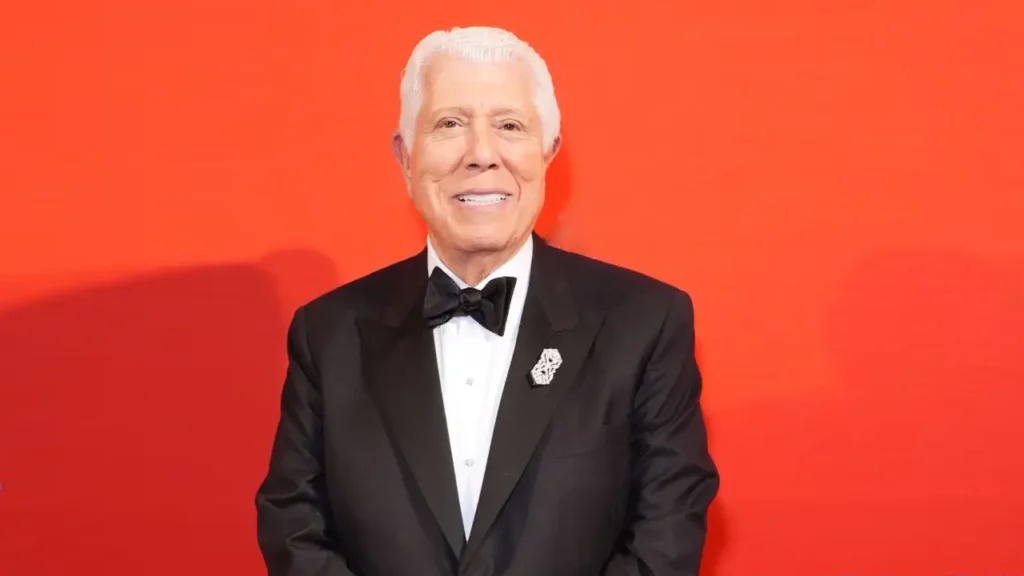
Dennis Basso’s net worth ranges between $14-$25 million. His wealth comes from multiple revenue sources: luxury boutiques in fashion capitals, a decades-long QVC partnership, celebrity custom designs, and brand acquisitions. This financial success reflects his ability to balance high-end craftsmanship with accessible luxury markets.
How does a fashion designer turn fabric and fur into millions? Dennis Basso transformed his career from a Fashion Institute of Technology graduate into a luxury brand with substantial wealth. His journey spans four decades of fur design, celebrity clientele, and strategic business decisions that positioned him among successful American fashion designers.
Career Foundation
Dennis Basso launched his business in 1983 with a fresh approach to fur design. After graduating from the Fashion Institute of Technology, he worked for established fur companies, learning sales and customer service. But design called to him.
His first collection at the Regency Hotel caught immediate attention. The New York Times devoted significant coverage to his debut show. Ivana Trump became an early client, ordering multiple coats shortly after that first presentation. This celebrity endorsement pattern would become central to his business growth.
Basso treated fur differently than traditional designers. He approached it as fluid fabric rather than heavy outerwear. This perspective created lighter silhouettes with bold colors and patterns that appealed to fashion-forward clients seeking modern luxury pieces.
Multiple Revenue Streams
Your wealth as a fashion designer rarely comes from a single source. Basso understood this early and built a diversified business model that sustained growth across market changes.
His flagship locations in New York, London, and Aspen serve high-net-worth clients willing to invest in custom fur pieces and evening wear. These boutiques represent his brand’s premium positioning and generate consistent high-margin sales from loyal customers.
The QVC partnership, lasting over 30 years, brought his designs to middle-income consumers. This mass market channel created substantial volume sales through faux fur, ready-to-wear, and accessories. His television appearances made him recognizable beyond elite fashion circles.
Brand acquisitions expanded his portfolio. The J. Mendel purchase in 2018 added another luxury label to his holdings. His new 8,000-square-foot flagship on East 57th Street—near Dior, Fendi, and Tiffany—positions him in Manhattan’s premium shopping district.
Connections and Hollywood Visibility
Celebrity clients drive luxury fashion sales in ways advertising cannot match. Basso built relationships with high-profile women who wore his designs to visible events.
His creations appeared in major films. Meryl Streep wore his designs in “The Devil Wears Prada.” Catherine Zeta-Jones and Renée Zellweger featured his work in “Chicago.” Nicole Kidman chose his pieces for “Nine.” These placements gave his brand mainstream recognition.
Red carpet appearances multiplied his exposure. First Lady Michelle Obama, Helen Mirren, Naomi Campbell, and Eva Longoria selected his evening wear for prominent events. Gabrielle Union wore a Dennis Basso wedding gown for her marriage to Dwayne Wade. Each appearance reinforced his position as a celebrity designer.
This visibility creates a marketing effect money cannot buy. When influential women choose your designs, it validates your brand’s quality and desirability to your target market.
The QVC Strategy That Expanded Reach
Basso entered television shopping when few established designers considered it viable. His QVC partnership began in the 1990s and continues today—a relationship spanning three decades.
This channel required different design thinking. He created faux fur collections, accessible ready-to-wear, and home goods that maintained his aesthetic while meeting price points for broader audiences. The strategy worked because he understood that different markets require different approaches.
His television presence became an asset. He hosted shows, connected with viewers directly, and built customer loyalty through personality and expertise. Women across America recognized him, creating a customer base far larger than boutique sales alone could generate.
The volume of television sales significantly contributed to his overall wealth. While individual transactions averaged lower than custom boutique orders, the cumulative revenue from consistent television appearances added substantial income over decades.
Fashion Business Model
Dennis Basso’s wealth positions him as a successful mid-tier luxury designer. His financial standing reflects focused positioning rather than mass market dominance.
Compared to megabrands, his net worth shows a different path. Ralph Lauren built a global empire with billions in wealth. Calvin Klein expanded beyond fashion into licensing deals worth hundreds of millions. Michael Kors pursued accessible luxury on an international scale.
Basso chose boutique luxury with strategic mass market extensions. His model maintained exclusivity in flagship locations while capturing volume through television. This hybrid approach generated steady profitability without requiring the massive infrastructure of global fashion corporations.
Your success in fashion depends on your chosen strategy. Basso proved that remaining specialized in luxury categories while selectively expanding into accessible markets can create substantial wealth without losing brand integrity.
Dennis Basso House and Asset
Smart designers invest wealth beyond their fashion business. Basso’s real estate holdings include properties in desirable locations.
His Watermill retreat provides personal enjoyment while serving as a valuable asset. The East 57th Street flagship represents both a retail investment and prime Manhattan real estate. These properties diversify his wealth portfolio beyond fashion’s inherent volatility.
Location matters in luxury retail. His boutiques in Aspen and on Madison Avenue placed him where affluent customers shop. Each retail location serves as both a revenue generator and a brand statement about quality and positioning.
Membership in Fashion’s Elite Circle
Professional recognition validates a designer’s standing. Basso joined the Council of Fashion Designers of America in 2002, placing him among the industry’s recognized leaders.
His Fashion Institute of Technology honorary doctorate in 2013 acknowledged his business success and design contributions. These honors cement reputation in ways that support premium pricing and attract discerning clients.
New York Fashion Week presentations since 2007 maintain his visibility in fashion’s most competitive market. Regular runway shows require significant investment but keep its brand relevant to media, buyers, and trend-watchers.
Manufacturing and Production
Quality control affects both reputation and profitability. Basso maintains a 40,000-square-foot atelier in Long Island City where expert craftsmen produce his designs.
Keeping manufacturing in New York costs more than overseas production but ensures quality standards. For luxury goods, this matters. Your clients pay premium prices expecting superior craftsmanship. Domestic production allows direct oversight of quality.
This vertical integration also protects profit margins. When you control production, you eliminate middlemen and maintain tighter financial control over your product costs.
Brand Extensions
At 70, Basso continues expanding rather than slowing down. His recent initiatives target new market segments while protecting his luxury positioning.
He’s developing a dress line in the $200 range for retailers like Macy’s and Bloomingdale’s. This strategy brings his design aesthetic to shoppers who cannot afford couture prices. The challenge lies in maintaining brand perception while pursuing volume sales.
His “Age of Possibility” collection emphasizes inclusive fashion that transcends age. This approach expands his potential customer base by rejecting narrow age targeting common in fashion marketing.
These moves suggest continued net worth growth potential. Expanding distribution while controlling brand perception could substantially increase revenue without requiring massive capital investment.
Basso supports charitable causes, including the American Cancer Society and Memorial Sloan-Kettering Cancer Center. This philanthropy reflects personal values while building goodwill in communities that support his business.
Charitable involvement creates intangible benefits for luxury brands. Your affluent clients often value social responsibility. Supporting causes they care about strengthens emotional connections beyond transactional relationships.
Key Success Principles
His four-decade career offers lessons for aspiring fashion entrepreneurs. Success required more than design talent—it demanded business thinking.
- Multiple revenue streams from boutiques, television, celebrity work, and licensing spread risk across different customer segments and channels.
- Strategic positioning of his designs with influential women created marketing effects that traditional advertising rarely achieves.
- From fur specialist to ready-to-wear designer to television personality, he evolved with market opportunities while maintaining core brand identity.
- Maintaining high standards through controlled manufacturing justified premium pricing and created loyal customers willing to invest repeatedly in his designs.
- The QVC relationship brought volume sales without requiring massive retail infrastructure investment. The J. Mendel acquisition added established brand equity to his portfolio.
Conclusion
His financial success demonstrates that luxury fashion offers multiple paths to substantial wealth. You don’t need global dominance to build millions. Focused positioning in premium categories, combined with selective mass market extensions, creates sustainable profitability.
The fashion industry rewards designers who understand business as well as aesthetics. Basso’s career proves that creative talent alone doesn’t build wealth—strategic thinking about market positioning, revenue diversification, and brand management converts design skill into financial success.
His story shows that American designers can compete successfully in luxury markets traditionally dominated by European houses. With the right combination of quality, celebrity connections, and business strategy, you can build a fashion brand with lasting value and substantial personal wealth.
Dennis Basso’s net worth of $14-25 million represents decades of consistent effort, smart decisions, and adaptation to changing markets. His wealth reflects success in balancing artistic vision with business acumen—a combination that remains essential for any fashion entrepreneur seeking lasting financial success.