Howard Lorber built one of New York real estate’s biggest names, then walked away from it in 2024 after more than two decades at the top. His story runs through a hotel bar meeting, a bankrupt telegraph company, and a hot dog stand that turned into a licensing machine. Given that track record, it’s no surprise so many people search for Howard Lorber net worth details and want to know exactly how he built his fortune.
Who is Howard Lorber?
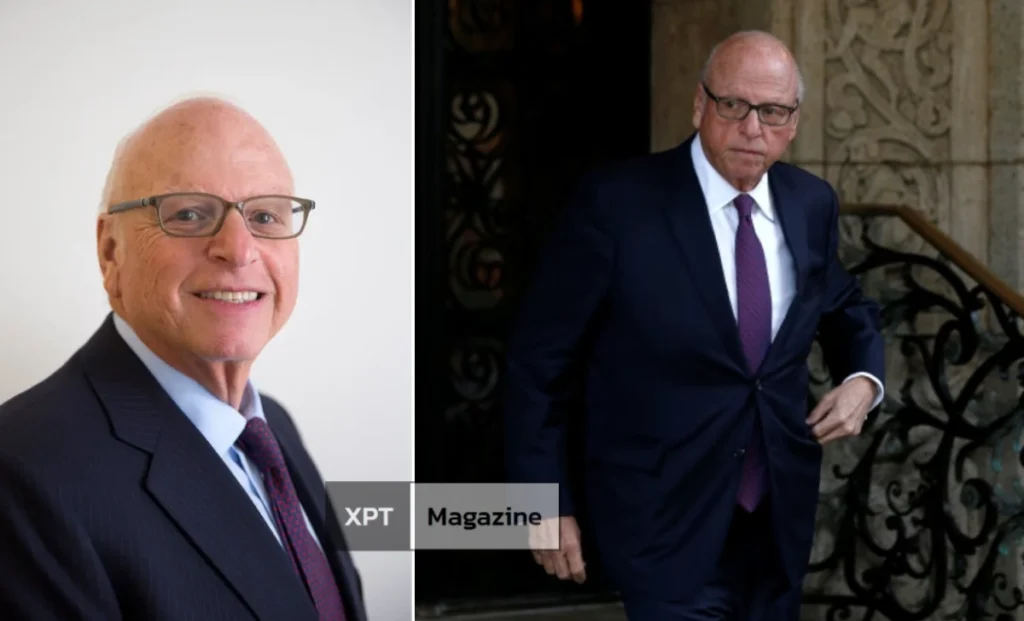
Howard Mark Lorber is an American business executive, investor, and longtime figure in New York real estate. Born on September 8, 1948, in the Bronx, he spent more than 20 years as Chairman of Douglas Elliman, the largest residential real estate brokerage in the New York metro area.
Beyond real estate, Lorber served as President and CEO of Vector Group Ltd. and as Chairman of Nathan’s Famous, the hot dog company known worldwide. He retired from Douglas Elliman in October 2024, closing out one of the longer runs in the industry. That mix of roles across real estate, holding companies, and food licensing is exactly why questions about Howard Lorber net worth keep coming up.
Howard Lorber Age and Early Life
Lorber turned 77 in September 2025 and was born in 1948. He grew up in the Bronx, the son of an electrical engineer who did well during the post-war building boom.
He graduated from Long Island University in 1970 with a degree in sociology, not exactly the usual path into business. Lorber has described himself as simply “good at math” during those early years, and he had no formal business training when he started out.
His first jobs were all sales-driven: stockbroker, then insurance, then real estate. Those years on the phones and in client meetings built the instincts he later used to spot undervalued brands and rebuild them.
How Did Howard Lorber Make His Money?
Lorber’s wealth didn’t come from one source. It came from a string of deals, each building on the last.
- The LeBow Partnership: A chance 1983 meeting with corporate raider Bennett LeBow at the Sherry-Netherland Hotel bar changed the course of Lorber’s career. He started out managing insurance and pension plans for LeBow.
- Western Union / New Valley: Lorber helped turn around Western Union, which was rebranded as New Valley to protect the name during bankruptcy proceedings. The company sold in 1994 for roughly $400 million in profit for LeBow. New Valley LLC became Lorber’s base of operations and still owns 70.6 percent of Douglas Elliman today.
- An Acquisition Pattern: Lorber kept going after companies with strong brand names but weak management, working from the belief that a well-known brand can survive almost any bad decision at the top.
- Nathan’s Famous: He took the hot dog company private, tried franchising and new store openings, then shifted to a licensing model instead. That pivot paid off. Nathan’s now sells more than 480 million hot dogs a year through licensing deals, and when its original supermarket license expired, Lorber negotiated new terms he called far better than before.
- Douglas Elliman: Starting in 2003, Lorber grew Elliman into the biggest residential brokerage in the New York metro area, with more than 4,000 agents and billions in yearly sales.
On top of all that, Vector Group’s stock returned over 10,000 percent (after dividends) since the 1990s under Lorber’s leadership as President and CEO — a stretch that beat even Berkshire Hathaway.
Howard Lorber Net Worth
No major outlet like Forbes or Bloomberg’s Billionaires Index has published a confirmed figure for Howard Lorber net worth. What’s available instead is a clear picture of his pay and his holdings, which together paint a strong financial profile.
In 2019, Lorber earned $11.7 million in total compensation from Vector Group, a number high enough that shareholders voted against the pay package two years running. For comparison, Steve Roth of the much larger Vornado Realty Trust earned $11.1 million that same year.
When Douglas Elliman went public, Lorber’s base salary was set at $1.8 million a year, with room for cost-of-living raises and a bonus of up to 150 percent of base pay. His perks included a car and driver, use of a corporate plane, club memberships, and a $3,750 monthly housing allowance.
Beyond salary, Lorber controlled a 70.6 percent stake in Douglas Elliman through New Valley LLC, plus his interests in Vector Group and other real estate holdings. His money came from decades of dealmaking across real estate, tobacco through Vector’s legacy business, and food licensing — not from any single paycheck. Public estimates of Howard Lorber net worth vary quite a bit across different sites, and none carries the backing of a major financial publication.
Howard Lorber’s Business Empire
Lorber’s career reads like a list of turnarounds, and each one added another layer to his portfolio.
- Vector Group Ltd. — The holding company where Lorber served as President and CEO, with interests spanning tobacco and real estate.
- [Douglas Elliman Company Profile] (LINK URL NEEDED) — His flagship brokerage and the largest in the New York metro area, with $12.6 billion in closed sales during one of its strongest years. Lorber chaired the company from 2003 until his 2024 retirement.
- Nathan’s Famous — Grew from a small restaurant chain into a global licensing operation, with Lorber as Chairman throughout the shift.
- New Valley LLC — Lorber’s own operating company and the vehicle behind his controlling stake in Elliman.
- Borders — He briefly sat on the bookseller’s Board of Directors starting in May 2010.
Later in his career, Lorber pushed Elliman’s new development marketing business into Manhattan, Florida, Texas, and Las Vegas. Every one of these moves followed the same pattern: find a brand people already trust, then fix what’s broken underneath it.
Howard Lorber’s Lifestyle and Assets
Lorber’s office sat on the 52nd floor at Fifth Avenue and 56th Street in Midtown Manhattan, a view that let him look out over both his home and, later, his next one.
He lived for years at the Sherry-Netherland Hotel, a classic address in old New York. He later bought an apartment in 432 Park Avenue, which was the tallest residential condo building in the city at the time and remains one of the most sought-after addresses in real estate anywhere.
His executive package at Douglas Elliman came with a car and driver, corporate jet access, and club memberships. Colleagues also describe him as someone who spent long stretches watching his Bloomberg terminal, tracking markets closely rather than leaving investments on autopilot. Since retiring, his son Michael says Lorber has leaned into golf, boating, time outdoors, time with his grandchildren, and charity work.
Howard Lorber’s Wife and Family
Public records don’t name Howard Lorber’s wife or offer much detail about his marriage, so this section sticks to what’s actually documented.
His son, Michael Lorber, built his own name in real estate and worked within the Douglas Elliman world. When Howard retired in October 2024, Michael posted a tribute online, calling his father a mentor whose compassion, generosity, and business sense shaped the man he became. Michael credited his father with helping him grow into both the professional and the parent he wanted to be. Anyone curious about the [Michael Lorber Real Estate Career] (LINK URL NEEDED) can find more on how the family name continues in the industry.
Search interest also covers how many children Howard Lorber has. Public information confirms Michael as his son but doesn’t list any other children on the record. Michael also announced that Michael Liebowitz, no relation to the family, would take over as Chairman of Douglas Elliman.
Howard Lorber and Donald Trump
“Howard Lorber Trump” shows up often in search results, but there’s no confirmed record of a direct political or personal relationship between the two men. Both have been major names in New York real estate for decades, and their paths have likely crossed socially and professionally within Manhattan’s property world.
Without a documented, sourced connection beyond that overlap, it’s fair to say no widely confirmed personal or political alliance between Lorber and Trump exists in the public record right now.
Controversy and Retirement
Lorber’s later career came with real scrutiny, and the facts are worth laying out plainly.
Vector Group shareholders rejected the company’s executive pay package two years in a row, pointing directly at Lorber’s $11.7 million compensation in 2019. That kind of repeated rejection is rare; fewer than 1 percent of public companies fail to win majority approval on pay votes in any given year.
Douglas Elliman also faced serious scrutiny after former brokers Tal and Oren Alexander were accused of multiple sexual assaults going back to 2008. Agent Jessica Cohen said she told Lorber about a 2010 incident back in 2012, though the company says no formal HR complaint was ever filed. During a five-hour internal review in October 2024, Lorber acknowledged past relationships with two brokers at the firm, including Jennine Gourin. His attorney noted that Elliman had no policy against consensual relationships between employees and independent brokers.
Lorber retired on October 22, 2024. The company said the departure was not tied to any disagreement over Elliman’s operations, policies, or practices. Around the same period, Douglas Elliman agreed to a $17.8 million settlement in the Gibson and Umpa commission lawsuits, which Lorber described as a step to reduce future uncertainty rather than an admission of wrongdoing. The company’s market value also fell from about $900 million to $130 million between 2021 and 2024, drawing sharp criticism from investors.
Howard Lorber’s Legacy and Career Highlights
Lorber leaves behind a track record that few in New York real estate can match.
He built Douglas Elliman into the largest residential brokerage in the metro area and steered the Western Union and New Valley turnaround into hundreds of millions in profit. He turned Nathan’s Famous from a struggling chain into a licensing giant selling more than 480 million hot dogs a year, while Vector Group’s stock climbed over 10,000 percent since the 1990s under his leadership. He also pushed Elliman’s reach into Florida, Texas, and Las Vegas, with annual sales hitting $12.6 billion at their peak.
Colleagues remember him as a quick study who could look at a business plan and spot the weak points fast. His son Michael and successor Michael Liebowitz now carry the Elliman name into its next chapter, building on a foundation Lorber spent more than 40 years putting in place.