
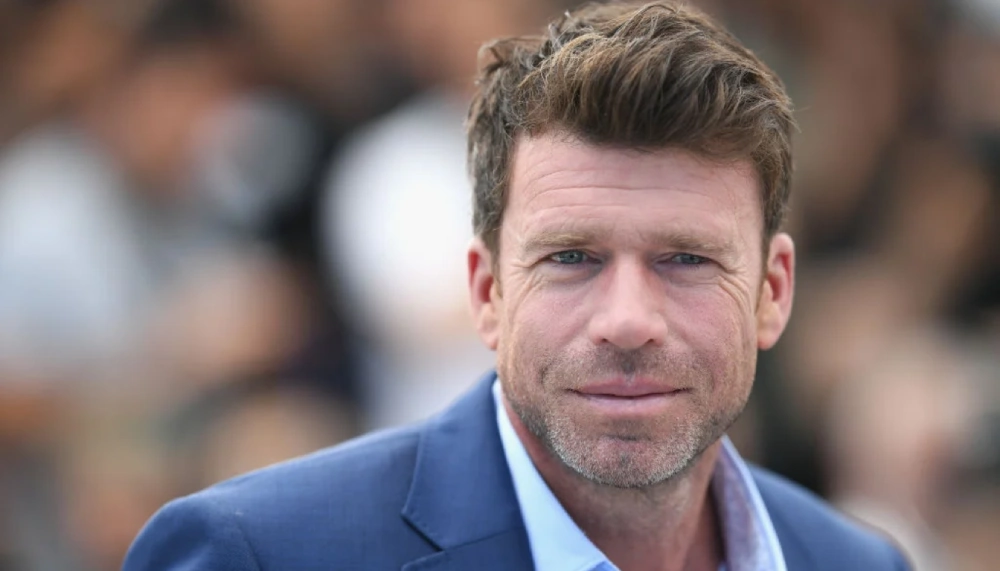
Taylor Sheridan is worth an estimated $200 million in 2026. When you fold in his ranch real estate portfolio — which includes a stake in one of the most storied cattle operations in American history — that figure climbs closer to $400–500 million. The creator of Yellowstone built this fortune not through a single breakthrough but through a relentless cycle of writing, producing, acquiring land, and then filming on that land — a structure where every dollar he earns routes back through properties and companies he already owns.
In October 2025, he signed a $1 billion deal with NBCUniversal, the largest creative contract in entertainment history. Fifteen years before that contract, he had $800 in his bank account.
Early Life & The Career Pivot That Changed Everything
Taylor Sheridan — born Sheridan Taylor Gibler Jr. on May 21, 1970 — grew up on family ranch land in Texas. His father was a cardiologist based in Houston. Sheridan attended Texas State University but dropped out, eventually making his way into acting through small television roles in the mid-1990s.
For roughly fifteen years, he worked steadily but without distinction. Guest spots on Walker, Texas Ranger, Dr. Quinn, Medicine Woman, and Party of Five paid the bills. A recurring role as Danny Boyd on Veronica Mars (2005–2007) gave him his most visible work to that point. Then came what he believed would be the real turning point: a part on Sons of Anarchy as Deputy Chief David Hale, beginning in 2008.
The Salary Dispute That Ended His Acting Career
By 2010, Sheridan wanted a raise. He felt the role warranted it. His attorney made the case to the show’s business affairs team, noting that performers on children’s programming at Cartoon Network were earning more. The response from the business affairs attorney, as Sheridan later recounted on the record, was blunt: the show acknowledged he probably deserved more but refused to pay it — because in their view, he simply wasn’t worth more. He was, they said, the eleventh name on the call sheet. One of fifty actors who could be swapped out.
Sheridan quit. His character was killed off almost immediately — dragged down a street by a van in what Sheridan has described as the show’s version of a dismissive exit. He walked away with $800 in his bank account, a pregnant wife, and no clear next move.
Writing From Desperation
There was no Master of Fine Arts degree. No connections in writers’ rooms. No agent championing the career change. What Sheridan did have was a decade’s worth of accumulated script literacy — thousands of screenplays read in casting waiting rooms, an instinct for what held together and what fell apart. He began writing his first screenplay, which would eventually become Sicario. The script sold to director Denis Villeneuve, and the resulting film grossed $84 million worldwide on a $30 million budget, earning three Academy Award nominations.
That single sale broke the cycle. Sheridan never auditioned again.
Screenwriting Breakthrough & Critical Acclaim
After Sicario (2015), Sheridan’s trajectory accelerated sharply. His next screenplay, originally titled Comancheria, sat on Hollywood’s Black List of best unproduced scripts in 2012 before being picked up, retitled, and released as Hell or High Water (2016). Directed by David Mackenzie and starring Chris Pine, Ben Foster, and Jeff Bridges, the film earned four Academy Award nominations — including Best Original Screenplay for Sheridan.
In 2017, Sheridan wrote and directed Wind River, a murder mystery set on a Native American reservation in Wyoming. The film premiered at the Sundance Film Festival and won the Un Certain Regard directing prize at Cannes. With three consecutive projects that earned critical respect and commercial returns, Sheridan had established himself as one of the most reliable voices in American genre filmmaking.
His subsequent film work — including the sequel Sicario: Day of the Soldado (2018), the Tom Clancy adaptation Without Remorse (2021), and Those Who Wish Me Dead (2021) starring Angelina Jolie — demonstrated growing range, even if none matched the intensity of those first three scripts. Cumulatively, Sheridan’s film catalogue has generated over $400 million in theatrical revenue worldwide. Those films continue to pay residuals through streaming licensing, international distribution, and cable rotation, producing an estimated $5–15 million annually in passive income.
Yellowstone & The Universe It Spawned
In 2018, Sheridan co-created Yellowstone with John Linson for Paramount Network. The series — starring Kevin Costner as John Dutton, the patriarch of a sprawling Montana ranch — grew slowly through its first two seasons before exploding into a full-blown cultural phenomenon. By its fifth season, the show was routinely outdrawing NFL Sunday Night Football in certain demographics. The series finale in late 2024 pulled in 11.4 million viewers, making it the most-watched episode in the show’s history.
Revenue and Viewership Scale
According to Bloomberg, Yellowstone has generated approximately $2.9 billion in total revenue and roughly $700 million in profit since its 2018 debut, with an additional $450 million coming from downloads and physical media sales. All of Sheridan’s combined Paramount productions have tallied over 1.3 billion streaming hours since 2022 and have collectively earned more than $800 million in global streaming revenue. His content has been a primary driver behind Paramount+ surpassing 75 million subscribers.
The Expanding Franchise
Building on Yellowstone‘s success, Sheridan created an interconnected web of series that expanded the Dutton family saga and branched into entirely new territory:
- 1883 (2021) — A prequel chronicling the Dutton family’s post-Civil War migration west, starring Sam Elliott, Tim McGraw, and Faith Hill. The most expensive Western miniseries ever produced at the time, with a reported $169 million budget.
- 1923 (2022) — Another Dutton prequel set during Prohibition and the Great Depression, starring Harrison Ford and Helen Mirren.
- Mayor of Kingstown (2021) — Co-created with Hugh Dillon, starring Jeremy Renner in a systemic-corruption drama set in a Michigan prison town.
- Tulsa King (2022) — Co-written with Sopranos veteran Terence Winter, starring Sylvester Stallone as a New York mafia capo exiled to Oklahoma.
- Special Ops: Lioness (2023) — A CIA undercover-operations thriller starring Zoe Saldaña and Nicole Kidman.
- Lawmen: Bass Reeves (2023) — A prestige limited series dramatizing the life of the legendary Black U.S. Marshal, starring David Oyelowo.
- Landman (2024) — A West Texas oil-patch drama co-created with journalist Christian Wallace, starring Billy Bob Thornton and Demi Moore. Sam Elliott joined the main cast in its second season.
- Marshals (2026) — Sheridan’s first network television series, airing on CBS, with Luke Grimes reprising his Yellowstone role as Kayce Dutton.
Paramount is also developing further franchise extensions. The Madison, a Yellowstone sequel starring Michelle Pfeiffer alongside Patrick J. Adams and Matthew Fox, has been announced. Cole Hauser and Kelly Reilly have also signed deals to continue their beloved roles in additional sequel projects.
The Paramount Deal
His television output became so central to Paramount’s streaming strategy that the company structured its entire content identity around his shows. In 2021, Sheridan signed a five-year overall production deal with ViacomCBS — now Paramount Global — valued at approximately $200 million. Under this agreement, Sheridan produces content exclusively across Paramount Network, Paramount+, and the broader Paramount ecosystem. His per-episode compensation ranges from $250,000 on smaller productions to $1.3 million for flagship Yellowstone episodes. Paramount spends an estimated $500 million per year solely on Sheridan-produced content.
The $1 Billion NBCUniversal Deal
In October 2025, Sheridan signed a $1 billion deal with NBCUniversal — the largest creative contract in entertainment history. The agreement is structured in two phases:
- Film Phase — An eight-year pact with Universal Pictures beginning in 2026, granting Sheridan creative freedom to develop films of all scales.
- Television Phase — A five-year deal with NBC and the Peacock streaming platform beginning in 2029, after his Paramount obligations expire.
Industry reports indicate Sheridan intends to develop roughly 20 new series under the NBCUniversal umbrella across the deal’s thirteen-year structure. NBCUniversal Chairman Donna Langley personally courted the agreement, visiting Sheridan’s Texas ranch multiple times to negotiate terms.
What Triggered the Move
The deal did not happen in a vacuum. After Paramount merged with Skydance Media in an $8 billion transaction, new leadership under CEO David Ellison and streaming chief Cindy Holland began scrutinizing the massive budgets behind Sheridan’s productions — some episodes reportedly exceeded $20 million in cost. Creative friction emerged around new pitches, including a project called The Correspondent that was ultimately rejected. Feeling constrained, Sheridan engaged with Langley, who offered both creative autonomy and long-term financial commitment on a scale Paramount could not match.
How Taylor Sheridan Actually Makes His Money
Understanding Sheridan’s net worth requires looking past headline deal numbers. His financial architecture is built on vertical integration — a model where he earns at every stage of production rather than collecting a single creator’s fee.
The Creator Pipeline
Every Sheridan-produced series routes through Bosque Ranch Productions, his namesake production company. The company holds executive-producer credits, ownership stakes, and revenue participation across the entire slate. This means Sheridan collects income in multiple layers per show:
- Writing and creator fees (paid upfront per season)
- Producer fees (paid across every episode produced)
- Backend profit participation (kicks in when shows hit profitability thresholds and enter licensing markets)
- Residuals from streaming, international sales, cable reruns, and merchandise licensing
The Ranch-as-Studio Model
Sheridan owns the land his shows are filmed on. This is not a symbolic detail — it is a revenue center. When productions use his ranches as filming locations, Bosque Ranch charges approximately $50,000 per week in location rental fees. Before cameras roll on any Western production, actors attend “cowboy camp” on Sheridan’s property — a training program that bills the production roughly $215,000 per week. Cattle from his herds appear on screen, earning a per-head appearance fee each time they are featured.
Few figures in Hollywood operate this way. Most creators write a script, hand it off, and collect a negotiated fee. Sheridan writes the script, shoots it on his own land, trains the cast at his own facility, supplies the livestock from his own herds, and then collects producer and backend fees through a production company he wholly controls. The result is an ecosystem where nearly every dollar in the production pipeline passes through at least one entity he owns.
Additional Revenue Channels
Beyond direct production income, Sheridan’s financial portfolio includes:
- Merchandise licensing: Yellowstone has spawned an extensive authorized product line — apparel, accessories, home goods, a spice collection, and branded food items — generating ongoing licensing revenue.
- Film residuals: The combined catalogue of Sicario, Hell or High Water, Wind River, Sicario: Day of the Soldado, and Those Who Wish Me Dead produces an estimated $5–15 million annually from continued licensing and distribution.
- Ranch operations: Working cattle, horse breeding, equine training, and agricultural activities generate operational revenue independent of entertainment.
- Brand partnerships: Bosque Ranch maintains commercial relationships with companies including American Hat Company, Tribute Equine Nutrition, and Community Coffee.
- Restaurant ventures: Sheridan has referenced involvement in the restaurant business as part of his broader vertical-integration philosophy of taking products directly to the consumer.
Real Estate Holdings & Ranch Investments
Ranch properties form the backbone of Sheridan’s wealth outside entertainment. Together, his real estate portfolio — including the Four Sixes acquisition — is valued in the hundreds of millions of dollars.
Bosque Ranch — Weatherford, Texas
Bosque Ranch is Sheridan’s home base. Located in Weatherford, Texas (Parker County), the roughly 600-acre property serves multiple functions simultaneously:
- Primary residence for Sheridan, his wife Nicole Muirbrook, and their son Gus
- A premier equine training facility — home of the NCHA Brazos Bash and the training center for multiple champion-level riders including NCHA Million Dollar rider Geoffrey Sheehan, NRCHA competitor Kelby Phillips, and NRHA Million Dollar Rider Matt Mills
- An official filming location used for Yellowstone, 1883, and other Sheridan productions
Sheridan has described the property as primarily a horse ranch, reflecting his deep personal involvement in the performance horse world. Bosque Ranch also hosts reining cow horse shows, concerts, charity events, and branded activations for its corporate partners.
6666 Ranch (Four Sixes) — West Texas
In 2022, Sheridan led a group of investors in purchasing the historic Four Sixes Ranch for approximately $320 million. The acquisition came about after the death of Anne Marion, the fourth-generation owner, whose estate reached out to Sheridan directly.
The numbers of that conversation have become part of Sheridan’s mythology. The estate quoted $350 million. Sheridan didn’t have it. He expanded his Paramount deal to $200 million and recruited additional investors to cover the rest. “I was real rich for 45 minutes,” he later joked. “Then I was broke again. That was the trade… I do the shows for the ranch.”
The property itself is staggering in scale and history:
- Total acreage: Over 266,000 acres across multiple counties in West Texas, organized into three divisions — the 6666’s Ranch in Guthrie (142,372 acres), Dixon Creek Ranch in Carson and Hutchinson Counties (114,455 acres), and Frisco Creek in Sherman County (9,428 acres)
- Founded: 1870, by Captain Samuel “Burk” Burnett, who purchased 100 head of cattle branded “6666” at age 19
- Historical significance: Burnett became one of the most influential cattlemen in Texas history. He hosted President Theodore Roosevelt for a wolf hunt in 1905 and maintained a friendship with Comanche leader Quanah Parker
- Infrastructure: The headquarters compound includes a 13,280-square-foot main house with 13 bedrooms, multiple bunkhouses, a loft barn, approximately 20 employee homes, a private landing strip, and an enclosed airplane hangar
- Working operations: The ranch maintains a herd of Angus cattle and Quarter Horses, employs between 50 and 100 people (including nearly 20 full-time cowboys, many from multi-generational ranching families), manages 119 pastures, and operates on a conservative stocking rate of roughly 30 acres per cow-calf pair
- Brand expansion: The Four Sixes brand has grown into a retail and licensing operation. TCU faculty and students helped design a mobile storefront for the ranch’s merchandise line, which now appears at events including the National Finals Rodeo and Cowboy Christmas
The ranch also served as a filming location for Yellowstone and has hosted film production since the 1970s — Roy Rogers’ final film, Mackintosh and T.J., was shot there in 1975.
Additional Properties
Sheridan operates a third, smaller ranch near Jacksboro, Texas, focused primarily on cattle operations. He has described this property as the working complement to Bosque Ranch’s equine focus.
Lifestyle & Personal Life
Sheridan married actress and model Nicole Muirbrook in 2013. The couple lives on Bosque Ranch in Weatherford with their son, Gus. Their daily life looks nothing like the Hollywood standard — Sheridan rises early, works with horses, and spends significant time on ranch operations.
His on-screen appearances are not vanity projects. Sheridan plays horse trainer Travis Wheatley on Yellowstone, portrays historical cowboy Charles Goodnight in 1883, and appears in Lioness as Cody Spears. These roles tend to involve riding sequences where Sheridan’s own horsemanship skills — developed over a lifetime — are the production’s most practical asset. As he told The Hollywood Reporter, he doesn’t believe audiences want to watch him act for an hour, but when a scene requires someone who can genuinely work cattle from horseback, he’s often the most qualified person on set.
In 2021, Sheridan was inducted into the Texas Cowboy Hall of Fame. In 2024, he was inducted into the Texas Business Hall of Fame — a dual recognition that mirrors the two sides of his career. At the business induction, he was introduced by Fort Worth businessman John Goff and delivered a characteristically dry observation: he had achieved all of this with a paycheck from “a bunch of Hollywood vegans.”
The Solo Writer Behind a Multi-Billion-Dollar Universe
One detail about Sheridan’s creative process stands out when measured against industry norms: he writes nearly all of his shows alone. In an era when a single prestige series typically requires a writers’ room of eight to fifteen people, Sheridan has been producing scripts for multiple simultaneous series from an isolated cabin in Wyoming. This is virtually unprecedented at the scale he operates — other prolific showrunners like Shonda Rhimes and Ryan Murphy depend on large collaborative writing teams to maintain output volume.
Since the start of 2022, Sheridan’s shows have accumulated more total streaming hours than those of any comparable creator. That output — written largely by one person — is what justified both the $200 million Paramount deal and the $1 billion NBCUniversal commitment.
The model is not without strain. Sheridan has acknowledged beginning to share writing duties more recently, bringing in collaborators for Landman and Tulsa King as the number of concurrent productions exceeded what any single writer could sustain.
Net Worth Over Time
| Period | Estimated Net Worth | Key Developments |
|---|---|---|
| Pre-2015 | Under $1 million | Working actor; $800 bank account after leaving Sons of Anarchy |
| 2015–2016 | $5–10 million | Sicario commercial success; Oscar nomination for Hell or High Water |
| 2017–2018 | $15–25 million | Directorial debut with Wind River; Yellowstone premieres; early ranch investments |
| 2019–2021 | $50–80 million | Yellowstone becomes highest-rated cable drama; $200M Paramount deal signed; Bosque Ranch Productions expands |
| 2022–2024 | $120–180 million | Multiple spinoffs launched; 6666 Ranch acquired; vertical integration fully operational |
| 2025–2026 | $200 million (liquid) / $400–500 million (including real estate) | $1B NBCUniversal deal signed; franchise expanding to CBS; ranch portfolio appreciating |
The $200 million figure comes from Celebrity Net Worth’s 2026 assessment, which remains the most widely cited benchmark. The higher realistic range accounts for the equity locked in his ranch holdings — large working ranches in Texas have appreciated 20–30% in recent years, and Sheridan’s portfolio represents some of the most significant acreage in the state.
What Comes Next
Sheridan’s financial trajectory points sharply upward for several reasons:
- The NBCUniversal runway: The $1 billion deal begins paying out its film component in 2026 and its television component in 2029. Conservative estimates place annual NBCUniversal compensation between $50–75 million, depending on production volume. With roughly 20 series planned, the deal represents a decade of guaranteed income at the highest tier of Hollywood compensation.
- Catalogue compounding: Every existing Sheridan show continues generating revenue through streaming, international licensing, and merchandise. Yellowstone alone has produced $2.9 billion in revenue to date, and its catalogue value grows with each new platform licensing deal.
- Ranch appreciation: The Four Sixes and Bosque Ranch properties are not static assets. They generate operational revenue while appreciating in market value — a dual-growth dynamic that most entertainment figures’ portfolios lack entirely.
- Franchise continuity: With The Madison, additional CBS network shows, and Cole Hauser/Kelly Reilly sequel projects in development, the Yellowstone universe is expanding rather than contracting. Each new series creates another revenue layer that feeds back into Sheridan’s production infrastructure.
Industry projections suggest Sheridan’s net worth could approach or exceed $500 million by 2030 if production targets under the NBCUniversal deal are met and his ranch holdings continue appreciating at current rates.
How Taylor Sheridan Built His Empire
Sheridan’s path from $800 to $200 million is not a standard Hollywood success story. Most writers who break through sign deals, collect paychecks, and build savings. Sheridan built infrastructure.
His model rests on four pillars:
- Own the content. Through Bosque Ranch Productions, Sheridan holds ownership stakes and executive-producer credits across his entire slate — not just creator fees, but backend participation that compounds for decades.
- Own the locations. By purchasing the ranches his shows film on, Sheridan turns production costs into personal revenue. Every dollar Paramount spends on location rental and actor training cycles back through his properties.
- Own the brand. The Sheridan name carries a specific promise — authentic Western storytelling with high production values. That brand equity lets him negotiate from a position of strength, as demonstrated by the NBCUniversal deal’s scale.
- Own the lifestyle. Unlike celebrities who purchase ranches as investments or lifestyle accessories, Sheridan operates his as working businesses. Cattle are raised and sold. Horses are trained and shown. The properties produce income on their own, independent of whether a single camera is rolling.
This vertical integration — content creation, physical production, location ownership, livestock operations, and brand licensing all managed under one roof — is structurally rare in entertainment. When Yellowstone films an episode at Bosque Ranch, Sheridan earns as the writer, the producer, the location landlord, the livestock supplier, and the production consultant. There is no middleman at any layer.
Conclusion
Taylor Sheridan’s journey is often reduced to a feel-good comeback narrative — broke actor writes a script, becomes rich. The reality is more deliberate than that. The salary rejection on Sons of Anarchy didn’t just push him toward writing. It taught him that in the entertainment business, the person who controls the infrastructure controls the economics. Every decision since — from founding Bosque Ranch Productions to purchasing the Four Sixes to structuring the NBCUniversal deal with explicit creative autonomy — has been an extension of that lesson.
At 55, Sheridan lives and works from his ranch in Weatherford, Texas. He writes from a cabin in Wyoming. He directs from horseback when the schedule allows. And, He oversees the largest active slate of original content any single creator has ever managed. And the $1 billion check NBCUniversal wrote for his future work suggests the industry considers him, by any honest measure, worth far more than what anyone imagined in 2010.