
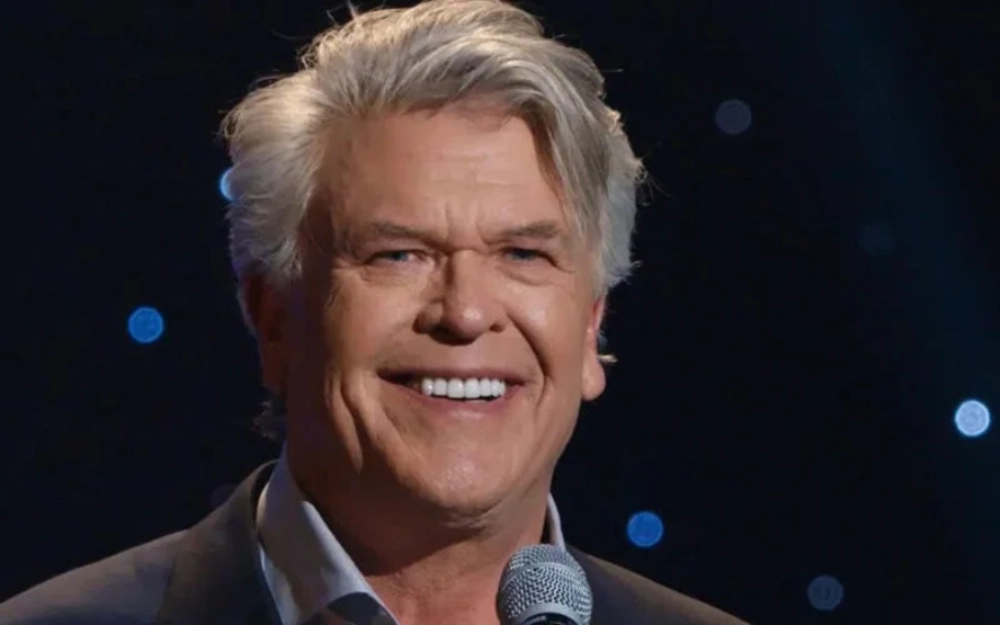
Ron White has built an estimated net worth of $40–45 million as of 2026. The Blue Collar Comedy Tour veteran transformed a slow-burn Texas storytelling style, a scotch-and-cigar stage persona, and decades of relentless touring into a multimillion-dollar brand that extends across comedy, entertainment media, real estate, and premium spirits.
Early Life & Rise to Fame
Ronald Dee White was born on December 18, 1956, in Fritch, a small town in the Texas Panhandle. Growing up in a working-class environment gave him the dry, plainspoken sensibility that would later define his comedy. At 17, White enlisted in the United States Navy and served aboard the auxiliary rescue and salvage ship USS Conserver during the final stretch of the Vietnam War era. After leaving the military, he spent time in Mexico, where he purchased a pottery factory — an unusual detour that added to the collection of real-life misadventures he would eventually turn into stage material.
White began performing stand-up in the late 1980s, working the comedy club circuit across Texas. His approach was different from most comics of that era. Instead of rapid-fire punchlines or exaggerated characters, White developed a slow, conversational delivery built around long, carefully structured stories that crept toward a devastating final line. His material leaned into personal flaws — drinking, divorce, bad decisions, travel disasters, and the absurdity of ordinary life — delivered with a mix of self-deprecation and quiet swagger. Audiences felt they were listening to the funniest guy at the bar, someone who had already made every mistake and turned each one into a story worth paying to hear. Critics and fans have categorized his comedy across country comedy, observational humor, satire, and blue comedy, though his storytelling style is what truly sets him apart.
The Nickname “Tater Salad”
The nickname “Tater Salad” originated from a routine about an old arrest in which White allegedly told the officer, “You can call me Tater Salad.” The name stuck, becoming inseparable from his public identity. His official website, tatersalad.com, carries the moniker to this day.
The pivotal break came in 2000 when Jeff Foxworthy invited White to join the Blue Collar Comedy Tour alongside Larry the Cable Guy and Bill Engvall. The tour — conceived by manager J.P. Williams as a working-class counterpart to the Original Kings of Comedy — became a cultural phenomenon, selling out venues in over 90 cities and generating more than $15 million in live ticket revenue. The franchise expanded far beyond the stage: three concert films (Blue Collar Comedy Tour: The Movie in 2003, Blue Collar Comedy Tour Rides Again in 2004, and Blue Collar Comedy Tour: One for the Road in 2006) collectively earned over $85 million in DVD retail sales and rentals.
A satellite radio show and the WB television series Blue Collar TV followed, with White making seven guest appearances. The merchandise machine — calendars, books, greeting cards, T-shirts, and more — added another revenue layer, with Foxworthy’s calendar alone generating $1 million in annual retail sales.
Within the four-man lineup, each comic brought something distinct. Foxworthy had “You might be a redneck,” Larry the Cable Guy had catchphrases and character comedy, and Engvall had “Here’s Your Sign.” White was the cigar-smoking, scotch-drinking adult storyteller — less overtly “blue collar” in presentation, but his blunt Texas honesty and barroom delivery made him the group’s sharpest edge. The tour elevated him from a respected club comedian to a nationally recognized headliner commanding arena-level fees.
Comedy Career & Major Milestones
Solo Comedy Works
White’s solo discography stretches back to 1990, well before his mainstream fame. His complete release history includes:
- Tater Salad a.k.a. Busted in Des Moines (1990) — An early self-produced CD distributed among comedy fans before the digital era
- Drunk in Public (2003) — His first nationally distributed comedy album following Blue Collar exposure; achieved gold certification with over 500,000 copies sold
- They Call Me “Tater Salad” (2004) — A DVD release that became one of his signature projects and went multi-platinum
- You Can’t Fix Stupid (2006) — DVD and CD release that earned Grammy recognition and became one of his most commercially successful specials
- Behavioral Problems (2009) — DVD released through Comedy Central
- A Little Unprofessional (2013) — DVD and digital download that secured his third Grammy nomination
- If You Quit Listening, I’ll Shut Up (2018) — Released on Netflix, his most recent full-length special
Grammy Recognition
White earned three Grammy nominations for Best Comedy Album. The first two came in 2007: one for Blue Collar Comedy Tour: One for the Road (shared with Foxworthy, Engvall, and Larry the Cable Guy) and another for You Can’t Fix Stupid. His third nomination arrived in 2014 for A Little Unprofessional.
Acting & Television Appearances
Beyond stand-up, White accumulated a range of screen credits. He appeared in the feature films Sex and the City 2 and Horrible Bosses, took roles in television series including Kath & Kim, Reno 911!, and 12 Miles of Bad Road, and performed a cameo in the Rascal Flatts music video “Why Wait.” In 2005, The WB Television Network aired a pilot for The Ron White Show, a variety program blending celebrity cameos, cartoons, and sketches. He also served as a celebrity judge on The Gong Show with Dave Attell.
In 2013, White stepped behind the camera as an executive producer of the documentary Bridegroom. Three years later, he starred as Phil — the veteran road manager for the fictional Staton-House Band — in the Showtime series Roadies. Most recently, in 2025, he appeared as fictional NASCAR driver Ron Dobbins on the Netflix comedy series Tires, introducing his persona to a streaming-era audience.
Published Work
In 2006, White published his memoir, I Had the Right to Remain Silent But I Didn’t Have the Ability. The title — drawn from one of his most recognized punchlines — captured his comedic voice: self-aware, legally questionable, and proudly inappropriate. The book landed on the New York Times Best Seller list and generated an estimated $2 million in earnings.
Income Sources & Wealth Timeline
Stand-Up Touring
Touring has always been the engine behind White’s wealth. During his peak years from 2005 through 2015, he commanded between $150,000 and $300,000 per show, performing roughly 30 to 40 dates each year. That schedule alone generated an estimated $4.5–12 million in annual gross revenue. White himself disclosed in 2020 court documents that he earned more than $200,000 per month on the road, spending over 200 days per year traveling between venues.
The economics of stand-up touring are notably favorable for established headliners. Unlike a touring band, a comedy act carries minimal overhead — no backup performers, no elaborate staging, no equipment trucks. Industry analysts estimate that top-tier comedians can recoup 60 percent or more of a show’s ticket revenue as direct profit, making one-man touring acts disproportionately lucrative compared to their gross receipts.
Year-by-Year Growth (Estimated)
- 2000: $1–2 million before the Blue Collar Comedy Tour era
- 2003: $8–10 million following tour success and first solo album release
- 2006: $15–18 million after Grammy-nominated specials and New York Times bestselling book
- 2010: $22–25 million with sustained touring, DVD royalties, and the Organica Media Group launch
- 2015: $30–35 million with expanded business ventures and the tequila brand gaining traction
- 2020: $38–40 million, with growth slowing due to the COVID-19 touring shutdown
- 2025–26: $40–45 million, driven by resumed touring, streaming royalties, and appreciating business assets
Number Juan Tequila
In 2012, White co-founded Number Juan Tequila with Alex Reymundo, a Mexican-born, Texas-raised comedian and fellow member of the Latin Kings of Comedy whom White had known since 1986. Reymundo, a 2007 ALMA Award winner, brought deep roots in the spirits world, while White contributed his recognizable brand and built-in audience.
The tequila is produced at Rivesca Distillery in Amatitán, Jalisco, under Master Distiller Nestor Rivera, using fully mature agave cooked in traditional stone ovens and spring water sourced from the Tequila volcano. The brand has earned recognition across national competitions, collecting 2 bronze, 2 silver, 16 gold, and 1 platinum medals, along with a best-in-show award for packaging. Its premium Extra Añejo — aged 116 months and limited to 3,000 bottles — retails at approximately $100. White’s ownership stake in the company is estimated at $5–8 million, with the brand contributing roughly $1–2 million in annual income. The venture also extends into experiential offerings, including a 100-foot yacht operating in Cabo San Lucas under the Number Juan banner.
Organica Media Group
In 2010, White co-founded Organica Music Group (OMG) with British music producer Michael Blakey. Based in Los Angeles, OMG was structured as a vertically integrated entertainment platform spanning music, comedy, film, and publishing. White contributed a $1 million initial investment and led the company’s comedy division, signing and developing both emerging and established performers, while Blakey oversaw music operations and secured a distribution deal with Universal Music Group.
The company’s roster grew to include soul legend Gladys Knight, pop singer Taylor Dayne, and Crystal Harris. OMG also launched a VIP division that curates premium meet-and-greet experiences and fan engagement events for touring artists and comedians, with a client list that has included Martin Lawrence, LeAnn Rimes, Nick Cannon, and White himself. For White, OMG represented a strategic shift from performer to entertainment entrepreneur — deepening his revenue streams well beyond the stage.
Content Ownership & Streaming Revenue
One of White’s most consequential business decisions was choosing to own his comedy specials outright rather than selling them to networks for flat one-time fees. In the standard industry model, a comedian might accept a single payment of $50,000–$200,000 for a special, surrendering all future revenue from DVD sales, broadcast licensing, and digital distribution. White retained those rights, allowing him to earn ongoing income from every format shift — from DVDs in the 2000s to streaming platforms in the 2010s and beyond.
As Netflix, Amazon Prime, and other platforms expanded their comedy catalogs, White’s library of specials continued generating passive revenue through licensing deals and royalties. Industry estimates suggest his comedy catalog alone produces $1–2 million annually, even without releasing new material. This ownership model is the single biggest reason his net worth has continued to compound long after his peak touring years.
Assets & Lifestyle
Real Estate Portfolio
White’s property holdings represent a substantial share of his overall wealth:
- Beverly Hills Post Office, Los Angeles — A 4,800-square-foot home purchased in 2010 for $1.505 million, listed for sale in September 2020 at $7 million
- Montecito, California — A 2,290-square-foot residence listed for $4.475 million in 2014
- Suwanee, Georgia — A 13,082-square-foot mansion listed multiple times between 2009 and 2017, with asking prices ranging from $2.4 million to $3.5 million
Luxury & Lifestyle Branding
White’s on-stage accessories — a scotch glass and a cigar — are not props. They reflect genuine personal tastes that have become inseparable from his brand. Over the years, he has built an extensive collection of rare single-malt whiskies, and his ease with luxury settings has made him a natural fit for premium product endorsements. Rather than treating lifestyle as passive consumption, White has consistently translated persona elements into revenue, most notably through the Number Juan Tequila brand.
Personal Life & Turning Points
Marriages & Family
White married Lori Brice on August 1, 1981. The couple had one son, Marshall, before divorcing in 1993. His second marriage, to Barbara Dobbs in June 2004, ended in 2008. In October 2013, White married singer Margo Rey, but the relationship collapsed by 2017 and became publicly contentious.
White maintained that the couple was never legally married, alleging Rey had refused to sign a prenuptial agreement and characterizing their $100,000 Texas wedding as a ceremony that both understood was not binding. Rey disputed this account, stating that White had abruptly canceled her credit cards, changed the locks on their shared home, and canceled 30 tour gigs that had been booked alongside his — all while she was managing medical bills from cancer treatment. In August 2019, a Los Angeles Superior Court judge sided with Rey, ruling that the couple was in a common-law marriage under Texas law.
White was ordered to pay $25,000 per month in spousal support starting November 2019. When the COVID-19 pandemic halted all live performances in 2020, White petitioned the court to terminate the obligation, filing documents showing his monthly income had dropped to zero while expenses exceeded $433,000. He described his net income at the time as just over $300,000 — insufficient to sustain the payments with no foreseeable touring income.
Sobriety & Personal Transformation
In early 2021, White made a decision that challenged the very foundation of his stage identity: he stopped drinking. After more than four decades of heavy alcohol use — a habit that was not merely part of his act but its defining feature — White credits a combination of hypnotherapist consultations and an ayahuasca ceremony in Peru with breaking his dependence.
The transformation carries a particular irony. His most commercially successful specials, including Drunk in Public, were built around drinking culture. His audiences expected the scotch glass, the cigar, and the slightly impaired storytelling rhythm. Yet White continued performing his classic routines after getting sober, suggesting that the craft behind the persona — the timing, the story construction, the deadpan delivery — was always the real product. The scotch was atmosphere; the comedy was architecture.
Charitable Work
White has maintained a consistent philanthropic presence, particularly supporting the Armed Forces Foundation and the Red Cross. In 2009, he launched “Ron White’s Comedy Salute to the Troops,” an annual charity event whose ticket and DVD sales benefit military families. Fellow comedians including Brian Regan, Lewis Black, Kathleen Madigan, and Dave Attell have participated over the years. His connection to military causes traces directly to his own Navy service. In recognition, White received the Patriot Award from the Armed Forces Foundation in 2009, and Texas legislative officials designated April 27 as “Ron White Day” in the state.
How Does Ron White’s Net Worth Compare?
White’s $40–45 million fortune places him competitively among his Blue Collar Comedy Tour peers, though each member of the group built wealth through a distinctly different financial architecture:
| Comedian | Estimated Net Worth | Primary Wealth Drivers |
|---|---|---|
| Jeff Foxworthy | ~$100 million | Television hosting, 14 million+ CDs sold, per-gig fees exceeding $150,000, book publishing, extensive merchandise licensing |
| Larry the Cable Guy | ~$50 million | Peak-year touring gross of $21.5 million, $3 million in annual merchandise, major brand endorsements |
| Ron White | $40–45 million | Content ownership model, touring revenue, tequila brand, Organica Media Group, real estate |
| Bill Engvall | ~$40 million | Touring, television appearances including Dancing with the Stars, Blue Collar franchise residuals |
Foxworthy built the broadest earnings base through television hosting, publishing, and licensing deals that extended well beyond comedy. Larry the Cable Guy maximized merchandise and branded endorsements to convert his catchphrase-driven fame into sustained income. White’s structural advantage is content ownership — by retaining rights to his specials instead of accepting one-time network fees, he built a long-term royalty engine that compounds with every new streaming deal and platform expansion. The comparison illustrates how four comedians from the same tour leveraged the same launchpad into fundamentally different financial outcomes.
Net Worth Trends & Where He Stands Today
Retirement Plans & the COVID Disruption
In January 2020, White announced his intention to retire from stand-up at the end of that year, with a farewell show scheduled for New Year’s Eve. He planned to settle in Texas and step away from the 200-day touring calendar he had maintained for decades. The COVID-19 pandemic intervened, canceling live performances for approximately 15 months and eliminating his primary income source. During this period, White’s financial disclosures in court filings revealed the depth of his dependence on live touring — with zero monthly income and fixed expenses exceeding $433,000, his wealth preservation became a real concern.
The Return to the Stage
White’s comeback began in Florida — one of the few states permitting live entertainment at the time — with abbreviated 25-minute sets. By September 2021, he had resumed full-time touring and initially planned to wrap up a final circuit and retire in fall 2022. That retirement never arrived. As of 2025, White continues to perform at theaters and large venues across the country, with dates extending through the year. A recent appearance at Fox Theatre in Atlanta alongside Jeff Foxworthy confirmed his continued drawing power on the live circuit.
Current Earning Trajectory
White’s net worth growth has decelerated from its peak pace as he has reduced — but not stopped — his touring schedule. However, his business investments continue to appreciate, and his comedy catalog generates an estimated $1–2 million annually through streaming royalties alone. Combined with Number Juan Tequila’s steady growth and real estate appreciation, his wealth base remains stable even without the aggressive touring calendar of his peak years. The Netflix role in Tires also suggests ongoing interest in screen work that could open additional revenue channels.
Why It Matters
White’s financial journey offers a durable blueprint for entertainment career longevity, built on four strategic pillars:
- Content ownership over work-for-hire — By retaining rights to his comedy specials rather than selling them for flat fees, White turned one-time stage performances into perpetual revenue engines that continue paying dividends through streaming and licensing.
- Authentic brand building — His scotch-and-cigar persona was never manufactured; it was an amplified version of his actual personality. That authenticity made brand extensions like a premium tequila line feel like natural progressions rather than endorsement deals.
- Revenue diversification — Rather than relying on a single income source, White spread earnings across touring, content licensing, media production, spirits, and real estate, creating a financial structure resilient enough to survive a 15-month pandemic shutdown.
- Audience loyalty through consistency — While many comedians chase trends or soften their material for broader platforms, White doubled down on his core audience: adults who value unflinching, story-driven humor. That demographic has rewarded him with two decades of reliable ticket purchases.
For aspiring entertainers, White’s career demonstrates how a distinctive persona can become a monetizable brand without requiring a sitcom, a blockbuster film, or a viral moment. He built a $40–45 million fortune by being relentlessly, specifically himself — and then finding businesses that matched.
FAQs
How much did Ron White earn from the Blue Collar Comedy Tour?
The Blue Collar Comedy Tour generated over $15 million in live ticket revenue across 90+ cities and produced three concert films that earned more than $85 million in DVD retail sales and rentals. White’s individual share — combined with the solo career momentum and audience base the tour created — laid the financial foundation for everything that followed.
Does Ron White still perform stand-up comedy?
Yes. Although White announced retirement plans in 2020, the COVID-19 pandemic disrupted his farewell schedule. He returned to touring in 2021 and continues performing at venues across the United States, with dates extending through 2025 and beyond.
What businesses does Ron White own?
White co-founded Number Juan Tequila with comedian Alex Reymundo in 2012 and co-founded Organica Media Group with producer Michael Blakey in 2010. He also owns his comedy special catalog outright, which generates ongoing revenue through streaming platforms and licensing agreements.
Is Ron White still sober?
White stopped drinking alcohol in early 2021 and has maintained his sobriety since. He credits a hypnotherapist and an ayahuasca ceremony in Peru with helping him quit after more than 40 years of heavy drinking.
How does Ron White’s net worth compare to Jeff Foxworthy’s?
Jeff Foxworthy’s estimated net worth of approximately $100 million exceeds White’s $40–45 million by a significant margin. Foxworthy’s broader television presence, massive CD sales, and extensive merchandise licensing created a wider earnings base, while White’s financial strength lies in touring income and his content ownership model.
Conclusion
Ron White turned a slow Texas drawl, a scotch glass, and an instinct for self-deprecating storytelling into a $40–45 million fortune that spans three decades. His career arc — from Navy enlistee to pottery factory owner to comedy club grinder to arena headliner to spirits entrepreneur — illustrates how authenticity, when paired with disciplined business decisions, can sustain an entertainment career well beyond its expected shelf life.
His choice to own his content rather than sell it, to diversify into industries aligned with his persona, and to maintain a deep connection with his core audience created a financial structure that survived pandemic shutdowns, personal upheavals, and an industry shift from DVDs to streaming. For a man whose most famous punchline is about his inability to stay quiet, Ron White has been remarkably strategic about building wealth that keeps earning long after the applause fades.