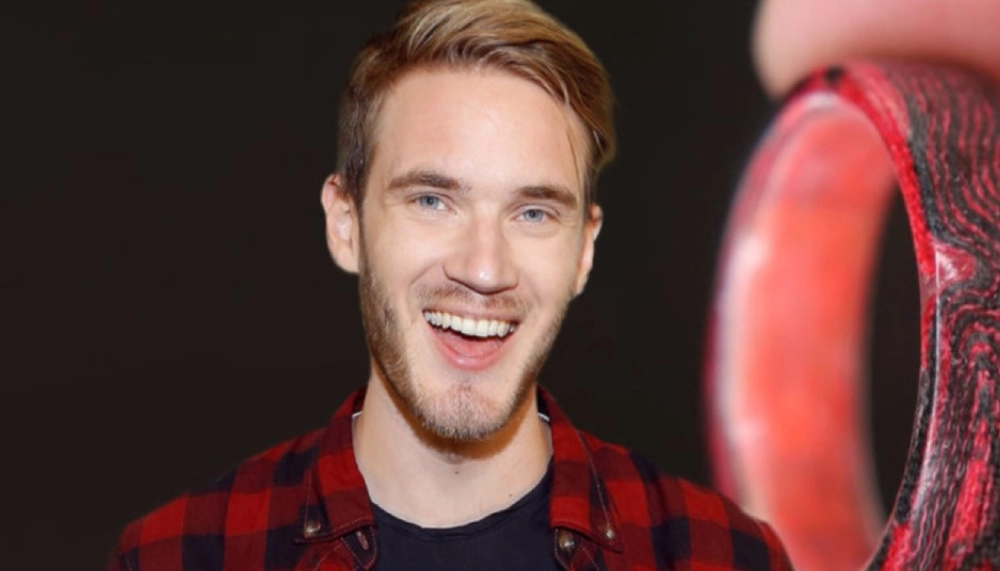
Felix Kjellberg earned more money in his bedroom than most Fortune 500 CEOs make in boardrooms. The Swedish YouTuber known as PewDiePie built a media empire that spans over a decade, transforming gaming commentary into serious wealth.
His estimated net worth sits between $40-45 million as of 2026, placing him among the highest-earning individual content creators in digital history — a position he has held longer than anyone else on the platform.
What is PewDiePie’s Net Worth?
Most financial analysts place PewDiePie’s net worth at approximately $40-45 million in 2026. CelebrityNetWorth estimates the figure at $40 million, while other financial tracking sources cite $45 million. The gap between these estimates reflects a broader challenge: creators rarely disclose their full financial picture publicly.
What is verifiable is the scale of his earnings over time. Since 2013, PewDiePie has generated over $73 million in pre-tax income from YouTube alone. Cumulative advertising revenue across his catalog of more than 4,500 videos — which have collectively amassed over 29 billion views — likely exceeds $100 million in gross earnings. After taxes, reinvestment, lifestyle costs, and over a decade of financial management, a net worth in the $40-45 million range represents the retained portion of that enormous revenue stream.
Felix himself has addressed the topic only once publicly, confirming in an interview that his actual net worth is “much much” higher than $20 million. That statement provides a floor — not a ceiling — and most credible estimates land well above it.
His wealth accumulation slowed noticeably after 2019, when he stepped back from daily uploads and relocated to Japan with his wife, Marzia. Despite uploading far less frequently, his established revenue streams continue generating substantial income from his subscriber base of over 111 million followers. His current annual earnings likely fall between $3-5 million — a significant decline from peak years, but entirely voluntary.
Felix Kjellberg (PewDiePie) Biography
Born Felix Arvid Ulf Kjellberg on October 24, 1989, in Gothenburg, Sweden, the future YouTube star grew up in a household that valued professional achievement. His father, Ulf Christian Kjellberg, is a corporate executive. His mother, Lotta Kristine Johanna, is an award-winning Chief Information Officer. And his older sister, Fanny, followed a more conventional career path. By most measures, Felix was expected to do the same.
He enrolled at Chalmers University of Technology to study Industrial Economics and Technology Management but found the coursework disengaging. He dropped out in 2011 — a decision that created friction with his parents, who reportedly withdrew financial support. Left to fund his own path, Felix took a job at a hot-dog stand while simultaneously selling photoshopped artwork and images online to scrape together enough money to buy a proper computer.
The YouTube journey began earlier than most people realize. Felix created his first channel, “Pewdie” — named after the sound he imagined a laser making — on December 19, 2006. He uploaded early Call of Duty clips and occasional vlogs, but the channel never gained serious traction. At some point, he lost access to the account entirely after forgetting the password. Rather than trying to recover it, he launched a fresh channel called PewDiePie on April 29, 2010.
On the new channel, he doubled down on horror game playthroughs and “Let’s Play” content. His exaggerated reactions to games like Amnesia: The The Dark Descent struck a nerve with viewers, and growth accelerated rapidly. By July 2012, he hit one million subscribers. By September, two million. In December 2011, with roughly 60,000 subscribers and growing ad revenue trickling in, Felix quit the hot-dog stand for good.
Most-Subscribed Individual’s Channel
In August 2013, PewDiePie surpassed Smosh to become the most-subscribed individual channel on YouTube — a title he held for years. The growth rate during this period was staggering: in 2013 alone, his channel grew from 3.5 million to 19 million subscribers, gaining new followers at a rate of roughly one per second throughout the entire year.
Felix first encountered Marzia Bisognin online in 2011 when she reached out to tell him she enjoyed his videos. What began as a digital friendship developed into a long-distance relationship, and eventually much more. Marzia built her own successful YouTube presence under the channel name CutiePieMarzia, accumulating around 7 million subscribers with content focused on fashion, beauty, and lifestyle before retiring from the platform in 2018. The couple married in August 2019.
Their move to Japan was not sudden. Felix and Marzia purchased a home there back in 2018, but actually relocating proved complicated. Japan’s immigration regulations — and then the COVID-19 border closures — stalled the process for years. They finally made the move in May 2022, with Felix qualifying for a five-year Business Manager visa by establishing a company in Japan — a bureaucratic step that very few foreign creators pursue. The couple now lives there with their two pugs, Edgar and Maya, and their growing family.
Historical Income & Net Worth Growth
PewDiePie’s earnings trajectory is one of the most dramatic in YouTube history. His rise from modest ad revenue to eight-figure annual income happened in barely two years.
| Year | Estimated Earnings | Key Context |
|---|---|---|
| 2012 | ~$140,000 | Channel gaining momentum, first million subscribers |
| 2013 | ~$12 million | Became most-subscribed channel; 1.3 billion views |
| 2014 | ~$14 million | Gained 14 million subscribers; 4.1 billion views |
| 2015 | ~$9 million | Slightly lower but still among top global earners |
| 2016 | ~$15 million | Peak earning year; diversified into books and games |
| 2017 | ~$12 million | Controversies impacted brand partnerships |
| 2018 | ~$15.5 million | Forbes ranked him #9 among highest-paid YouTube stars |
| 2019 | ~$13 million | Forbes ranked him #7; began reducing upload frequency |
| 2020–2025 | ~$3-5 million/year | Semi-retired; passive income and selective uploads |
From 2013 through 2019, PewDiePie was a fixture on Forbes’ annual highest-paid YouTubers list. During his peak years, he earned between $12 and $15.5 million annually — a range that placed him consistently in the top ten globally, often higher.
The 2017 dip deserves context. In February of that year, the Wall Street Journal published an investigation revealing anti-Semitic jokes and Nazi imagery in several of PewDiePie’s videos. The fallout was swift and financial: Disney, which owned his multi-channel network Maker Studios, severed ties immediately. YouTube cancelled his original series “Scare PewDiePie” and removed his channel from its preferred advertising program — the premium tier that guarantees higher ad rates. Multiple brand sponsors withdrew. Felix characterized the controversial segments as satire intended to expose what people will do for money, but the commercial damage was real and measurable.
Brand Partnerships
He rebuilt his brand partnerships relatively quickly, and by 2018 his income had recovered to its highest level. However, the controversies permanently narrowed the pool of mainstream advertisers willing to associate with his content. Brands that remained were predominantly niche — gaming peripherals, energy drinks, VPN services — rather than the broad consumer companies that typically pay premium sponsorship rates.
After 2019, the decline in earnings was strategic rather than involuntary. Felix shifted from daily uploads to a selective posting schedule, prioritizing content that genuinely interested him over algorithm-optimized production. The reduced output lowered his advertising revenue, but it also dramatically reduced his operating costs and preserved his mental well-being.
Main Income Sources
YouTube Ad Revenue
YouTube’s Partner Program remains the financial bedrock of PewDiePie’s wealth. With billions of lifetime views across his channel, the platform’s revenue-sharing model has generated tens of millions in cumulative earnings. Industry estimates suggest gaming-focused creators typically earn between $2 and $5 per 1,000 monetized views, though rates fluctuate based on audience geography, seasonality, and advertiser demand. His back catalog — thousands of videos uploaded over more than a decade — continues generating views and revenue independently of any new content. A video posted in 2012 can still attract hundreds of thousands of monthly views today, producing ongoing ad income with zero additional effort. This catalog functions less like traditional creator earnings and more like royalty income: the asset exists, and it pays out indefinitely.
Sponsored Content
Sponsored videos represent PewDiePie’s highest-paying content format on a per-video basis. Industry reports indicate he charges approximately $450,000 for a single dedicated sponsorship — a rate that reflects his massive reach and deeply engaged audience. However, Felix has become increasingly selective about which brands he promotes. At his peak, he accepted perhaps 10 to 20 sponsorship deals annually, generating $5-10 million beyond standard ad revenue.
Notable long-term partnerships included G FUEL, the gaming energy drink company, which maintained a multi-year deal reportedly worth seven figures annually before ending in 2022. Other recurring sponsors have included NordVPN, Lootcrate, and Jellysmack. Collectively, brand partnerships across his career have contributed well over $13 million in sponsorship income. Current deals are minimal and represent less than $1 million annually — another reflection of his reduced activity rather than diminished market value.
Merchandise & Brand Ownership
Merchandise has been a meaningful revenue stream, though its structure is more sophisticated than simple product sales. PewDiePie’s merchandise operation runs through Represent, a company in which Felix holds an ownership stake — not just a licensing arrangement. The iconic “Bro Fist” branding appeared across clothing, accessories, and novelty items, generating an estimated $3-5 million annually during peak years.
The Tsuki clothing line, developed jointly with Marzia, operates in a different market segment. Rather than mass-market fan merchandise, Tsuki targets minimalist, Japanese-inspired streetwear with a higher price point and more refined aesthetic. Both ventures illustrate a pattern: Felix has consistently preferred owning the infrastructure behind his brands rather than merely collecting endorsement fees.
Mobile Games
Two mobile game launches significantly expanded PewDiePie’s income beyond YouTube’s platform. “PewDiePie: Legend of the Brofist,” released in 2015, was a fully developed indie game that capitalized on his gaming audience’s loyalty. “PewDiePie’s Tuber Simulator,” launched in 2016, reached the number-one position on the App Store shortly after release. Both titles generated substantial revenue through downloads and in-app purchases, representing a rare example of a YouTuber successfully translating audience attention into standalone product sales.
Book Royalties
His 2015 publication, “This Book Loves You” — a satirical collection of parody motivational quotes published through Penguin Books and Dark Horse Comics — became a bestseller. While book income doesn’t approach his digital earnings, the publication represents durable intellectual property that continues producing royalties years after release. It also served as a brand-building exercise, proving PewDiePie’s appeal could extend beyond screen-based content.
Other Ventures
Felix has experimented with additional revenue channels over the years, including an early iPhone app developed during his Maker Studios partnership. More recently, he launched “PewDiePie Infinity” on Twitch in March 2023 — an innovative setup that broadcasts a continuous loop of his archived streams and videos. He has described it as an “infinite money glitch in real life”: the channel generates Twitch revenue from existing content without requiring any new production. It currently has approximately 1.5 million followers on the platform. Affiliate marketing deals, potential cryptocurrency investments, and real estate holdings round out a diversified, if private, financial portfolio.
Lifestyle
Despite a net worth that places him comfortably among the world’s wealthiest content creators, PewDiePie maintains spending habits that frequently surprise fans. He drives a Tesla rather than a collection of exotic supercars. His Japanese home is comfortable and well-appointed but far from the sprawling mansion that someone with his earnings might be expected to own. Online communities regularly note his minimalist approach to material possessions.
This frugality appears rooted in values rather than necessity. Felix has spoken about prioritizing experiences over acquisitions — a philosophy that directly influenced the couple’s decision to relocate to Japan for cultural immersion rather than financial optimization. Japan’s tax structure is not particularly advantageous for high-earning foreign residents, making it clear the move was driven by lifestyle preference rather than tax strategy.
Their move to Japan itself required significant planning and patience. The couple purchased their home in 2018 but didn’t officially relocate until 2022 due to immigration requirements and COVID-era border restrictions. Felix navigated the process by qualifying for a five-year Business Manager visa — a path that required opening a registered company in Japan. When they finally flew over, they chartered a private flight not for luxury, but because their pug Edgar exceeded commercial airline weight limits for pets.
This blend of pragmatism and comfort defines the Kjellberg financial approach. Their combined household net worth likely exceeds $50 million when accounting for Marzia’s independent ventures, including her pottery and home goods brand, Mai, which she operates from Japan. Rather than pursuing maximum growth, the couple has structured their finances around sustainability — an approach that some personal finance observers compare to the “barista FIRE” strategy, where accumulated assets generate enough passive income to fund a comfortable lifestyle with minimal active work.
Comparison to Other YouTubers
Raw net worth comparisons between PewDiePie and newer creators obscure more than they reveal.
| Creator | Est. Net Worth | Key Difference |
|---|---|---|
| PewDiePie | ~$40-45 million | Largely liquid assets; no employees; semi-retired |
| MrBeast | $500M–$1 billion | Illiquid business equity; 100+ employees; high burn rate |
| Markiplier | ~$35 million | Similar career length; more consistent upload schedule |
| Ninja | ~$25 million | Streaming-focused; shorter peak earning window |
MrBeast’s estimated wealth dwarfs PewDiePie’s on paper. But the comparison requires context. MrBeast’s net worth is predominantly tied up in business equity — his production company, Feastables, and other ventures — that depends on continued operational success. He employs over 100 people and faces constant pressure to outperform his own previous output. His wealth is impressive but illiquid and demanding.
PewDiePie’s $40-45 million, by contrast, is largely liquid. He has no employees, no production infrastructure to maintain, and no investor expectations to meet. His income comfortably exceeds his expenses without requiring daily effort. By quality-of-life metrics rather than balance-sheet rankings, his position may be more enviable than creators worth ten times as much.
Gaming Creators
Among gaming creators specifically, PewDiePie remains near the top of the wealth rankings. Markiplier’s $35 million and Ninja’s $25 million demonstrate the earning potential in gaming content, but neither matches the decade-plus duration of PewDiePie’s peak earning period. His longevity is the differentiator: he accumulated substantial wealth across many years rather than in a concentrated burst.
The broader comparison reveals something about how YouTube itself has changed. PewDiePie built his fortune during an era when individual personality could dominate the platform through sheer consistency and authenticity. Today’s landscape — shaped by algorithm changes, corporate channels like T-Series and Cocomelon, and the shift toward TV-screen viewing — makes it nearly impossible for a single creator to replicate that trajectory. The “Subscribe to PewDiePie” movement that erupted during his subscriber race against T-Series captured this transition perfectly: it was, at its core, a cultural debate about whether individual creators could still compete with corporate media entities on the platform they helped build.
What Drives Variation in Estimates
Net worth estimates for PewDiePie range from $40 million to as high as $90 million depending on the source. This variation isn’t sloppy reporting — it reflects genuine structural challenges in evaluating creator finances.
YouTube Revenue Complexity
YouTube’s advertising payouts depend on CPM (cost per thousand impressions) rates, which vary enormously based on content category, viewer demographics, and seasonal advertising budgets. Gaming content — PewDiePie’s primary category — traditionally earns lower CPMs ($2-5 per 1,000 views) compared to finance or business content ($15-30 per 1,000 views). However, PewDiePie’s audience skews toward English-speaking markets with higher advertiser demand, which partially offsets the gaming category disadvantage. Small differences in assumed CPM rates produce wildly different revenue estimates when multiplied across 29 billion views.
Sponsorship Opacity
Sponsorship contracts are private by nature. While industry insiders can estimate rate ranges based on audience size and engagement, the actual terms of any individual deal remain confidential. A single major partnership — or the termination of one — could shift annual earnings by millions without any public disclosure. PewDiePie’s shift from mainstream brand sponsors to niche gaming companies after 2017 represents exactly this kind of invisible financial impact.
Multi-Jurisdiction Tax Complexity
Felix has earned income across three different national tax regimes during his career: Sweden (early years), the United Kingdom (2013-2022), and Japan (2022-present). Each jurisdiction has different income tax rates, capital gains rules, and wealth reporting requirements. Swedish tax records were somewhat transparent before his international moves, but UK and Japanese financial disclosures are far more limited. This international complexity makes it nearly impossible for external analysts to calculate after-tax wealth accumulation with precision.
Investment and Spending Patterns
A creator earning $15 million annually at peak might have a current net worth anywhere from $20 million to $100 million depending on investment returns and personal spending. Felix’s apparent frugality suggests his savings rate has been high, which would push estimates upward. However, without knowledge of his investment allocation — stocks, bonds, real estate, or other assets — and their performance over time, analysts must make assumptions that introduce significant variance.
The $20 Million Floor
Felix’s own statement that his net worth is “much much” higher than $20 million provides the only first-person data point available. This anchors the lower end of estimates and suggests that figures below $30 million are likely inaccurate. Most credible sources cluster around $40-45 million, which aligns with a high savings rate applied to his documented peak earnings of $73 million pre-tax.
PewDiePie’s Age & Current Activity
At 35 years old, Felix Kjellberg represents a mature phase of digital stardom. Born in 1989, he belongs to the generation that grew up alongside YouTube itself — old enough to remember the platform’s early years, young enough to have built a career on it from scratch.
His current posting pattern reflects a semi-retired creator who has shifted from production to curation. Instead of the daily uploads that defined his peak era, he now posts weekly or bi-weekly, choosing topics based on genuine personal interest rather than trending potential. Recent content leans toward philosophy discussions, book reviews, cultural commentary drawn from his life in Japan, and occasional gaming sessions — a far cry from the high-energy horror reactions that made him famous.
This evolution is partly personal choice and partly a response to how the platform itself has changed. YouTube’s audience increasingly watches on television screens rather than phones, favoring longer, higher-production content over the rapid-fire daily vlogs that built PewDiePie’s empire. The algorithm now rewards consistency and production value in ways that benefit teams and companies over individual creators working from home. Felix’s decision to step back from the daily grind aligned with a platform shift that was already making that grind less effective.
The financial infrastructure supporting this lifestyle is largely passive. His back catalog of thousands of videos continues accumulating views and generating ad revenue. His merchandise operations run with minimal active involvement. The Twitch “Infinity” channel loops archived content around the clock. The result is a creator who has successfully transitioned from intensive daily production to a sustainable model where existing assets fund an ongoing income stream — requiring only occasional creative effort to maintain audience connection.
Legacy and Influence on the Creator Economy
PewDiePie’s impact on digital media extends well beyond his personal bank account. His career established several precedents that continue shaping how creators build businesses and negotiate with platforms.
He demonstrated that gaming commentary — once considered a niche hobby — could sustain a full-time career and eventually generate tens of millions in revenue. More importantly, he proved that audience loyalty could transcend content categories entirely. His transition from pure gaming videos to personality-driven commentary, vlogs, and cultural content showed that viewers were investing in the person, not just the game. Nearly every major creator today operates on this principle.
Subscriber Race against T-Series
The subscriber race against T-Series in 2018-2019 became a watershed moment for creator-platform dynamics. What started as a lighthearted competition evolved into a global cultural conversation about whether individual creators could maintain relevance against corporate media entities on the platforms they had helped popularize. The “Subscribe to PewDiePie” campaign that emerged was organic, massive, and ultimately bittersweet — it demonstrated the power of individual creator audiences while foreshadowing the structural advantages that larger organizations would increasingly enjoy.
His controversies also reshaped how the advertising industry evaluates creator partnerships. Before PewDiePie, most brands treated influencer risk similarly to traditional celebrity endorsement risk. His 2017 situation forced advertisers to develop new frameworks for assessing the unpredictability of personality-driven content creators. The brand safety protocols, vetting processes, and content guidelines that now govern influencer marketing deals were refined substantially in response to incidents involving PewDiePie and creators who followed him.
For younger creators, his career offers two competing models: the MrBeast approach of perpetual growth, scale, and business expansion, or the PewDiePie approach of building substantial wealth during peak years and then transitioning to a sustainable, lower-intensity lifestyle. Both are valid. But PewDiePie’s version is the one that prioritizes longevity over leaderboard position — and for most people building careers in an unpredictable industry, that trade-off may prove wiser.
Conclusion
PewDiePie’s journey from a Swedish hot-dog stand to a $40-45 million net worth is one of the defining success stories of the digital media era. His estimated fortune represents more than just accumulated earnings — it reflects deliberate choices about how to build wealth, when to stop chasing growth, and what financial security actually looks like for someone who achieved it before turning 30.
His estimated $40-45 million net worth places him among the most financially successful individual creators in YouTube history. But the number itself is less remarkable than what it enables: a comfortable life in Japan, creative freedom to post only when inspired, passive income from a catalog built over more than a decade, and the ability to step away from the spotlight entirely without financial consequence.
In an industry that increasingly rewards scale, corporate structure, and relentless output, PewDiePie carved out a different kind of victory. He built enough, then chose to enjoy it. For anyone studying how digital creators convert online attention into lasting financial security, his career remains the most instructive case study available — not because he earned the most, but because he figured out when earning more no longer mattered.