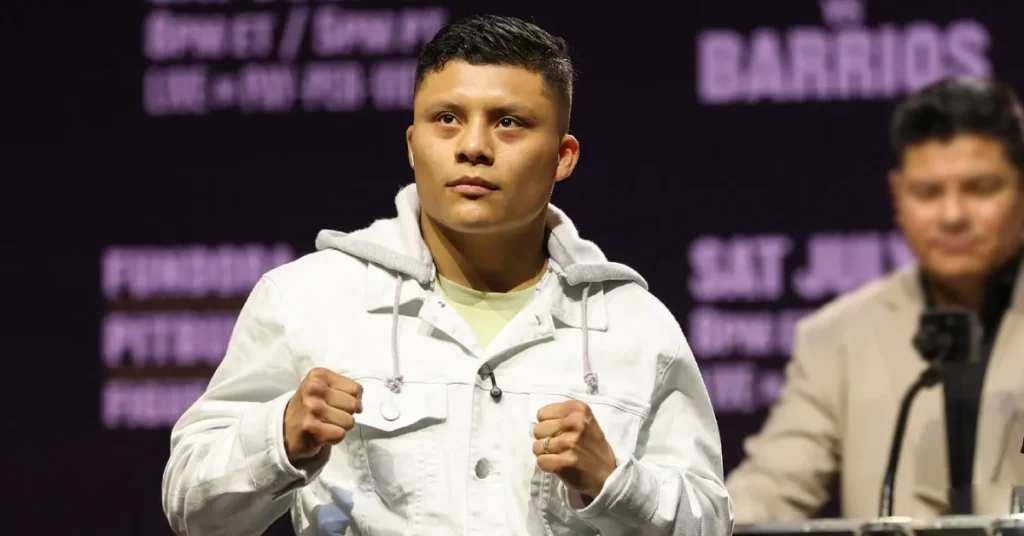
Isaac “Pitbull” Cruz’s net worth in 2026 is estimated to sit between $1 million and $3 million, assembled primarily through fight purses earned across his career in the lightweight and super lightweight divisions. Additional income flows through pay-per-view revenue shares, sponsorships, and an increasingly active merchandise operation. His unrelenting fighting style and standing as a former world champion continue to push his financial ceiling higher with every appearance.
The Mexico City native has spent the past five years transforming from a short-notice replacement into one of boxing’s most bankable attractions at 140 pounds. That climb—from a fighter nobody expected to last six rounds against Gervonta Davis to headlining pay-per-view events on Prime Video—tells the real story behind those millions.
What is Pitbull Cruz’s Net Worth 2026?
The $1–3 million range appears consistently across financial tracking sites and boxing publications. That spread makes sense once you understand how professional boxing compensates its athletes. Unlike salaried competitors in team sports, boxers negotiate individual fight contracts. Promoters rarely disclose exact purse figures publicly, and what actually reaches a fighter’s bank account depends on variables that shift with every event: ticket sales, pay-per-view buy rates, placement on the card, and the commercial appeal of the opponent across the ring.
Cruz’s financial trajectory pivoted sharply after December 2021. Brought in on two weeks’ notice as a replacement opponent for Gervonta Davis, he lost a competitive decision—but gained something far more valuable. That night at Staples Center proved he belonged on the sport’s biggest stages. Davis himself acknowledged it afterward, calling Cruz a warrior and declaring that a star had been born. From that point forward, Cruz’s purses climbed with each successive booking. Title fights and pay-per-view main-event slots command exponentially more than preliminary appearances, and Cruz graduated into that elite tier over the following years.
His capture of the WBA super lightweight championship in March 2024, followed by an active three-fight campaign in 2025 that included a WBC interim title bout, cemented his position. A fighter who once accepted whatever opportunity appeared now dictates the terms of his own contracts.
Who Is Isaac “Pitbull” Cruz?
Isaac Jonathan Cruz González was born on May 23, 1998, in Mexico City. At 28 years old, he occupies the prime athletic window of his career with a world-class résumé already behind him. The “Pitbull” nickname arrived early and never left—a direct translation of the suffocating pressure and aggression he brings to every exchange in the ring.
Boxing runs through the Cruz family bloodline. Both his father and grandfather competed professionally, and Cruz has described following their path as a matter of legacy rather than simple influence. “I’m very proud to be part of the Cruz dynasty, one of the best boxing families in Mexico,” he has said. That multi-generational foundation gave him technical grounding and a fighter’s mentality long before he ever signed a professional contract.
Physically, Cruz presents a compact puzzle for opponents. Standing 5 feet 4 inches tall with a reach of 63.5 inches, he fights from an orthodox stance and uses his shorter frame as a weapon rather than a liability. His low center of gravity generates torque on body shots that taller fighters simply cannot replicate from distance, while his compact build forces him into phone-booth range—exactly where he thrives. Opponents who underestimate that concentrated power tend to pay for the miscalculation quickly.
The Boxer: Career Snapshot
Cruz turned professional in 2015 at just 17 years old. His current record stands at 28 wins—including 18 by knockout—against 3 losses and 2 draws. Those numbers paint the portrait of a genuine power puncher who has also demonstrated the durability and adaptability to go the full distance when necessary.
His earliest professional setback came in February 2016 against Luis Miguel Montaño, who handed Cruz his first loss via unanimous decision. A draw against Jose Calyecac followed in September 2017. Those early results were formative—they introduced Cruz to the demands of composure and mid-fight adjustment, lessons that would prove invaluable once he stepped up to face world-class opposition.
After building his record to 19–1–1, Cruz announced himself on a major stage. On October 31, 2020, he stopped former world title contender Diego Magdaleno in just 53 seconds on the undercard of Gervonta Davis versus Léo Santa Cruz at the Alamodome. It was a statement that demanded attention.
The Gervonta Davis Breakthrough
The fight that changed Cruz’s career arrived on December 5, 2021. Originally, Rolando Romero had been scheduled to face Davis for the WBA lightweight title, but when Romero was pulled from the event, Cruz stepped in on two weeks’ notice. It was his first time headlining a pay-per-view card.
What followed was twelve rounds of intense, competitive action. Cruz marched forward relentlessly, absorbing everything Davis threw and firing back with enough volume and power to keep the champion uncomfortable throughout. Davis retained his title via unanimous decision—scorecards read 115–113, 115–113, and 116–112—but later revealed he had fractured his hand during the fight, an injury that underscored the physical toll Cruz inflicted. Cruz became only the second fighter in Davis’s professional career to hear the final bell. The performance earned him a reported purse in the range of $600,000, but more importantly, it established him as a pay-per-view-level attraction overnight.
“That fight provided me a new level of experience,” Cruz reflected. “It made me more mature. The crowd embraced me that night, and that was priceless.”
Climbing the Rankings
Cruz rebounded five months later with a statement victory. In April 2022, he knocked down former unified featherweight champion Yuriorkis Gamboa multiple times en route to a fifth-round technical knockout at AT&T Stadium in Arlington, Texas. The fight took place on the undercard of Errol Spence Jr. versus Yordenis Ugás, and Cruz’s dominant showing earned him the vacant WBO Inter-Continental lightweight title while signaling that the Davis loss had sharpened rather than diminished him.
“Gamboa didn’t crumble after the first time he fell,” Cruz later explained. “It was about breaking him mentally as well as physically. I learned the value of patience in that fight.”
September 2022 brought another emphatic performance at Crypto.com Arena in Los Angeles. Facing the southpaw Eduardo Ramirez in a WBC lightweight title eliminator, Cruz ended the fight in the second round with a devastating left hook–right cross combination, claiming the WBC Silver lightweight championship and positioning himself one step from a world title shot.
In July 2023, Cruz took on the undefeated Giovanni Cabrera in a WBC and WBA lightweight title eliminator at T-Mobile Arena in Las Vegas. The bout served as the co-main event for the historic Errol Spence–Terence Crawford undisputed welterweight clash. Cruz emerged with a hard-fought split decision victory, claiming the WBO Latino lightweight title and moving into the position he had spent years pursuing—a mandatory challenger for a world championship.
The Title Chapter: 2024
March 30, 2024 marked the culmination of Cruz’s long climb. On the inaugural PBC pay-per-view card distributed through Amazon Prime Video, he stopped Rolando “Rolly” Romero to claim the WBA super lightweight world championship. The victory was both a sporting and financial milestone—Cruz earned a reported guaranteed purse surpassing $650,000, with additional pay-per-view revenue upside attached to the landmark event. It was the kind of payday that validated years of grinding through undercards and accepting short-notice opportunities.
But the champion’s reign proved brief. On August 3, 2024, at BMO Stadium in Los Angeles, Cruz made his first title defense against Jose “Rayo” Valenzuela on the Terence Crawford–Israil Madrimov undercard. Valenzuela’s technical boxing and disciplined movement proved to be an effective counter to Cruz’s pressure, and the champion lost his belt by split decision. Reported earnings for the fight varied by source—estimates ranged from $425,000 to upward of $800,000 depending on whether pay-per-view revenue shares were included—but even in defeat, Cruz’s drawing power remained firmly intact.
The 2025 Comeback
Cruz wasted no time rebuilding. On February 1, 2025, he returned to the T-Mobile Arena in Las Vegas and outpointed the durable Angel Fierro over ten rounds, earning a unanimous decision on the David Benavidez–David Morrell undercard. Five months later, he followed with another ten-round unanimous decision victory over Omar Salcido, keeping himself active and visible during a critical period of his career.
The payoff for that activity arrived on December 6, 2025, when Cruz headlined a PBC pay-per-view on Prime Video against former world champion Lamont Roach Jr. at Frost Bank Center in San Antonio, Texas. The WBC interim super lightweight title was at stake, and Cruz earned a career-high guaranteed purse of $1 million for the assignment—a figure that reflected his transformation from short-notice substitute to pay-per-view headliner.
The fight itself was dramatic and contentious. Cruz scored a knockdown in the third round when a clean left hook sent Roach’s glove touching the canvas. But the momentum shifted midway through the bout. In the seventh round, the referee deducted a point from Cruz for repeated infractions—pushing Roach’s head down and using his own head in close quarters. Over twelve rounds, Roach’s counterpunching and lateral movement gradually neutralized Cruz’s forward pressure, and the technical fighter from Washington, D.C. outlanded Cruz over the course of the contest. The official result was a majority draw: one scorecard of 115–111 for Cruz was overruled by two scores of 113–113. Cruz retained his interim title but left San Antonio without the definitive victory he had sought.
Where His Money Comes From
Fight Purses
The guaranteed purse remains the foundation of any professional boxer’s income, and Cruz’s have grown substantially since his 2021 breakout. Reported earnings from his major bouts illustrate that upward momentum clearly:
- Gervonta Davis (December 2021): A reported base purse of approximately $300,000, supplemented by roughly 40 percent of pay-per-view revenue, bringing estimated total earnings to approximately $600,000 or more.
- Rolando Romero (March 2024): A guaranteed purse surpassing $650,000, with additional pay-per-view earnings tied to the inaugural PBC–Prime Video card.
- Jose Valenzuela (August 2024): Reported figures range from $425,000 to $800,000 depending on the source and whether PPV revenue shares are factored in.
- Lamont Roach Jr. (December 2025): A career-high guaranteed purse of $1 million, not including pay-per-view revenue.
These figures represent only the guaranteed portions. When pay-per-view buys exceed certain thresholds, fighters receive additional revenue that can significantly multiply their base compensation. Cruz’s position as a consistent headliner on PBC’s Prime Video pay-per-view platform places him in a strong negotiating posture for future events.
Pay-Per-View and Promotional Platform
Cruz competes under the Premier Boxing Champions (PBC) banner, the promotional outfit that controls his matchmaking, event placement, and pay-per-view distribution. PBC’s partnership with Amazon Prime Video has reshaped how boxing reaches its audience domestically and internationally, and Cruz has been a direct beneficiary. His March 2024 title victory over Romero was part of the very first PBC pay-per-view event on the platform. That visibility translates directly into higher purses and stronger leverage when negotiating future contracts.
Sponsorships and Brand Partnerships
Beyond the ring, Cruz generates income through endorsement arrangements, though specific contract details remain largely private. Reports have suggested a possible partnership with Under Armour, though this has not been officially confirmed by either party. Training gear companies, nutritional supplement brands, and regional businesses targeting the Mexican and Hispanic consumer market represent the most natural alignment for a fighter with Cruz’s demographic reach. At his current level, deals of this nature typically range from five-figure regional arrangements to six-figure national campaigns.
Merchandise and Trading Cards
An increasingly visible revenue stream is Cruz’s merchandise business, particularly his trading cards. Cruz actively promotes his cards through his Instagram account, directing followers to purchase through linked retailers. The collector market for his cards spans a wide range—standard releases are available for around $8, while premium autographed editions are listed at $1,250 or higher on resale platforms. That price spread signals genuine collector demand rather than casual novelty purchasing, which is an important distinction for long-term merchandise revenue potential.
Social Media
Cruz maintains an active presence on Instagram under the handle @isaacpitbullcruz, where he connects with fans between fights and uses the platform to promote merchandise and sponsor content. While social media income for professional boxers rarely rivals what fighters in team sports can command through digital channels, it provides supplemental revenue through ad partnerships and branded content while keeping his name visible during periods between scheduled bouts. YouTube content adds another layer of engagement, though specific revenue figures from either platform remain undisclosed.
2024–2025: Pivotal Seasons for Cruz’s Earnings
The stretch from March 2024 through December 2025 fundamentally reshaped Cruz’s financial standing. Winning a world title elevated his negotiating leverage. Losing it four months later tested his marketability—and proved it was durable. The three-fight 2025 campaign demonstrated that Cruz could remain a headlining draw regardless of whether a championship belt was around his waist.
Cruz’s decision to stay consistently active also matters strategically. Fighters who sit idle between marquee events risk fading from public consciousness. By competing three times across 2025, Cruz maintained his physical sharpness, kept himself in the news cycle, and gave his team continuous leverage at the negotiating table. Each bout built anticipation for the next, creating a self-reinforcing loop of visibility and earning potential.
The super lightweight division itself has been a commercially fertile landscape. With recognizable names and marketable styles populating the 140-pound ranks, the opportunities for lucrative pairings are abundant. Cruz’s reputation as a fighter who accepts any challenge—combined with the high-action entertainment his approach guarantees—makes him a perennial candidate for premium television slots and pay-per-view headlining positions.
Public Image and Social Reach
The “Pitbull” persona extends well beyond the ropes. Cruz’s aggressive, come-forward style has made him one of the most fan-friendly fighters in the sport. Casual viewers gravitate toward fighters who hunt for stoppages and throw punches in volume, and Cruz delivers on both counts regularly. His willingness to absorb punishment in order to inflict it creates dramatic, highlight-reel moments that circulate across social media platforms and sustain his name recognition between scheduled bouts.
That style carries particular resonance within the Mexican and Mexican-American boxing community. Mexico has produced generations of beloved fighters who embody the pressure-fighting tradition, and Cruz represents the latest link in that lineage. His cultural connection to these fanbases gives him built-in commercial value across both Mexico and the United States—markets that represent the two most critical territories in professional boxing. PBC has recognized this, officially designating him a “Mexican superstar” in promotional materials.
Cruz has also benefited from the support of respected voices within the sport. Boxing analyst Teddy Atlas scored Cruz’s majority draw against Roach in the Mexican fighter’s favor, lending third-party credibility to the argument that Cruz deserved the victory. When established analysts publicly back a fighter’s case, it reinforces his standing with fans and potential opponents alike—indirectly strengthening his position in future purse negotiations.
Multiple major boxing publications have ranked Cruz among the top fighters in his weight class throughout his career. That consistent recognition across different ranking systems speaks to his legitimacy as an elite competitor, not merely a fan favorite with an exciting style.
What the Numbers Don’t Show
Published net worth estimates paint an incomplete picture of a professional boxer’s financial reality. The headline figures—the $600,000 purses, the seven-figure guarantees—represent gross revenue before anyone else takes their cut.
Managers typically claim between 20 and 33 percent of a fighter’s purse before the athlete sees a single dollar. Trainers, sparring partners, cutmen, and other members of the fight-night team each receive their own percentages. Then come taxes, which can consume 40 percent or more depending on the jurisdiction where the fight takes place and the fighter’s country of residence.
Training camps themselves are expensive undertakings. Elite fighters routinely spend $50,000 or more preparing for a single major bout—covering sparring partners, nutritionists, strength and conditioning coaches, facility rentals, and specialized equipment. Medical examinations, insurance, and travel further erode the headline number.
These hidden expenses explain why fighters with impressive career earnings sometimes face financial difficulties after retirement. The guaranteed purse that generates headlines is only the starting point of the financial conversation. What remains after everyone takes their share—and after taxes are settled—is a fraction of the public figure. For Cruz, whose earning power continues to climb, managing that gap between gross income and net worth will prove just as important as winning his next fight.
Outlook: 2026 and Beyond
At 28 years old, Cruz occupies the core of his athletic prime. His body has absorbed punishment across nearly a decade of professional fighting, but his 2025 activity—three bouts across eleven months—suggests his durability and competitive drive remain fully intact. The question is no longer whether Cruz can compete at the championship level. It is whether he can convert his current position into a definitive title reign and the financial windfall that accompanies one.
Several paths to major paydays sit within reach. Cruz has publicly called for a rematch with Lamont Roach Jr., a fight that would carry genuine pay-per-view appeal given the controversy surrounding their majority draw and the fact that both fighters believe they won. He has also expressed interest in a second meeting with Gervonta Davis—a matchup that would likely generate the largest single purse of his career, given the commercial scale of Davis’s events and the narrative of unfinished business stretching back to their 2021 encounter.
The super lightweight division remains one of boxing’s deepest and most commercially viable weight classes. Cruz’s place within that landscape is secure: he is a proven draw, a former world champion, and a fighter whose approach virtually guarantees entertainment. As long as he remains active and healthy, the opportunities for career-defining paydays will continue to materialize.
Conclusion
Isaac “Pitbull” Cruz’s estimated $1–3 million net worth in 2026 reflects a career built on action, resilience, and a refusal to turn down any challenge. From his breakthrough performance against Gervonta Davis on two weeks’ notice to his rise through the super lightweight title picture, Cruz has consistently traded short-term risk for long-term earning potential. His purse trajectory—climbing from a reported $300,000 base against Davis to a guaranteed $1 million for the Roach bout—charts a fighter whose financial ceiling continues to rise alongside his in-ring résumé.
Whether a Roach rematch, a Davis sequel, or another marquee opportunity comes next, Cruz has positioned himself as a fighter the boxing world will continue to pay to watch. For the latest purse information and upcoming bout announcements, official PBC communications and verified boxing news outlets remain the most reliable sources.