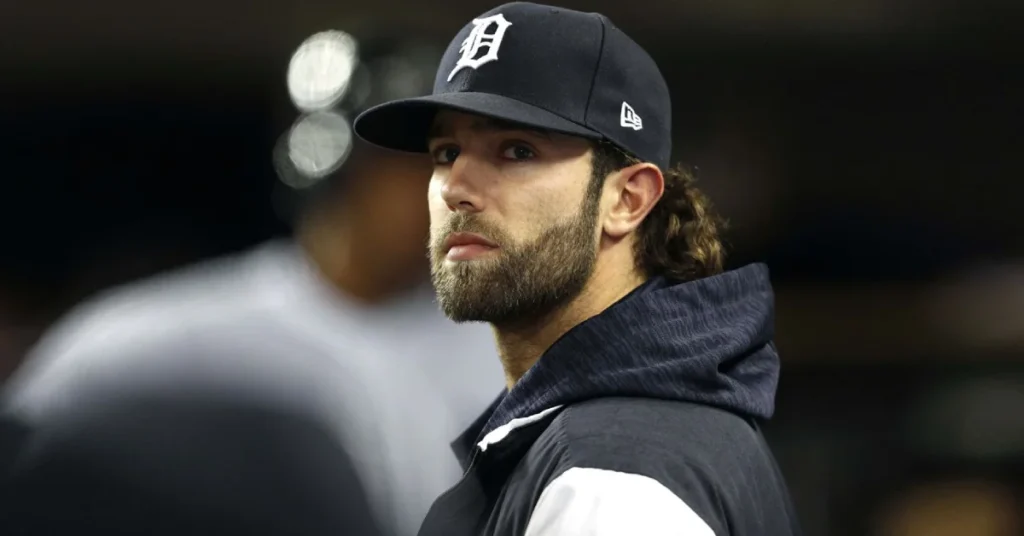
Daniel David Norris is known in baseball not for flashy headlines or dramatic controversies, but because he chose to live in a 1978 Volkswagen Westfalia van—even while earning millions as a professional pitcher.
His story isn’t just about baseball. It’s about a young man from Johnson City, Tennessee, who received a $2 million signing bonus as a teenager and chose to live on $800 a month. It’s about someone who looked at the professional athlete lifestyle and quietly said, “That’s not for me.” Here’s a closer look at his career journey, his estimated net worth, and the philosophy that shapes every financial decision he makes.
From a Bicycle Shop to the Big Leagues
Norris was born on April 25, 1993, in Johnson City, Tennessee—a town where his family had owned and operated a local bicycle shop for more than 80 years. That kind of generational small-business environment shaped how Norris thought about money and work long before he ever signed a professional contract.
His talent on the mound was evident early. As a left-handed pitcher with a powerful arm and natural movement, Norris caught the attention of major league scouts during his high school years. In 2011, the Toronto Blue Jays selected him in the second round of the MLB Draft, 74th overall, and offered him a $2 million signing bonus—life-changing money for an 18-year-old from a small Tennessee town.
Most teenagers with that kind of windfall would buy a sports car or put a down payment on a house. Norris bought a $10,000 Volkswagen Westfalia van and named it “Shaggy.” That single choice offered a preview of the nonconformist, minimalist lifestyle he would maintain throughout his entire career.
The Road to the Majors
Before Norris ever stepped onto a major league mound, he spent three years grinding through the Toronto Blue Jays’ minor league system—a journey that tested his arm and his patience.
He started with the Rookie-Advanced Bluefield Blue Jays and the Low-A Vancouver Canadians in 2012, posting a combined 2–4 record with an 8.44 ERA. The numbers weren’t pretty, but Norris was just 19 years old and still refining his craft. By 2013, pitching for the Single-A Lansing Lugnuts and High-A Dunedin Blue Jays, he showed real improvement—dropping his ERA to 3.97.
The 2014 season was his breakout. Through his first nine starts with Dunedin, Norris posted a 0.80 ERA and earned recognition as the Pipeline Pitching Prospect of the Month for May. After going 6–0 with a 1.22 ERA in 13 starts, he was promoted to the Double-A New Hampshire Fisher Cats, and later to the Triple-A Buffalo Bisons—where he struck out 10 in his debut and followed it up with 13 strikeouts in his next start, becoming the first pitcher in Bisons history to record back-to-back starts with at least 10 strikeouts.
For the full 2014 minor league season, Norris finished with a 12–2 record, a 2.53 ERA, and 163 strikeouts in 124⅔ innings. Baseball America named him to their First Team All-Stars, he appeared in the 2014 All-Star Futures Game, and by midseason he was ranked as the Blue Jays’ top prospect and the 25th-best prospect in all of baseball.
On September 5, 2014, Norris made his MLB debut against the Boston Red Sox—and struck out David Ortiz in his first major league appearance.
His MLB Career
Norris’s journey through the majors has been defined by talent, resilience, and constant movement between teams.
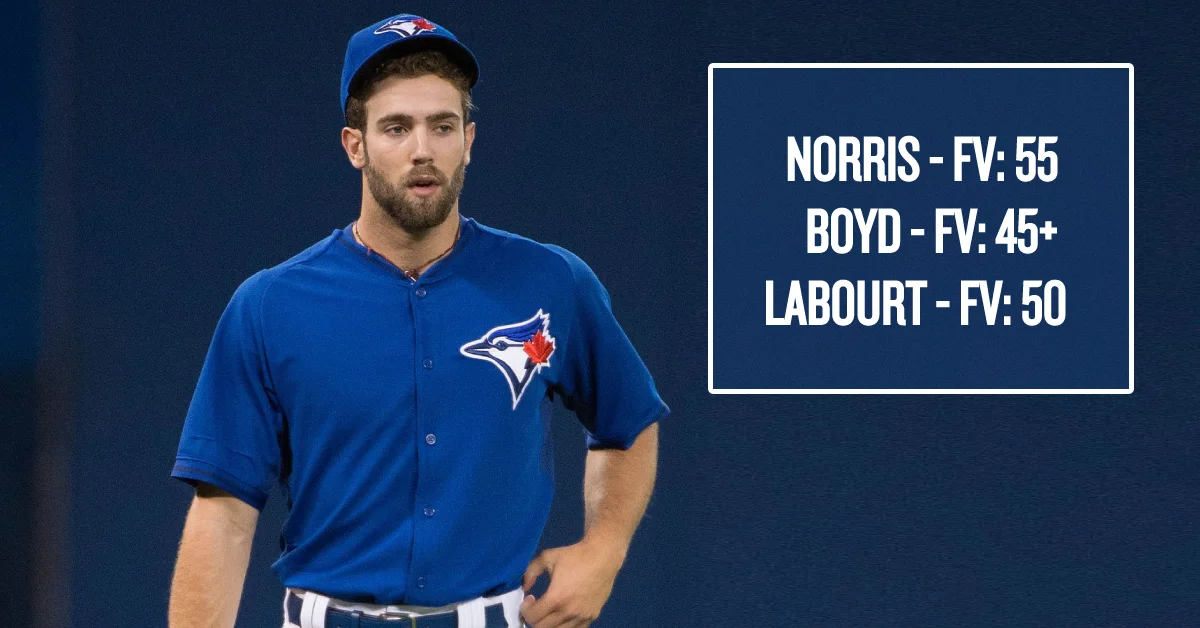
He began the 2015 season in Toronto’s starting rotation before being optioned to Triple-A. Then, on July 30, 2015, came the trade that changed his trajectory: Norris was sent to the Detroit Tigers along with Matt Boyd and Jairo Labourt in exchange for ace pitcher David Price.
His Tigers debut was impressive—7⅓ innings, five strikeouts, just one earned run in a 6–1 victory over the Baltimore Orioles. Then, on August 19, 2015, Norris did something no Tigers pitcher had done in a decade: he hit a home run in his first career plate appearance. It was the first time an American League pitcher had accomplished that since 2000, and the first home run by a Tigers pitcher since 2005.
Over the years, Norris has pitched for multiple organizations:
- Toronto Blue Jays (2014–2015)
- Detroit Tigers (2015–2021)
- Milwaukee Brewers (2021)
- Chicago Cubs (2022)
- Detroit Tigers (second stint, 2022)
- Cleveland Guardians (2023)
As a pitcher, Norris relies on a four-seam and two-seam fastball that averages around 92 miles per hour and tops out near 96. He complements those with a slider and a circle changeup that both sit around 85 mph, along with a curveball in the mid-70s. This five-pitch arsenal has allowed him to work both as a starter and out of the bullpen—a versatility that has kept him in the big leagues for over a decade.
Daniel Norris Net Worth (2026)
Daniel Norris has an estimated net worth of approximately $4 million. For a pitcher who has earned more than $12 million in career MLB earnings—a figure documented on Spotrac—that number might seem surprisingly low.
But that’s exactly the point. Norris’s net worth isn’t a reflection of underperformance or financial mismanagement. It’s the result of a deliberate, disciplined approach to money that runs counter to nearly everything in professional sports culture.
Where the rest of his earnings went becomes clear when you understand his lifestyle. Norris lives on roughly $800 a month—a fraction of what even his lowest annual salary provided. The bulk of his career earnings has gone into savings and conservative, long-term investments. Financial planners who work with professional athletes often stress this exact approach, but very few players actually practice it. Norris has lived it for over a decade.
Compared to teammates with similar career arcs, Norris’s financial position stands out not for its size but for its sustainability. While some retired athletes face financial hardship after their playing days end, Norris has built a foundation designed to last well beyond his time on the mound.
Career Earnings: Year by Year
Norris’s financial journey began with that $2 million signing bonus from the Toronto Blue Jays in 2011—money that arrived before he ever threw a professional pitch.
From there, his earnings evolved alongside his career. During his early years in the majors, Norris earned close to the league minimum—roughly $500,000 to $550,000 annually. As he established himself with the Detroit Tigers and entered salary arbitration, his pay increased meaningfully:
- 2019: $1.275 million (avoided arbitration with Detroit)
- 2020: $2,962,500 (avoided arbitration)
- 2021: $3.475 million (avoided arbitration—his highest single-season salary)
After his time with the Tigers, Norris signed one-year deals with the Milwaukee Brewers (2021), Chicago Cubs (2022), and eventually the Cleveland Guardians (2023) on minor league contracts—agreements that typically pay significantly less than arbitration-level salaries.
All told, Norris’s career MLB earnings total approximately $12 to $13 million over more than a decade in professional baseball. For context, that’s a fraction of what a single top-tier starting pitcher might earn in one season. But what makes Norris’s story remarkable isn’t the amount—it’s how little of it he’s spent. By living on roughly $10,000 a year, he’s preserved the vast majority of what he earned.
Why He Lives Simply
The story that made Norris famous beyond baseball wasn’t about a no-hitter or a Cy Young Award. It was about a van.
“Shaggy”—his 1978 Volkswagen Westfalia—became the most talked-about vehicle in Major League Baseball. During the off-season, Norris would live in the van, driving to surf spots and camping in natural areas. Even during spring training, he sometimes chose to sleep in Shaggy rather than rent an apartment or stay in a hotel.
It wasn’t a publicity stunt. Norris has described himself as a nonconformist and minimalist—someone who genuinely finds more peace in simplicity than in luxury. “I’m actually more comfortable being kind of poor,” he told ESPN. “Who am I to deserve that? What have I really done?”
His monthly budget of roughly $800 covers the essentials:
- Food—often simple, healthy meals he prepares himself
- Gas for the van
- Basic utilities and a phone plan
- Occasional gear for surfing and outdoor activities
What often gets lost in the van-life narrative is why Norris lives this way. His Christian faith is the foundation. “I know God has a plan no matter what,” Norris has said. “No longer do I live and die by my success. I live and die by my faith in God. Everything after that is just an added blessing.” For Norris, minimalism isn’t a financial strategy—it’s a spiritual one.
His approach hasn’t gone unnoticed by his teams. Tony LaCava, Toronto’s assistant general manager, once said of Norris: “He takes care of himself as well as anybody we’ve got. He’s in great shape. He competes on the mound. If that wasn’t the case, maybe we’d be more worried about some of the other stuff. But right now, the van and all that is secondary. He has great values, and they’re working for him.”
Life Beyond the Diamond
Norris’s off-field life reveals a person who is far more than a baseball player with a van.
One of his deepest passions is photography. During the 2015 season, he befriended professional photographer Ben Moon and even acquired Moon’s Canon EF 85mm portrait lens. That friendship grew into something meaningful: during the following off-season, the two took a road trip from Norris’s home state of Tennessee to Oregon, where Moon is based. Moon turned the footage into a short documentary film called Offseason—a quiet, visually rich portrait of a professional athlete choosing to slow down.
Surfing is another constant in Norris’s life. He’s drawn to the ocean and to outdoor spaces that offer the kind of peace a packed stadium never could. It was this shared love of nature that connected him with professional surfer Sage Erickson. The two began dating in 2021, and their relationship deepened around mutual appreciation for the outdoors and simplicity. They married in November 2023.
Even in marriage, Norris’s financial philosophy hasn’t shifted. Rather than buying a house or upgrading their lifestyle, the couple continues to prioritize experiences—surfing, hiking, and time in nature—over material accumulation.
Overcoming Adversity
Norris’s career hasn’t been a smooth ride. Beyond the normal wear and tear of professional baseball, he’s faced both a life-threatening diagnosis and a relentless string of physical setbacks that would have ended many careers.
In October 2015, Norris revealed through Instagram that he had been diagnosed with thyroid cancer. The diagnosis had actually come months earlier, in April, but with his doctor’s approval, he chose to continue pitching through the season before pursuing treatment. On October 29, 2015, he underwent surgery to remove a malignant growth from his thyroid—and was declared cancer-free.
The cancer scare was the most serious, but it was far from his only health challenge. Physical injuries followed Norris year after year:
- 2014: Arthroscopic surgery to remove bone spurs and loose bodies from his pitching elbow
- 2015: Right oblique strain that ended his season early
- 2016: Lower back issue in spring training, followed by a second oblique strain
- 2017: Hip and quadriceps problems throughout the season
- 2018: Groin injury that required surgery and sidelined him for 8 to 12 weeks
- 2020: Tested positive for COVID-19 before the shortened season
Four consecutive seasons on the disabled list—from 2015 through 2018—would have pushed many players out of the game entirely. Norris kept coming back. That resilience, combined with the perspective gained from his cancer diagnosis, deepened his belief that life is about more than what you own or how much you earn.
How He Thinks About Money
At the center of everything—his van, his budget, his career choices—is a philosophy that most professional athletes never embrace.
Rather than viewing his playing career as a window to accumulate as much as possible, Norris has always treated his earnings as a bridge to freedom. His approach to money is built on a few core principles:
- Spend on experiences, not possessions
- Value freedom over status symbols
- Keep needs minimal to maintain independence
- Find fulfillment in nature, faith, and relationships—not consumption
His story has resonated far beyond the baseball diamond, particularly among people interested in financial independence and minimalist living. In a sports culture that celebrates excess—mansions, luxury cars, designer wardrobes—Norris represents a radically different approach. He doesn’t just save money; he’s structured his entire life around not needing it.
Final Thoughts
Daniel Norris represents something increasingly rare in professional sports—an athlete who sees wealth as a tool for freedom rather than a scoreboard of success.
His estimated net worth of around $4 million might seem modest compared to the contracts of elite pitchers. But measured against his values, his lifestyle, and his long-term financial stability, it tells a different story. Norris didn’t just earn money in baseball—he kept it, invested it, and built a life where he’ll never be forced to chase a paycheck.
From the bicycle shop in Johnson City to the mound at Comerica Park, from “Shaggy” the van to the short film Offseason, from a cancer diagnosis to a cancer-free declaration—Norris’s journey is one of intentionality at every turn. He chose a $10,000 van over a mansion. He chose $800 a month over the lifestyle his salary could have funded. Then he chose faith and freedom over accumulation.
In a world obsessed with more, Daniel Norris made his mark by choosing less. And that might be his most impressive achievement—both on and off the baseball diamond.