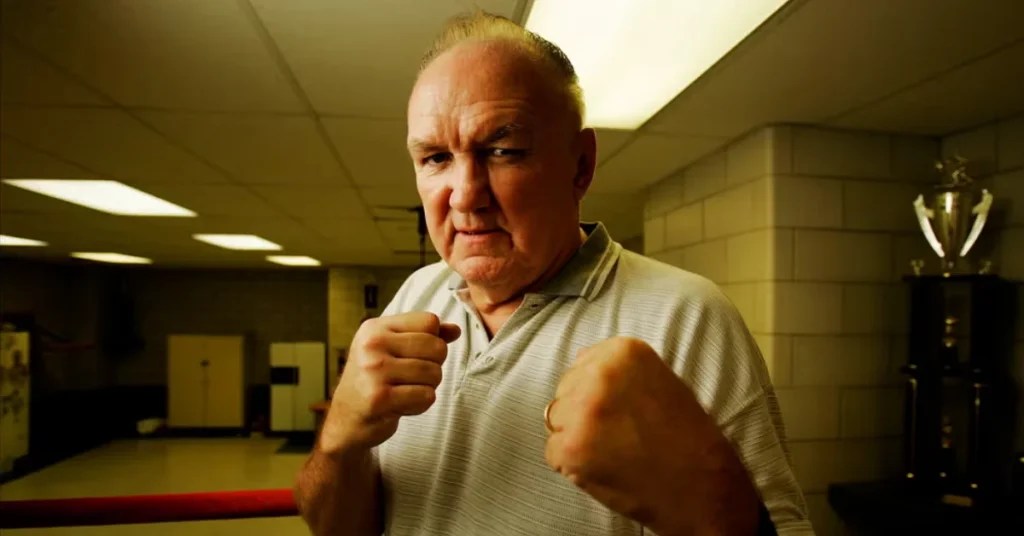
Chuck Wepner didn’t make the most money in boxing, but few fighters have lived a story as compelling as his. Known as “The Bayonne Bleeder” for his willingness to absorb punishment that would have stopped most men, Wepner went 15 rounds with Muhammad Ali and became the real-life inspiration behind the Rocky franchise. His financial journey — from modest fight purses to a quiet second career in liquor sales — is just as layered as his time in the ring.
Who is Chuck Wepner?
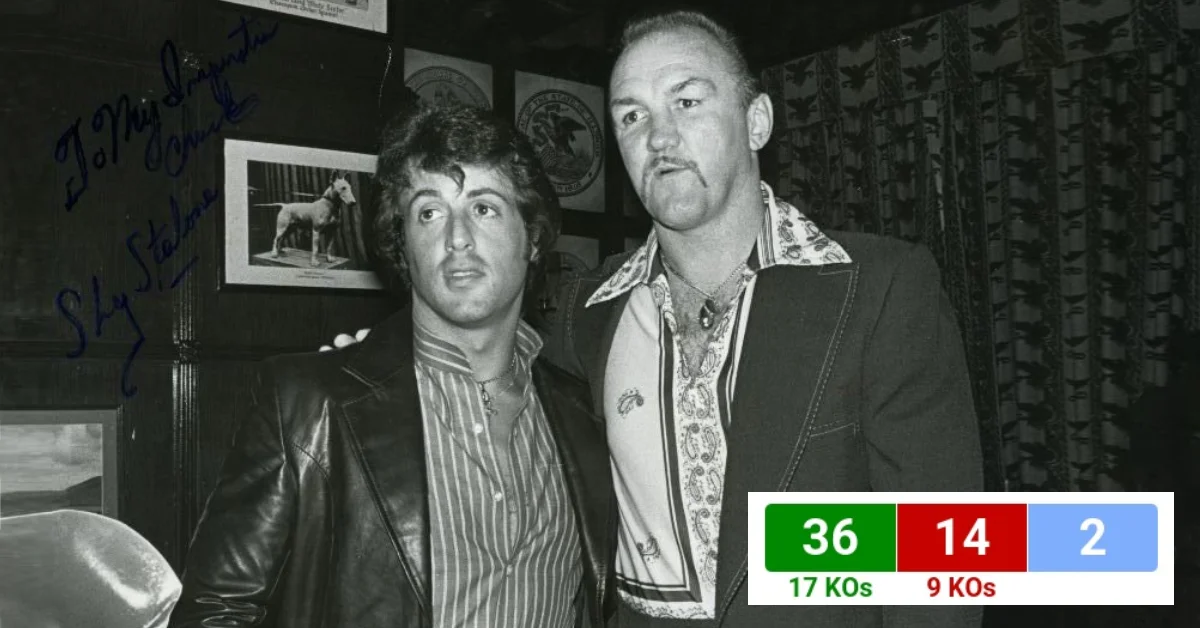
Chuck Wepner stands 6’5″ tall and finished his professional career with a record of 36 wins, 14 losses, and 2 draws across 52 fights. Born in New York City on February 26, 1939, he grew up in Bayonne, New Jersey — a tough waterfront town where, as he once put it, “you had to fight to survive.” Before turning professional, Wepner served in the U.S. Marine Corps, where he boxed on the military team and became a base champion. He was also recognized for heroism during his service — according to a 1975 Sports Illustrated profile, he once pulled three Marine pilots from blazing aircraft.
The nickname “Bayonne Bleeder” started as an insult, but Wepner owned it. He accumulated 328 stitches over the course of his career and had his nose broken nine times. “It never fazed me,” he told the BBC in a later interview. That toughness made him a fan favorite on the Northeast club boxing circuit through the mid-1960s and 1970s.
His most famous moment came in March 1975 when he fought Muhammad Ali for the heavyweight championship. Against 40-to-1 odds, Wepner knocked Ali down in the ninth round and survived until there were just 19 seconds left in the fight. That gutsy performance caught the attention of a young, struggling actor named Sylvester Stallone, who used it as the spark to write the screenplay for Rocky. The 1976 film won the Academy Award for Best Picture and launched a billion-dollar franchise — while Wepner returned to his regular life in New Jersey.
Chuck Wepner Net Worth
Most credible sources estimate Chuck Wepner’s 2025 net worth at around $400,000, though a few unverified estimates claim higher figures. The evidence strongly supports the lower number.
For a man whose story inspired a multi-billion-dollar movie franchise, $400,000 might seem surprisingly modest. But Wepner fought in an era when even championship purses were a fraction of what today’s boxers earn. His biggest payday — $100,000 for the Ali fight — was the most he ever made in the ring. Compare that to modern fighters like Floyd Mayweather, who earned over $100 million for a single bout.
After retiring from boxing in 1978, Wepner built a long second career in the liquor industry. He spent years working with Allied Beverage Group, New Jersey’s largest liquor distributor, and later joined Majestic Wines and Spirits in Carlstadt, New Jersey, where he works alongside his wife Linda as a spirits and wine specialist. This steady work — not boxing — is what has sustained his livelihood for decades.
When compared to other fighters from the 1960s and 1970s, many of whom ended up broke despite their fame, Wepner’s modest but stable financial position is a quiet success. He avoided bankruptcy, kept working, and built a foundation that has carried him into his 80s.
Early Life
Wepner was born on February 26, 1939, in New York City, of German, Ukrainian, and Polish descent. The family moved to Bayonne, New Jersey, when he was about a year old. He was raised by his mother and grandparents, living in a converted coal shed until the age of 13.
As a teenager, Wepner played basketball through the Police Athletic League and made the team at Bayonne High School, where his 6’5″ frame gave him an edge. At just 15, inspired by the war film Battle Cry, he persuaded his mother to sign his enlistment papers so he could join the U.S. Marine Corps. In the Marines, he discovered boxing, developed a reputation for absorbing punishment, and became a military champion.
After his service, Wepner worked as a bouncer and turned professional in 1964 at age 25. He had already built a strong amateur record, winning the New York Golden Gloves Novice Heavyweight Championship that same year and finishing his amateur career at a perfect 16-0. His early professional paydays were modest — sometimes just a few hundred dollars per fight — reflecting an era when only the biggest names in boxing made real money.
What Did Wepner Make in Boxing
Wepner’s biggest payday came from the 1975 Ali fight, where he earned $100,000 — substantial for him, but a fraction of Ali’s guaranteed $1.5 million purse for the same bout. That pay gap illustrates how even well-known challengers earned dramatically less than champions in that era.
Before the Ali fight, Wepner had already shared the ring with some of the sport’s most feared heavyweights. In 1969, he faced a young George Foreman at Madison Square Garden and lost by cut eye stoppage in the third round. A year later, he fought the legendary Sonny Liston in what would be Liston’s last professional bout. Wepner lost by TKO in nine rounds and needed 72 stitches in his face afterward. He later called Liston the hardest puncher he ever faced.
Despite those losses, Wepner kept winning enough to stay relevant. He beat former WBA heavyweight champion Ernie Terrell in 1973 and fought Joe Bugner in England that same year, though that bout ended in a cut eye stoppage loss. He also engaged in a three-fight rivalry with Randy Neumann over the New Jersey state heavyweight title, winning the championship and defending it at venues like Madison Square Garden.
Across his 52 professional bouts from 1964 to 1978, most of Wepner’s earnings were in the low thousands — enough to supplement his day job selling liquor, but not enough to build lasting wealth. Only the Ali fight changed that equation, and even then, not by much.
The Big Fight With Ali
On March 24, 1975, Chuck Wepner stepped into the ring at the Richfield Coliseum in Richfield, Ohio, to challenge Muhammad Ali for the WBA and WBC heavyweight titles. Carl Lombardo, a Cleveland-area businessman, had invested $1.3 million to finance the bout. Nobody gave Wepner much chance — the odds were 40-to-1 against him.
Wepner spent eight weeks training in the Catskill Mountains under trainer and cutman Al Braverman and manager Bill Prezant. Prezant reportedly told people the fight would surprise everyone. For the first time in his career, Wepner could train full-time — until then, his routine had been morning road work, daytime liquor sales, and evening sparring at Bayonne boxing clubs.
What happened that night became boxing lore. In the ninth round, Wepner scored a knockdown — though Ali insisted Wepner had stepped on his foot, and published photographs appeared to confirm it. Wepner turned to Braverman in his corner and said, “Al, start the car. We’re going to the bank. We are millionaires.” Braverman replied: “You better turn around. He’s getting up and he looks pissed off.”
Ali recovered and proceeded to dominate the remaining rounds, opening cuts above both of Wepner’s eyes and breaking his nose. With 19 seconds left in the 15th and final round, Ali knocked Wepner down. The referee counted to seven before stopping the fight by technical knockout.
Wepner’s $100,000 purse was the largest of his career — worth roughly $550,000 in today’s dollars. But the fight’s true value was the story it created: a blue-collar underdog from Bayonne who went the distance with the greatest heavyweight alive.
How Wepner Inspired Rocky
After watching Wepner survive 15 rounds with Ali, a struggling actor named Sylvester Stallone sat down and wrote the screenplay for Rocky in roughly three days. The film, released in 1976, became a massive hit — winning three Academy Awards including Best Picture and launching Stallone into stardom.
The parallels were unmistakable. Like Wepner, Rocky Balboa was a working-class underdog from a tough neighborhood who got a shot at the heavyweight champion. Like Wepner, he went 15 rounds. Unlike Wepner, the fictional Balboa actually “goes the distance” and nearly wins.
For years, Stallone publicly denied that Wepner had inspired the film. Wepner watched from the sidelines as the Rocky franchise generated billions in revenue while he returned to his day job selling liquor. The situation grew more painful in 1979 when Stallone considered casting Wepner as a sparring partner in Rocky II — but Wepner failed the audition due to personal struggles with substance abuse that had taken hold after his retirement from boxing.
In 2003, Wepner finally filed a lawsuit against Stallone for using his life story without compensation. The case was settled privately in 2006 for an undisclosed amount. While the settlement likely improved Wepner’s financial position, it came three decades after the original film — meaning he missed out on Rocky’s peak earning years.
Later Career and Final Fights
The Ali fight made Wepner famous, but his boxing career continued for three more years — with mixed results and some unusual detours.
In 1976, Wepner fought professional wrestler André the Giant in an exhibition that ended in a countout after André threw him out of the ring. The bout became a piece of pop culture trivia years later when Rocky III featured a strikingly similar scene — Rocky facing wrestler “Thunderlips,” played by Hulk Hogan, who also tosses him over the ropes.
A year later, Wepner traveled to Japan for a Wrestler vs. Boxer match against Antonio Inoki, losing in what was essentially a promotional spectacle. These crossover fights reflected Wepner’s post-Ali fame more than his boxing ability — he had become a curiosity, a name that drew crowds on reputation alone.
His final professional bout came against rising prospect Scott Frank for the New Jersey state heavyweight championship. Wepner lost the 12-round decision but proved durable one last time. He announced his retirement afterward, closing a 14-year career that had taken him from Bayonne gymnasiums to a world title fight and across the globe.
Money Problems Over the Years
After retiring from boxing in 1978, Wepner struggled to adjust to life outside the ring. He began abusing drugs — a downward spiral that had immediate professional consequences. In 1979, Sylvester Stallone wanted to cast Wepner as a sparring partner in Rocky II, but Wepner failed the audition because of his substance problems. It was a painful missed opportunity — a chance to profit from the franchise inspired by his own life, lost to the very struggles that retirement had brought.
The situation worsened dramatically in November 1985 when Wepner was arrested during an undercover police investigation after being found with four ounces of cocaine. Under a plea-bargain agreement reached in 1988, he was sentenced to ten years in prison. He served 17 months at Northern State Prison in Newark, New Jersey, followed by 20 months in the state’s intensive supervision program.
Wepner eventually rebuilt his life after prison, settling into steady work in the liquor industry. But legal trouble resurfaced in the early 2000s. In 2002, the FBI arrested him for his role in a counterfeit autograph scheme. Working with a man named John Olson, Wepner had been selling forged Muhammad Ali signatures on memorabilia — part of a broader FBI investigation into sports autograph fraud known as Operation Bullpen. Both men were arrested; Wepner received probation.
These episodes — the drug conviction, the autograph scheme, and the long-delayed Stallone lawsuit — paint a picture of a man who spent decades navigating financial instability. For a figure whose story generated billions in Hollywood revenue, Wepner’s post-boxing struggles highlight how little the sport and its cultural byproducts gave back to him.
Chuck Wepner’s Lifestyle Today
Now 86, Chuck Wepner lives a quiet life in Bayonne, New Jersey, with his wife Linda. He continues to work at Majestic Wines and Spirits in nearby Carlstadt, where he has spent years as a consumer spirits and wine expert — a long second career that has provided steady income far beyond what his boxing earnings ever delivered.
His $400,000 net worth supports a comfortable but modest lifestyle, particularly since he likely owns his home outright after decades of steady employment. It is not a lavish existence, but it reflects a financial stability that many former boxers from his era never achieved.
Wepner remains active in the boxing community. He makes regular ringside appearances at fight cards across New Jersey, signing autographs and posing for fans. In October 2012, he appeared ringside alongside former world light heavyweight champion Mike Rossman at a Tropicana Casino fight card in Atlantic City.
Perhaps the most visible mark of his legacy came in 2022, when a statue of Wepner was unveiled in Collins Park in Bayonne — a project several years in the making. The statue cements his place not only in boxing history but in the identity of the city where he grew up and still lives.
Recent interviews suggest Wepner remains sharp and energetic despite his age. His public life centers on family, work, and maintaining ties to the boxing world — not on displays of wealth.
How Wepner Compares to Other Boxers of His Era
When measured against other fighters from the 1960s and 1970s, Wepner’s $400,000 net worth tells a surprisingly positive story. Many boxers from that era — even champions — struggled financially after their careers ended. The sport simply did not generate the kind of money seen today.
Leon Spinks, who famously defeated Muhammad Ali in 1978, spent years in poverty and homelessness after his career collapsed. Thomas Hearns, a multi-division world champion who earned millions in the ring, later faced foreclosure on his home. Even Ali himself, despite career earnings that dwarfed Wepner’s, encountered serious financial difficulties due to mismanagement and extreme generosity.
Wepner never earned anywhere close to what those fighters made, yet he avoided the financial freefall that defined so many post-career trajectories. By maintaining steady employment, staying out of prolonged legal disputes, and living within his means, he built something that many of his more celebrated peers could not: a stable, self-sufficient life after boxing.
The Legacy of “The Real Rocky”
Chuck Wepner’s true wealth cannot be measured by his bank account. The Rocky franchise has generated well over $1 billion in box office revenue alone, with additional billions from merchandise, home video, and streaming — all rooted in the story of a Bayonne underdog who went 15 rounds with Ali.
The cultural recognition has grown steadily over time. ESPN’s 2011 documentary The Real Rocky — produced by Michael Tollin, who later produced the 2016 biopic — reintroduced Wepner’s story to a new generation. That same year, Liev Schreiber portrayed him in the film Chuck, which premiered at the Toronto International Film Festival. Zach McGowan took on the role again in the 2019 film The Brawler. Each project reinforced the same truth: Wepner’s underdog narrative resonates far beyond the boxing world.
In 2022, the Bayonne statue made that legacy permanent in physical form.
When asked about the years he spent watching Rocky generate wealth that never flowed back to him, Wepner has shown remarkable perspective. In interviews, he typically expresses gratitude for the recognition rather than bitterness about the money. That outlook may be his most enduring quality — a man who measures success by something other than dollars.
Conclusion
Chuck Wepner’s net worth of $400,000 tells only a fraction of his financial story. From a converted coal shed in Bayonne to the Richfield Coliseum in Ohio, from Marine barracks to a world title fight with Muhammad Ali, his journey is a quintessential American underdog tale.
He competed in an era when even championship bouts paid modest sums by modern standards. His biggest purse of $100,000 — earned for 15 brutal rounds with Ali — would not cover a single training camp for today’s elite heavyweights. Yet he managed to build a foundation of steady work and modest savings that has sustained him into his mid-80s.
The financial gap between Wepner’s story and the franchise it inspired remains striking. Rocky and its sequels generated billions; Wepner received a fraction of that through a late settlement and decades of liquor sales. His 17 months in prison and years of personal struggle are reminders that the “real Rocky” lived a harder life than the fictional one.
Still, few athletes in any sport can claim to have inspired an Academy Award-winning film franchise that continues to move audiences nearly 50 years later. Chuck Wepner may not rank among the richest boxers on paper, but as the Bayonne Bleeder himself might say — he survived. And in the world he came from, that counts for everything.