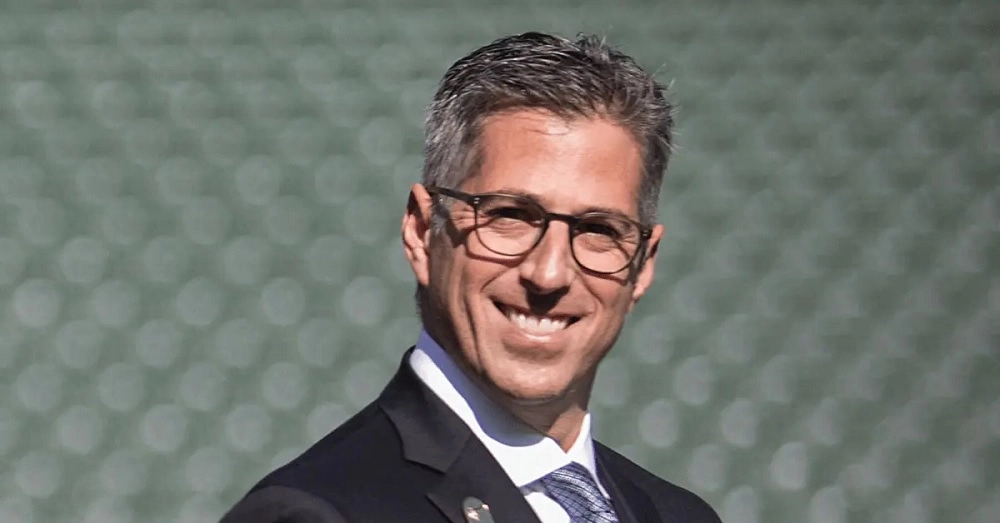
Casey Wasserman is one of the most influential figures operating at the intersection of sports, entertainment, and global event management. As the founder and CEO of Wasserman — a global sports marketing and talent management firm — and the chairman of the LA28 organizing committee for the 2028 Summer Olympics in Los Angeles, he has built a fortune estimated at $400 million. That figure, however, may only be the starting point. A potential sale of his namesake agency could push his personal wealth well beyond that number.
In this article
His story is not simply one of inherited privilege. While the Wasserman name carries significant weight in Hollywood, Casey has spent more than two decades building an enterprise that reaches far beyond his grandfather’s entertainment legacy.
From sports representation and music management to Olympic leadership and architecturally significant real estate, his career reflects a pattern of strategic expansion — though recent years have tested his empire in ways few could have predicted.
What is Casey Wasserman’s Net Worth?
Casey Wasserman’s net worth is estimated at approximately $400 million, according to Celebrity Net Worth. That valuation is largely tied to his ownership stake in Wasserman, the global agency he founded in 2002. The company — which spans sports, music, consulting, and event strategy — generates estimated annual earnings of around $200 million before interest, taxes, depreciation, and amortization.
The majority stake in the firm is held by Providence Equity Partners, while Casey retains a minority stake with significant influence, including the ability to veto a potential transaction. In early 2026, following a period of reputational pressure, the company began exploring a sale. Initial valuations placed the agency at approximately $3 billion, a figure that, depending on deal structure, could push Casey’s personal fortune to $800 million or beyond.
Outside the agency, his wealth is supported by a substantial real estate portfolio, his role as LA28 chairman, and his leadership of the Wasserman Foundation. Together, these positions place him at the center of some of the most valuable industries in the world — and some of their most consequential recent developments.
Early Life
Casey Wasserman was born in Los Angeles in 1974 into a family whose influence over the entertainment industry spanned generations. His grandfather, Lew Wasserman, ran MCA and is widely regarded as one of the most powerful executives in modern Hollywood history. Lew shaped the careers of figures like Alfred Hitchcock and Sidney Poitier, and his approach to dealmaking became the template for how the entertainment business is conducted at the highest level.
Growing up in that environment, Casey absorbed the mechanics of high-level negotiation and institutional leadership from an early age. He attended the University of California, Los Angeles, where he earned a degree in political science. While UCLA gave him academic grounding, his most formative education came from watching his grandfather operate at the highest levels of the industry.
Lew Wasserman passed away in 2002, the same year Casey founded his own agency. Though the family name opened doors, Casey was determined to build something distinct — an enterprise rooted not in legacy alone, but in the convergence of sports, media, and brand strategy that would define the entertainment economy for decades to come.
Career Highlights
Casey entered the sports business world in 1998, at the age of 24, when he purchased the Los Angeles Avengers of the Arena Football League. Though not a major professional franchise, the team gave him practical, hands-on experience in sponsorship sales, media partnerships, and league operations. The Avengers ultimately ceased operations in 2009, but the lessons from that first venture became the foundation for everything that followed.
In 2002, Casey founded Wasserman Media Group. The company began modestly, representing athletes in golf and action sports, but its approach was different from the start. Rather than focusing narrowly on contract negotiations, Wasserman emphasized long-term brand building and marketing strategy for its clients. This philosophy attracted both talent and capital, and the firm grew rapidly through acquisitions and expansion into basketball, baseball, soccer, and Olympic sports.
A transformative moment came in 2021, when Wasserman acquired Paradigm’s North American music business. Subsequent additions of agencies including AM Only, CODA, and Windish significantly expanded its live touring footprint. By the mid-2020s, the company represented major artists such as Coldplay, Ed Sheeran, Kendrick Lamar, Chappell Roan, Abby Wambach, and Dropkick Murphy, alongside its deep roster of elite athletes and global brand clients. The firm was named Booking Agency of the Year at the 2024 Pollstar Awards, reflecting its growing dominance in live entertainment.
Leadership Role
In parallel with his agency’s growth, Casey took on what may be his most visible leadership role. In 2015, he became chairman of the Los Angeles Olympic bid committee. When the city was awarded the 2028 Summer Games, he assumed leadership of the organizing committee, known as LA28. The Games carry an estimated budget of more than $7 billion and rely heavily on private sponsorship and existing infrastructure. Casey positioned LA28 as a financially disciplined model designed to limit taxpayer exposure while expanding youth sports initiatives across the region. He also advocated for greater flexibility around athlete expression under Rule 50 of the Olympic Charter.
Major Business Ventures
Wasserman’s strength lies in the diversity of its divisions. The agency operates across sports representation, music management, brand consulting, and event strategy — each division feeding the others in ways that compound the firm’s overall value. A sponsorship deal negotiated by the sports division can inform a brand campaign developed by the consulting team, while a music client’s touring schedule can be paired with corporate partnerships that generate revenue across the entire business.
This integrated model is what attracted Providence Equity Partners to take a majority position in the company years ago. It is also what made Wasserman a target for acquisition interest when the firm began exploring a potential sale in 2026.
The business evolved significantly through strategic acquisitions over the years. Each purchase — from boutique sports agencies to major music rosters — added both clients and institutional expertise. By the mid-2020s, the company managed the careers and commercial interests of thousands of athletes, musicians, and broadcasters worldwide, operating from offices across North America, Europe, and Asia.
Casey’s role as LA28 chairman also feeds into his agency’s broader influence. The position connects him with international sports federations, global corporate sponsors, and political leaders across multiple countries. While the roles are formally separate, the network effects are significant — and they have helped make Wasserman one of the most powerful independent agencies in the global entertainment landscape.
Recent Challenges and the Epstein Files
In January 2026, the U.S. Department of Justice released additional documents related to Jeffrey Epstein. Among them were previously undisclosed email exchanges from the early 2000s between Casey and Ghislaine Maxwell, who was later convicted of sex trafficking offenses connected to Epstein.
The emails, which contained flirtatious language, were more than two decades old — written well before Maxwell’s criminal conviction. Casey issued a public statement expressing deep regret for the correspondence. He stated that he had never had a personal or business relationship with Epstein, and acknowledged that he had flown on Epstein’s plane in 2002 as part of a humanitarian trip connected to the Clinton Foundation. He said he did not witness any inappropriate conduct during that trip.
Though no criminal allegations were made against him, the fallout was swift and significant. Several high-profile artists — including Chappell Roan, Beach Bunny, Wednesday, and Water From Your Eyes — departed the agency. Roan wrote publicly that she could not “passively stand by,” stating that artists deserve representation aligned with their values. The agency temporarily removed its online client roster as departures mounted.
Olympic Role
The controversy extended to his Olympic role as well. Los Angeles County Supervisor Janice Hahn and other local officials publicly called for his resignation as LA28 chairman. Internal discussions reportedly considered potential replacements, including former House Speaker Kevin McCarthy. The LA28 board ultimately engaged outside counsel to review Casey’s past interactions related to the files; the review concluded that his conduct did not extend beyond what had already been publicly documented, and he retained his position as chairman.
In March 2026, amid mounting reputational pressure, the company rebranded itself as “The Team” — a move widely interpreted as an effort to reset the firm’s public identity. Around the same time, Casey and his firm began exploring a potential sale of all or part of the business, marking one of the most significant strategic turning points in the company’s history.
The investment bank Moelis & Company was engaged to manage the process, which attracted interest from several major private equity firms, including Permira, New Mountain Capital, and TA Associates, as well as strategic buyers such as United Talent Agency and former Endeavor executive Patrick Whitesell. Initial valuations placed the company at approximately $3 billion, with reported annual earnings of around $200 million. The process remains in its early stages, with no guarantee that a transaction will ultimately be completed. Casey, as a minority stakeholder with veto power, retains significant control over any potential deal structure.
Investments and Assets
Casey’s real estate history reflects both his wealth and his appetite for architecturally significant properties.
His most notable transaction involved a custom-built mansion in Beverly Hills known as the Foothill Estate. Casey assembled the compound by combining multiple parcels of land, including property that had belonged to his grandparents — where Lew Wasserman once entertained the likes of Alfred Hitchcock and Sidney Poitier — and a lot once owned by Frank Sinatra. He hired architect Richard Meier to design an approximately 18,000-square-foot residence, completed in 2016, featuring an 85-foot infinity pool, a screening room, an art studio, staff quarters, and three acres of landscaped grounds. The property was listed in October 2018 for $125 million — a price that, had it held, would have made it the most expensive residential sale in Los Angeles history. After several price reductions, Casey sold the estate in June 2020 for $68 million to music executive David Geffen.
New Home Purchase
Two months later, in August 2020, Casey purchased a newly built home in the Bird Streets neighborhood of the Hollywood Hills for $23.6 million. Designed by XTEN Architects and inspired by Stanley Kubrick’s 2001: A Space Odyssey, the 11,179-square-foot property won the AIA Los Angeles Award for most influential architecture of 2020. Set on a promontory on one of the neighborhood’s most sought-after cul-de-sacs, the five-bedroom, seven-bathroom home features polished terrazzo floors, walls of glass that capture jetliner views of Los Angeles, a professional theater, a private dance studio, an infinity pool, and an eight-car subterranean showcase garage. The home’s Space Odyssey-inspired ceilings reportedly cost over $1 million, and the property includes radiant heated floors inside and out. Casey listed the property for $32.5 million before reducing the asking price to $24.995 million.
In addition to these holdings, he purchased another Beverly Hills home in August 2020 for $23 million. Together, these properties form a real estate portfolio that contributes meaningfully to his overall net worth — and reflects a pattern of acquiring architecturally distinctive homes in Los Angeles’ most exclusive neighborhoods.
Personal Life
Casey married Laura Ziffren in 1995. Laura comes from a family with deep roots in the entertainment industry — her father, Ken Ziffren, is a prominent entertainment attorney in Los Angeles. The couple had two children during their marriage of more than two decades.
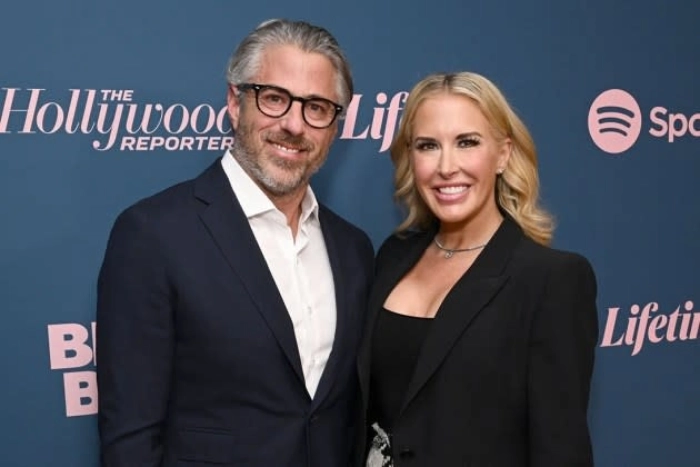
In recent years, following the end of his marriage, Casey has been publicly linked to Jenny Chandler. The couple has appeared together at major events, including the Met Gala, and has been photographed at various high-profile gatherings in Los Angeles and beyond.
Despite his wealth and public profile, those who know Casey describe him as relatively grounded. He maintains an active interest in sports beyond the business side — watching games as a fan and staying physically active. His personal connection to athletics gives him a perspective that resonates with the athletes and artists his agency represents.
His lifestyle reflects his success without excessive display. He invests heavily in real estate and business ventures rather than conspicuous consumption — an approach that mirrors his grandfather’s well-known philosophy of exercising influence without unnecessary showmanship. Lew Wasserman was legendary for wielding enormous power with minimal public visibility; Casey, by most accounts, follows a similar path.
Influence in Sports and Entertainment
Casey occupies a rare position bridging two of the world’s most lucrative industries. His agency represents thousands of clients across professional sports, live music, broadcasting, and brand marketing. This scope gives him considerable influence over how athletes negotiate contracts, how brands activate in the sports space, and how live entertainment is produced and marketed on a global scale.
His role as LA28 chairman amplifies that influence considerably. The 2028 Summer Olympics will be one of the most-watched sporting events of the decade, and Casey sits at the center of its planning — coordinating with international Olympic officials, corporate sponsors, city and state government, and global broadcast partners. The position places him in ongoing conversation with some of the most powerful figures in international sports governance and business.
The Wasserman name continues to carry weight in Hollywood as well. While Casey’s career has focused primarily on sports and live entertainment rather than traditional film and television, his family legacy gives him access to the entertainment industry’s most established networks. He uses these connections strategically — bridging deals between sports clients and entertainment brands in ways few other agency heads can replicate.
His influence extends into political and civic circles in Los Angeles. He has maintained relationships with elected officials and civic leaders across the city — relationships that proved both valuable and complicated during the LA28 controversy. Whether navigating Olympic policy, managing agency growth, or responding to public crises, Casey’s network remains one of his most significant professional assets — one that does not appear on any balance sheet but shapes nearly every aspect of his business life.
Philanthropy and Community Impact
The Wasserman Foundation, which Casey leads as president and CEO, is central to his family’s legacy of giving. Originally established by his grandparents, the foundation supports causes spanning education, arts and culture, health research, and social justice.
Among its beneficiaries are some of Los Angeles’ most prominent institutions. The foundation has funded the Motion Picture & Television Fund, which supports entertainment industry workers in need; the Los Angeles County Museum of Art, where the Wasserman family has been a longtime patron; and the Challenged Athletes Foundation, which provides opportunities for athletes with physical disabilities. Casey has also been involved with the California Institute of the Arts, continuing his family’s deep investment in creative education.
His philanthropic work extends beyond financial contributions. Casey takes an active role in shaping the strategic direction of the organizations he supports, serving on boards and providing institutional guidance drawn from his decades of experience in business leadership.
During the COVID-19 pandemic, the Wasserman Foundation directed additional resources toward food security, housing assistance, and healthcare access for communities hit hardest by the crisis — a response that reflected both urgency and the foundation’s longstanding focus on Los Angeles.
The foundation’s geographic concentration remains intentional. Casey believes his most meaningful impact can be made close to home, in the communities where he lives and works. That approach builds long-term goodwill while reinforcing the civic infrastructure that supports his broader business interests as well — a dynamic his grandfather understood well and practiced throughout his own career.
Conclusion
Casey Wasserman has built a $400 million fortune through more than two decades of strategic growth across sports, entertainment, and real estate. From the Arena Football League to the helm of a global agency and the chairmanship of the 2028 Summer Olympics in Los Angeles, his career reflects a consistent pattern of identifying opportunity at the intersection of media, athletics, and brand strategy.
The road has not been without serious challenges. The 2026 Epstein files controversy tested both his reputation and his business empire, triggering high-profile client departures, a company rebrand, and early-stage discussions around a potential agency sale at a valuation of approximately $3 billion. Whether that sale proceeds — and at what price — will likely define the next chapter of his financial story.
Yet the foundation of his wealth remains substantial. Wasserman continues to represent some of the biggest names in sports and music worldwide. The LA28 Olympics remain on track for 2028. And his real estate holdings, philanthropic leadership, and deep networks across entertainment, politics, and global sports ensure that Casey Wasserman’s influence will extend well beyond any single controversy or transaction.
His grandfather built Hollywood’s power structure. Casey has spent his career building one of his own — in a different arena, on a larger stage, and with stakes that continue to grow.