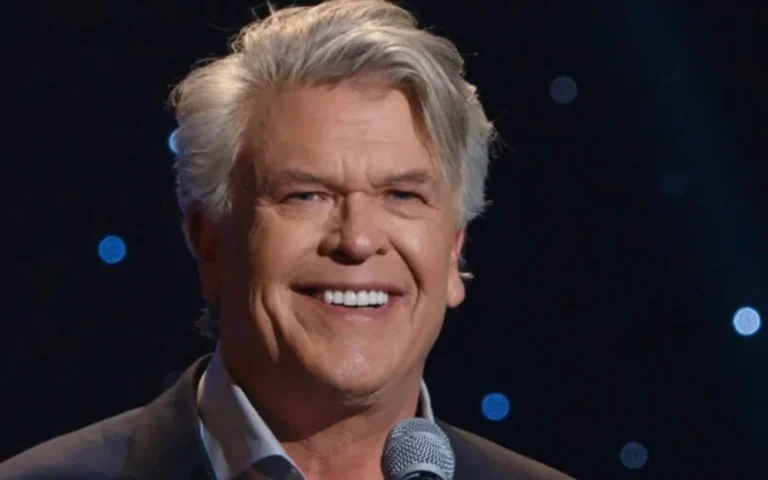
John Donahoe’s net worth falls somewhere between $115 million and $400 million, depending on which stock holdings, past compensation, and private investments you count. He built this fortune over four decades of leadership at some of the most recognized names in American business — Bain & Company, eBay, ServiceNow, and Nike.
In this article
Donahoe stepped down as Nike’s CEO in October 2024, ending a tenure shaped by digital transformation, pandemic disruption, and eventually, slowing sales momentum. Yet the wealth he accumulated across his career tells a steadier story — one of upward movement at every stop along the way.
What is John Donahoe’s Net Worth?
Arriving at a precise number for Donahoe’s net worth is difficult because the majority of it sits in stock holdings that shift with market prices. What’s verifiable: his disclosed holdings across eBay, ServiceNow, PayPal, and Nike total over $113 million based on SEC insider trading filings.
That figure represents only what he still owns today — not the shares he has sold over the years or the cash compensation he has drawn from each company.
| Company | Role | Approximate Shares | Estimated Value |
|---|---|---|---|
| eBay | Former CEO & President | ~457,000 | ~$51 million |
| ServiceNow | Former CEO, Current Director | ~409,000 | ~$48 million |
| Nike | Former CEO & President | ~241,000 | ~$10 million |
| PayPal Holdings | Director | ~68,000 | ~$4 million |
Estimates based on SEC insider trading filings and publicly tracked corporate stock data. Actual values fluctuate with share prices.
The gap between $113 million in visible holdings and the higher estimates — $300 to $400 million — comes from stock Donahoe sold over the years, accumulated cash compensation, signing and retention bonuses, and private investments that don’t appear in public filings. His roughly five-year tenure at Nike alone brought in over $104 million in total reported pay and benefits, a large portion of which was granted as stock awards.
Early Life and Education
Donahoe grew up in a middle-class household in the American Midwest. He earned his undergraduate degree from Dartmouth College, then completed an MBA at Stanford Graduate School of Business — credentials that opened the door to elite management consulting and, eventually, the C-suite.
His education at Stanford sharpened the analytical and strategic thinking that would define his career. Rather than heading into finance or entrepreneurship — the typical paths for top MBA graduates at the time — Donahoe chose consulting, a decision that gave him exposure to hundreds of businesses across industries before he ever ran one himself.
Career Path
Bain & Company (1982–2005)
Donahoe spent more than two decades at Bain & Company, rising from associate to worldwide managing director — the firm’s top leadership role — in 1999. Running a global consulting firm meant overseeing operations across dozens of countries, managing large teams, and advising Fortune 500 executives on their toughest strategic problems.
This experience built the operational and analytical foundation that would carry Donahoe through his next three CEO roles. It also gave him a deep network of business relationships that would prove valuable throughout his career.
eBay (2005–2015)
Donahoe joined eBay’s board in 2005 and became CEO and president in 2008. He inherited a company searching for its identity after the initial e-commerce boom had faded. During his seven years at the helm, eBay’s annual revenue roughly doubled, and Donahoe pushed the company toward mobile commerce and structured product listings — positioning it for the smartphone-driven shopping shift still in its early stages.
This was also his first major wealth-building phase. Stock grants and option exercises from his eBay tenure still anchor a significant portion of his net worth, with his remaining eBay holdings currently valued at approximately $51 million.
ServiceNow (2017–2019)
After a period of board service and advisory work, Donahoe took the CEO role at ServiceNow in 2017. The cloud computing company, focused on enterprise workflow automation, was growing fast but had room to scale. Under his leadership, ServiceNow’s market capitalization grew past $50 billion, driven by expanding enterprise adoption and strong revenue growth.
His ServiceNow stock — roughly 409,000 shares — is now worth approximately $48 million. Donahoe transitioned out of the CEO role in 2019 but remained on the board of directors, a position he still holds.
Nike (2020–2024)
Donahoe’s connection to Nike started well before the CEO appointment. He had served on Nike’s board of directors since 2014, giving him six years of familiarity with the company’s strategy, brand positioning, and internal operations before stepping into the top job on January 13, 2020.
His arrival coincided with overlapping crises. Nike was still managing the fallout from workplace culture scandals that surfaced in 2018, including allegations of gender discrimination and a hostile “boys’ club” environment in parts of the organization. The company had also fallen well short of an ambitious $50 billion revenue target announced in 2015. Then the COVID-19 pandemic shut down retail across the globe within weeks of Donahoe starting.
Donahoe responded by accelerating Nike’s pivot to direct-to-consumer sales, a strategy he formalized under the name “Consumer Direct Acceleration.” The plan prioritized digital channels, Nike-owned stores, and premium consumer experiences over wholesale partnerships.
By key financial measures, the approach delivered results early. Nike’s share price climbed roughly 46% during Donahoe’s tenure, creating over $75 billion in shareholder value. The company’s quarterly dividend increased about 25% to $0.30 per share.
But the tenure also drew criticism. A significant number of long-time Nike veterans departed during his watch, and some observers felt Donahoe — frequently characterized as a “technocrat” rather than a product-obsessed “sneaker guy” — pulled the company’s culture away from its sports-driven roots. Sales growth eventually stalled, and Nike’s stock came under pressure in 2023 and 2024 as competitors like On Running and Hoka gained market share.
Donahoe stepped down in October 2024, replaced by Elliott Hill, a Nike veteran who had spent decades in various leadership roles at the company.
Income and Compensation
Donahoe’s pay at each company followed the standard structure for large-cap public company CEOs: a relatively modest base salary, annual performance bonuses, and — the real driver of wealth — equity compensation in the form of restricted stock units and option grants.
His 2023 Nike compensation totaled approximately $32.8 million, with the vast majority coming from stock awards and incentive-based pay rather than cash salary. Over his full CEO tenure, he collected over $104 million in total reported compensation.
These figures come with an important caveat. The compensation reported in annual proxy statements reflects the estimated value of stock awards at the time of grant, not the cash an executive actually receives. Donahoe’s realized gains — what he pocketed after selling shares — may be higher or lower depending on Nike’s stock price at the time of sale. This distinction matters when comparing reported compensation to actual wealth accumulation.
Investment Portfolio
Donahoe’s holdings span at least five publicly traded companies. Beyond the major positions in eBay, ServiceNow, Nike, and PayPal, he also holds shares in Aurora Innovation, a company developing autonomous vehicle technology.
SEC records show that 2015 was a particularly active year for Donahoe’s trading activity, with 38 transactions recorded. That concentration of activity coincided with his departure from eBay and suggests a deliberate effort to rebalance his portfolio during a career transition.
Spreading holdings across multiple companies and industries — from e-commerce to cloud software to sportswear to fintech — is a textbook risk management strategy for executives whose wealth is largely tied to equity compensation. It protects against any single stock’s decline wiping out a disproportionate share of overall net worth.
Board Memberships
Donahoe currently serves as a director at ServiceNow and PayPal Holdings, roles that come with their own mix of cash retainers and stock grants. His prior board seat at Nike — held from 2014 through his CEO appointment in 2020 — provided both compensation and the insider perspective that led to his selection as CEO.
He has also been a member of the Board of Trustees at Dartmouth College, connecting back to his undergraduate roots and reflecting a continued engagement with higher education and institutional governance.
Philanthropy and Personal Life
Donahoe and his wife, Eileen Donahoe, have made significant charitable contributions over the years. The couple is listed among the founding donors of the Obama Foundation, contributing between $1 million and $5 million toward the development of the Obama Presidential Center in Chicago and the Foundation’s broader leadership programs.
Eileen Donahoe has built her own accomplished career in human rights and technology policy. Together, the couple keeps a relatively low public profile compared to executives of similar wealth — no mega-yachts or viral social media presence, just steady philanthropic engagement and board-level involvement in institutions they care about.
Conclusion
John Donahoe’s net worth — estimated between $115 million and $400 million — is the product of a career spent leading major companies through periods of growth and disruption. From his start at Bain & Company through CEO roles at eBay, ServiceNow, and Nike, each position added to both his reputation and his financial portfolio through stock-heavy compensation packages.
The main drivers behind that wealth: consistent advancement into increasingly high-paying roles, equity compensation at companies that generally grew during his tenures, disciplined diversification across multiple holdings, and a career that kept him in demand for over four decades. His story demonstrates that in modern corporate America, the most significant executive fortunes often come not from founding companies but from running them well — and being paid in stock to do so.
For business professionals looking to understand how executive wealth gets built, Donahoe’s career offers a clear case study in the mechanics of equity compensation, portfolio diversification, and the compounding effect of sustained corporate leadership.