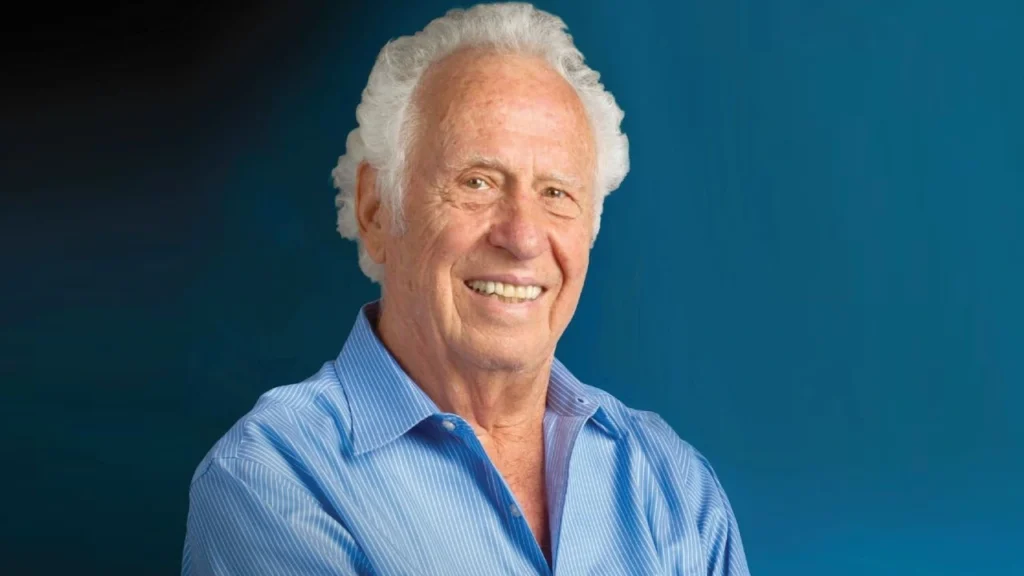
Jake Jabs, the 95-year-old founder and CEO of American Furniture Warehouse (AFW), holds an estimated net worth ranging between $1 billion and $4 billion depending on the source, making him one of the wealthiest self-made furniture retailers in American history. The wide range reflects the inherent difficulty of valuing a privately held company that does not disclose financials, but the core of his wealth traces back to a single bold bet in 1975: purchasing the liquidated assets of a bankrupt Colorado furniture store for $80,000.
Born in 1930 on the rural outskirts of Lodge Grass, Montana, Jabs grew up in circumstances that offered no hint of the empire to come. He transformed that initial investment into a retail operation spanning three states with annual revenues in the hundreds of millions, anchored by a business philosophy that prizes cash ownership, direct sourcing, and genuine customer value over aggressive selling. Fifty years after opening his first store, he still runs the company day to day.
Early Life and Family Heritage
Jake Jabs — whose given name is indeed Jake, not a shortened form of Jacob — was one of nine children raised in a household shaped by displacement and resilience. His mother was of Volga German descent, and his father was Vistula German, both belonging to ethnic German communities that had lived for generations along the Russia-Poland border before fleeing Soviet Russia. His father had been drafted into the Russian Army during the Polish–Soviet War after Russian forces invaded the family farm. Following the conflict, he emigrated to Brazil, spent two years working as a carpenter, and eventually joined relatives in Detroit, Michigan. It was there he met Jake’s mother through family connections; the couple later moved to Montana, where she had been living.
The family settled on a farm near Lodge Grass and survived by sharecropping sugar beets. The household was deeply impoverished. There was no electricity, no running water, and no indoor plumbing. Yet Jabs’ father, who had received only a second-grade education, made it a personal mission to impress upon his children the importance of learning. Despite the family’s hardship, he played the violin and prioritized acquiring musical instruments for his children, recognizing their developmental value even when money was scarce. Jake took up both the banjo and the guitar, skills that would later open unexpected doors.
That emphasis on education produced remarkable results. Five of the nine Jabs children went on to earn college degrees, a testament to the culture of ambition their parents built from almost nothing.
Education and Military Service
From Hardin High School to Montana State College
Jabs attended Hardin High School, graduating in 1948. He enrolled at Montana State College, now Montana State University, where he joined the Reserve Officers’ Training Corps with the original goal of becoming a high school teacher. College life also reflected his Montana upbringing: he participated in the marching band and competed on the school’s rodeo team. He graduated in 1952 with a Bachelor of Science in Vocational Agriculture.
The ROTC commitment carried an obligation that would redirect his path entirely. Rather than stepping into a classroom, Jabs entered active military service after graduation.
Korean War and the Education of a Future Entrepreneur
Jabs served as a second lieutenant in the United States Air Force during the Korean War, fulfilling his ROTC duty over a two-year enlistment. He was stationed at bases across various parts of Europe and later assigned to an American Post Office in French Morocco as a security courier. That overseas assignment exposed him to more than a dozen countries and, more significantly, to contrasting systems of governance and economic organization. The experience deepened his conviction in the power of free enterprise, a philosophy that would become the backbone of every business decision he later made.
Decades after his service, Montana State University recognized his contributions by awarding him an honorary doctorate in 2012, cementing a relationship with his alma mater that continues through major philanthropic investments.
The Music Years: Where Business Instincts Took Shape
Nashville and the Marty Robbins Chapter
After completing his military obligation, Jabs relocated to Nashville, Tennessee, with serious ambitions of building a music career. He found work playing lead guitar for country artist Marty Robbins, a notable position that placed him inside professional music circles at a high level. But Jabs eventually came to a frank self-assessment: his vocal abilities were not strong enough to sustain a lasting career as a performer, and he decided to redirect his energy toward business.
Montana Music and the First Entrepreneurial Lessons
Returning to Bozeman, Montana, Jabs became a co-partner in a music store called Montana Music, where he continued teaching guitar lessons to customers alongside the retail operation. Over time, he bought out his partner and became the sole owner. He then expanded the store’s product mix by adding televisions and stereos, testing what would sell beyond musical instruments.
That practical experiment changed his trajectory. After noticing that furniture generated faster sales than anything else in the store, Jabs purchased a truckload of discount furniture and offered it to his existing customer base. The response was immediate and enthusiastic.
The music business also taught Jabs enduring principles he would carry into every venture that followed: live within your means, pay cash for inventory, maintain strong credit, and never let personal preference override what customers are telling you they want to buy. He expanded into additional music stores, but when a new location in Billings triggered what he described as a “rude awakening” in cutthroat price competition, he lost interest in the industry entirely and sold every store. The experience, however, had given him something far more valuable than revenue: a working understanding of retail economics.
The Road to American Furniture Warehouse
Mediterranean Galleries and an Instructive Setback
Before AFW existed, Jabs tested the furniture market through a different venture. In 1968, he purchased a failing high-end furniture store in Denver, Colorado, and a struggling furniture factory in Bridger, Montana, known as Lazy Bones. He renamed the retail locations Mediterranean Galleries and the factory the Yellowstone Manufacturing Company. The Galleries expanded across Colorado with locations in Colorado Springs and Pueblo, as well as a store in Billings, Montana.
The Mediterranean furniture trend, however, proved short-lived. By 1974, declining consumer interest forced Jabs to close and liquidate all the stores. The Bridger factory continued operating under different management and was eventually renamed Loren Mitchell in 1992; Jabs sold it in 2004. While the Galleries ended in disappointment, the experience gave Jabs something competitors could not easily replicate: deep operational knowledge of furniture sourcing, manufacturing logistics, and retail merchandising at scale.
The $80,000 Deal That Created a Billionaire
In 1974, the same year Jabs liquidated his galleries, another Colorado institution met a far more dramatic end. The American Furniture Company, a Denver fixture that had operated continuously since 1898, suddenly shuttered after its parent company failed to meet lease obligations and faced an involuntary bankruptcy petition. The Denver store and warehouse contained assets valued at more than $1.5 million, including inventory, forklifts, trucks, and equipment.
Jabs saw what others missed: an extraordinary opportunity disguised as a liquidation. In 1975, he invested every dollar he had — $80,000 — to acquire those remaining assets. As he later reflected:
“I figured I made a million bucks that day.”
He founded the American Furniture Warehouse Company and reopened the store at 58th Avenue and Bannock in Denver the following June, immediately becoming the owner of the largest single furniture store in Colorado. That moment, half a century ago, laid the foundation for everything that followed.
The AFW Business Model: Why It Outperforms
Direct Import and Full Vertical Integration
American Furniture Warehouse operates on a direct-import model that systematically removes the intermediaries who traditionally inflate retail furniture prices. Jabs purchases large volumes directly from manufacturers around the world, paying in cash and negotiating volume discounts that competitors relying on distributors simply cannot match.
One operational detail captures the philosophy clearly: AFW never returns damaged goods to manufacturers. Instead, the company repairs items in-house and distributes them through a fleet of over 800 company-owned delivery vehicles, including tractor-trailers, box trucks, and customer rental trucks. Vertical integration extends to real estate. Jabs owns the physical properties beneath his stores rather than leasing them, a strategy that eliminates a major recurring expense while building equity in commercial properties across Colorado, Arizona, and Texas.
The combined effect is a pricing structure that typically runs 20 to 30 percent below traditional furniture retail, a gap that has proven nearly impossible for competitors to close because few can replicate the full stack of cost advantages AFW has assembled over five decades.
A Different Philosophy of Selling
The in-store experience at AFW reflects Jabs’ broader convictions about how commerce should function. The company does not use high-pressure sales tactics. Salespeople carry no quotas and face no requirement to upsell extended warranties or furniture care products. Customers are encouraged to browse at their own pace and select pieces they genuinely want, rather than being guided toward higher-margin alternatives.
This no-pressure environment was a deliberate departure from industry norms that had long relied on aggressive commission-driven selling. The approach generated strong word-of-mouth referrals and a loyal base of repeat customers, which Jabs considers the most valuable marketing channel any business can build. The goal, as he describes it, is to earn customers who return voluntarily and recommend the store to others, not to maximize the value of a single transaction through pressure.
Marketing That Became a Cultural Phenomenon
AFW’s television commercials rank among the most recognized advertisements in Colorado history. For years, Jabs appeared on screen alongside exotic animals, most memorably tigers and lions, creating an instantly recognizable brand personality that no competitor has been able to replicate. The concept originated unexpectedly when a supplier connected to animal trainers arranged for a baby tiger to visit the AFW office; the overwhelming reaction from staff convinced Jabs of the marketing potential.
By starring in the commercials himself rather than hiring actors or expensive agencies, Jabs kept advertising costs remarkably low while maximizing brand visibility. The savings flowed directly into inventory, real estate, and expansion. Today, bins filled with stuffed tiger toys sit throughout AFW showrooms as a nostalgic callback to those iconic ads.
Net Worth Breakdown: Tracing the Billions
Estimating Jake Jabs’ net worth is an exercise in educated approximation. American Furniture Warehouse is privately held and discloses no financial data, which means published figures vary significantly depending on methodology and source. The widely cited range spans from approximately $1 billion to $4 billion, with the divergence largely driven by how analysts value AFW’s real estate holdings, accumulated inventory, and brand equity.
Is Jake Jabs a billionaire?
By any credible estimate, Jake Jabs is unquestionably a billionaire. Whether his total wealth sits closer to $1 billion or approaches $4 billion, the distinction is academic in practical terms — his fortune places him firmly among the wealthiest individuals in Colorado and among the richest self-made figures in the entire American furniture industry.
The principal components of his wealth include:
- American Furniture Warehouse Equity — As founder and majority owner, Jabs controls a company that has grown from a single Denver location to between 16 and 18 stores across three states, generating hundreds of millions in annual revenue. This equity stake represents the largest single component of his net worth.
- Commercial Real Estate — By owning the properties beneath his stores rather than leasing, Jabs has accumulated substantial real estate assets that appreciate independently of furniture sales, particularly in high-growth Colorado Front Range markets.
- Diversified Investments — Specific holdings remain private, but reports suggest positions across multiple asset classes that have contributed to wealth growth alongside AFW’s organic performance.
- Inventory and Equipment — AFW maintains a massive furniture inventory purchased outright with cash, complemented by over 800 delivery vehicles, large-scale warehouses, and in-house repair facilities, all held on the company’s balance sheet.
- Brand Value — Five decades of consistent brand building, anchored by Jabs’ personal involvement and the iconic advertising campaigns, represent significant intangible value that does not appear on any balance sheet.
A single definitive number matters less than understanding the structural advantages that produced it: owning instead of leasing, purchasing inventory with cash instead of financing, and building brand recognition through personality and genuine value rather than outsized advertising budgets.
Philanthropy: Over $35 Million and Counting
Transformative Gifts to Education
Jabs’ most visible philanthropic legacy centers on higher education. His largest single gift — $25 million to Montana State University in 2011 — established the Jake Jabs College of Business and Entrepreneurship and Jabs Hall, the biggest individual donation in the institution’s history. A year earlier, he contributed $3 million to create the Jake Jabs Center for Entrepreneurship for the New West at MSU. Between 2013 and 2018, he pledged more than $12 million to the University of Colorado Denver to fund the Jake Jabs Center for Entrepreneurship, the largest individual donation ever made by an entrepreneur to a CU Denver Business School department.
That center has since helped launch multiple Colorado businesses and has awarded over $280,000 in scholarships to more than 500 students. Beyond financial contributions, Jabs regularly lectures at high schools and universities, sharing the business principles he developed across half a century in retail with aspiring entrepreneurs.
Community, Healthcare, and Veteran Support
Jabs’ giving extends well beyond university campuses. He serves as National Vice-President of the Muscular Dystrophy Association and actively supports Easter Seals, Children’s Hospital, the Susan G. Komen Race for the Cure, and the American Heart Association. He directed $2 million toward establishing a Project C.U.R.E. warehouse in Centennial, Colorado.
His connection to military communities runs deep. AFW and its employees collectively donate more than $2 million annually to local charities, and the company has been a key sponsor of events benefiting the Tragedy Assistance Program for Survivors, which supports families who have lost loved ones in military service.
AFW also operates a distinctive customer-driven giving initiative: purchasers of mattresses can designate 2 percent of the sale price to their preferred school, channeling everyday retail spending directly into local education fundraising.
In recognition of this sustained generosity, Jabs was named a recipient of the 2026 Volunteers of America Good Samaritan Award, which honors individuals who demonstrate exceptional compassion and commitment to serving others. He accepted the award on June 7, 2026, at the Volunteers of America National Conference in Denver.
Awards and Recognition
Jake Jabs’ career has earned him honors across business, community service, philanthropy, and veteran advocacy:
- Colorado Business Hall of Fame — Inducted in recognition of his transformative impact on the state’s retail landscape.
- American Heritage Award — Presented by the Anti-Defamation League in 2012.
- Honorary Doctorate — Conferred by Montana State University in 2012.
- Volunteers of America Good Samaritan Award — 2026 honoree.
- Number One Veteran-Owned Business in Colorado — Designated by the Denver Business Journal, recognizing AFW as the state’s leading veteran-founded enterprise.
- Colorado Easter Seals Champion Award — For sustained community engagement.
- American Red Cross Community Heroism Award — For humanitarian contributions.
- American Legion Community Service Award — For dedication to veteran and community causes.
Current Status and Legacy
At 95, Jake Jabs remains actively involved in American Furniture Warehouse as President and CEO, a tenure that has now reached half a century. He continues to travel internationally to source furniture, makes buying decisions, and participates in company promotions. His longevity in business has weathered multiple recessions, and each economic downturn reinforced his conviction that cash-rich, value-driven retail does not merely survive tough times — it emerges stronger from them.
Jabs lives in Denver, Colorado, where he has maintained his primary residence since relocating from Montana in 1968 to pursue his furniture business ambitions. He is married to Rene Green, and they have a daughter, Terri Jabs Kurth, who has grown up watching her father build AFW from a single warehouse location into one of the largest privately held furniture retailers in the western United States. While Terri has largely stayed out of the public spotlight, her connection to the family business and the Jabs name naturally positions her as a figure of interest regarding the company’s long-term future and succession planning.
Love of Music
Jabs maintains his lifelong love of music, often picking up a guitar to play his favorite song, “Take Me Home, Country Roads” by John Denver. He performs annually at the Palisade Peach Festival and occasionally at AFW events, keeping alive the passion that first carried him from a Montana ranch to a Nashville stage.
He is also the author of two books: his autobiography An American Tiger (2000) and Thriving in Tough Times (2011), both available through AFW locations and the company’s website. His written works and public lectures center on what he calls the basic American philosophy of hard work, long hours, self-confidence, the courage to take risks, and the desire to deliver genuine value to every customer.
The institutions bearing his name continue to extend his influence beyond the retail floor. The Jake Jabs College of Business and Entrepreneurship at Montana State University and the Jake Jabs Center for Entrepreneurship at CU Denver serve as launchpads for the next generation of business builders, carrying forward the principles that shaped one of the most improbable success stories in American retail history.
Conclusion
Jake Jabs’ financial legacy rests on a handful of principles executed with uncommon discipline over five decades:
- Acquire distressed assets at the right moment. Jabs founded AFW during the 1975 recession and consistently found his best deals when economic pressure forced others to liquidate.
- Own what others lease. Real estate ownership, in-house repairs, and a company-managed delivery fleet eliminate recurring costs that erode competitors’ margins.
- Pay cash and avoid debt. A cash-first inventory model preserves flexibility during downturns and strengthens negotiating position with global suppliers.
- Let customers sell for you. Honest pricing, no-pressure sales, and consistent service produce organic referrals that outperform any advertising campaign.
- Diversify beyond the core business. Real estate and investment holdings have cushioned and expanded Jabs’ wealth independently of furniture sales cycles.
- Invest in people and communities. Over $35 million in educational philanthropy has created opportunities for thousands of students while reinforcing the values that built AFW from nothing.
From a family of nine on a Montana farm without electricity or plumbing to one of America’s wealthiest furniture retailers, Jake Jabs’ story is not simply about accumulating wealth. It is about building something durable through discipline, customer respect, and a willingness to act on opportunity when others see only risk. Fifty years after that $80,000 purchase, American Furniture Warehouse remains a privately held, founder-led business still operating under the same core principles.