
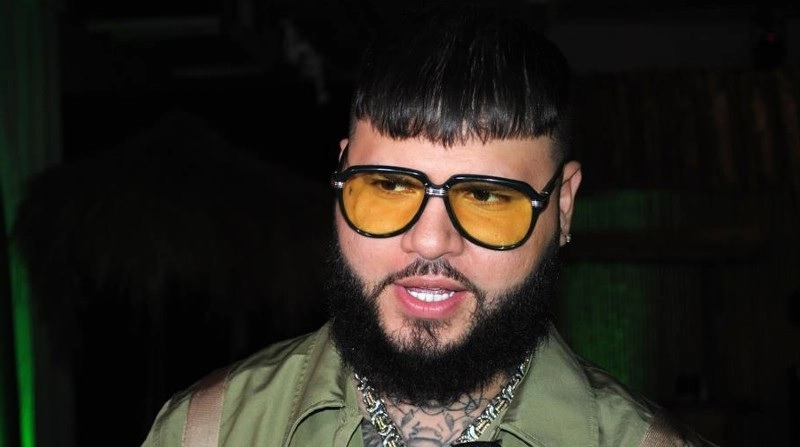
Carlos Efrén Reyes Rosado, known worldwide as Farruko, is a Puerto Rican singer, songwriter, rapper, and record producer who ranks among Latin music’s most commercially successful artists. Starting with uploading tracks on MySpace as a teenager, he built a career that spans over fifteen years, multiple number-one albums, and global hit singles. A question fans and industry observers frequently ask is just how much wealth Farruko has accumulated through his music and business ventures.
Farruko’s net worth is estimated at approximately $16 million. This figure reflects over a decade of hit albums, sold-out tours, streaming revenue from billions of plays, co-ownership of a music label, and strategic brand partnerships. Below is a detailed breakdown of how this reggaeton powerhouse built his fortune and where his wealth stands today.
Farruko Net Worth
Farruko’s financial standing is estimated at $16 million, a significant jump from the roughly $3 million he was valued at in 2017. That growth aligns directly with the global explosion of Latin urban music over the past several years, during which Farruko released some of the genre’s biggest hits and expanded his touring reach worldwide.
Among his peers, Farruko occupies a strong mid-tier position. He has not yet reached the wealth levels of Daddy Yankee, whose fortune is estimated around $40 million, or J Balvin, who sits near $20 million. However, he stands well above the majority of newer reggaeton and Latin trap artists. His consistency — releasing charting albums in 2014, 2015, 2017, 2019, and 2021 — has kept his earning trajectory steady rather than cyclical.
His estimated annual income ranges between $2 and $3 million, drawn from multiple streams including streaming royalties, live performance fees, label earnings, and brand endorsements. This diversification is key. Unlike artists who depend heavily on a single revenue source, Farruko’s income architecture provides resilience against the fluctuations of the music industry.
Early Life
Born on May 2, 1991, in Bayamón, Puerto Rico, Carlos Efrén Reyes Rosado grew up in a working-class household surrounded by the island’s rich musical traditions. The sounds of reggaeton, salsa, and Caribbean rhythms formed the backdrop of his childhood and would later shape his versatile musical identity.
Young Carlos showed a passion for writing lyrics and developing his flow from an early age. During his teenage years, he adopted the stage name “Farruko,” the identity that would eventually become known to millions of fans across the world.
His entry into the music industry came through MySpace, which was the dominant social platform for independent artists in the mid-2000s. Farruko uploaded his earliest tracks directly to the site, building a grassroots fan base through organic online engagement. His first song, “Sexo Fuera del Planeta,” released in 2009, gained traction on the internet and drew attention from Puerto Rican radio broadcasters. As local stations began playing his music, Farruko’s audience expanded beyond the digital space and into mainstream Puerto Rican airwaves — a transition that solidified his presence in the reggaeton scene and set the stage for his professional career.
Growing up amid economic challenges in Bayamón gave Farruko the hunger and resilience that would define his work ethic. These formative struggles became the foundation for a career marked by constant reinvention and a relentless drive to succeed.
Career Highlights
Farruko’s professional career began in 2009, but his official arrival came in 2010 with the release of his debut album El Talento del Bloque. The project spawned successful singles including “Nena Fichu,” “Su Hija Me Gusta,” and “Te Iré a Buscar,” establishing him as a fresh voice in Latin urban music. His unique blend of reggaeton, trap, Latin pop, and dancehall influences set him apart from his contemporaries.
His second album, TMPR The Most Powerful Rookie (2012), expanded his reach with international hits like “Feel the Rhythm,” “Titerito,” and “Va a Ser Abuela.” That same year, he earned his first Latin Grammy nomination for Best Urban Music Album, signaling industry recognition beyond commercial success.
The 2013 release of Imperio Nazza: Farruko Edition peaked at number 13 on the Billboard Top Latin Albums chart, featuring singles “Besas Tan Bien” and “Voy a 100.” A year later, Farruko notched a career milestone when Farruko Presenta: Los Menores (2014) became his first number-one album on the Top Latin Albums chart.
The Collaborations That Changed Everything
Farruko’s career trajectory shifted dramatically through high-profile collaborations. In 2013, he was featured on J Balvin’s hit single “6 AM,” which became a defining moment. The song reached number 2 on the Monitor Latino chart and earned nominations at Premios Juventud and the 15th Annual Latin Grammy Awards for Best Urban Song. “Passion Whine,” also with J Balvin, ranked on the Top Latin Songs list for 26 consecutive weeks.
These collaborations opened the door to work with an expansive roster of artists. He recorded “Krippy Kush” with Bad Bunny and producer Rvssian, a track that became a massive global moment in Latin trap. He joined J Balvin and Rvssian again on “Ponle,” collaborated with Myke Towers on “Si se da,” Rauw Alejandro on “Fantasías,” and Abraham Mateo and Christian Daniel on “Loco Enamorado.” Farruko also worked with Reik and Camilo on “Si Me Dices Que Sí” and appeared alongside Enrique Iglesias on “Me Pasé” in 2021. Additional featured appearances include tracks with Chino & Nacho, Anuel AA, Yandel, Ozuna, Sech, Wisin & Yandel, and Ricky Martin — a breadth of collaboration that few Latin artists can match.
Albums That Defined a Decade
Visionary (2015) returned Farruko to the number-one spot on the Top Latin Albums chart. It was followed by TrapXFicante (2017), which peaked at number three and showcased his ability to shift into grittier Latin trap territory. Gangalee (2019) reached number two on the chart and featured the remix of “Calma” with Pedro Capó, a crossover success that became a worldwide anthem and earned multiple awards.
His commercial peak arrived with La 167 in 2021. The album debuted at number one on the Top Latin Albums chart and reached number 26 on the Billboard 200 — his highest placement on the all-genre chart. It contained “La Tóxica,” which earned a Latin Grammy nomination for Best Reggaeton Performance, “El Incomprendido,” and the single that would define his career: “Pepas.”
Released on June 24, 2021, “Pepas” became one of the biggest global songs of the year. Its high-energy fusion of tribal guarachero, techno, and reggaeton dominated clubs, festivals, and charts worldwide, accumulating over one billion streams on Spotify alone. The track pushed Farruko into international superstardom and cemented his reputation as an artist willing to take bold creative risks. La 167 also earned a Grammy Award nomination for Best Música Urbana Album in 2022 — a mainstream Grammy, not just a Latin Grammy — marking a significant milestone in his career.
Musical Style
Farruko’s musical style draws from a wider palette than most of his peers. Beyond reggaeton and trap, his work incorporates elements of dancehall, dembow, guaracha, salsa, EDM, and Caribbean-influenced melodies. This genre versatility has allowed him to remain relevant across shifting musical trends and appeal to diverse audiences.
In addition to his work as a performer, Farruko co-founded the music label Carbon Fiber Music in 2014 alongside his manager Franklin Martínez. As of 2022, the label has nine signed artists and represents a significant business asset beyond his personal music career.

Income Sources
Farruko’s wealth is built on multiple income streams, a structure that provides financial stability well beyond what music sales alone can offer.
Music Sales and Streaming
His catalog includes nine studio albums and dozens of singles. The shift from physical sales to streaming has reshaped how artists earn, and Farruko adapted to this landscape effectively. Songs like “Pepas,” “Krippy Kush,” “Calma” (Remix), and “6 AM” each generate millions of streams, creating a perpetual royalty income. With Spotify alone accounting for over one billion plays on “Pepas,” the streaming revenue from his catalog represents a substantial and ongoing financial asset. His Apple Music presence and YouTube channel — where popular music videos accumulate hundreds of millions of views — add further layers of digital earnings.
Live Performances and Touring
Concert revenue is Farruko’s single largest income source. His booking fees have grown substantially over the course of his career, reflecting his rising profile and the global demand for Latin urban music. He has headlined multiple tours, including the El Talento del Bloque Tour, Visionary World Tour, TrapXFicante Tour, Gangalee Tour, and the La 167 Tour. These tours span Latin America, the United States, and Europe, regularly selling out major venues.
Brand Partnerships
Companies targeting the Latin music demographic pay Farruko for endorsements, appearances, and promotional campaigns. These partnerships range from social media collaborations to larger-scale ambassador roles, providing income that supplements his music-related earnings.
Merchandising
Branded merchandise sold at concerts and through online channels creates an additional revenue stream. While smaller than touring or streaming income, merchandise sales contribute consistently over time.
Music Royalties
As both songwriter and performer on numerous hits, Farruko earns royalties whenever his music is played on radio, in commercials, at events, or on streaming platforms. These royalties compound over time and represent one of his most valuable long-term financial assets.
Assets and Investments
Real estate comprises a significant portion of Farruko’s wealth. He owns property in both Puerto Rico and Florida, with his primary residence located in Puerto Rico. While exact valuations are not publicly disclosed, his real estate holdings represent a meaningful component of his overall net worth.
His car collection and personal jewelry — including high-end watches and diamond-encrusted chains — reflect his financial success and serve as both lifestyle purchases and stores of value.
Beyond tangible assets, his most strategically important investment is the co-ownership of Carbon Fiber Music, the label he founded with Franklin Martínez in 2014. With nine artists on its roster, the label generates revenue through artist management, music distribution, and production deals. Label ownership is one of the most reliable wealth-building mechanisms in the music industry, and it positions Farruko as more than just an artist — he is a music entrepreneur.
Music royalties from his extensive catalog represent another critical long-term asset. As his older hits continue generating streams and his newer releases add to the catalog, this passive income will grow over the coming decades.
Awards and Achievements
Farruko’s career has been marked by consistent industry recognition. His first Latin Grammy nomination came in 2012 for Best Urban Music Album. Since then, he has earned additional Latin Grammy nominations, including one for Best Reggaeton Performance for “La Tóxica.” His songs have been regular fixtures on the Billboard Latin charts, with multiple top-ten hits and several number-one albums on the Top Latin Albums chart.
The most significant award milestone came in 2022 when La 167 received a Grammy Award nomination for Best Música Urbana Album — a nomination at the main Grammy ceremony, distinguishing it from Latin-specific categories and reflecting his crossover reach.
Beyond formal awards, Farruko has achieved streaming milestones that few Latin artists can claim. “Pepas” surpassed one billion streams on Spotify, and several other tracks in his catalog have crossed the hundreds-of-millions mark. His sold-out performances at major venues — including the FTX Arena in Miami and other prestigious arenas across the Americas and Europe — underscore both his commercial drawing power and his standing as a top-tier live act.
His songs have charted across multiple countries and continents, with “Calma” (Remix) becoming a particular worldwide success that earned multiple awards and introduced Farruko to audiences far beyond the traditional reggaeton market.
Legal Issues
Not every chapter in Farruko’s career has been triumphant. In April 2018, he was arrested in Puerto Rico after authorities discovered approximately $52,000 in undeclared cash hidden in his shoes and luggage while returning from the Dominican Republic. The incident resulted in three years of probation.
The arrest carried consequences beyond the legal system. During the probation period, his ability to travel freely for international performances was restricted, reducing his earning capacity at a time when his career was otherwise gaining momentum. Legal fees and associated costs further impacted his finances.
Farruko’s response, however, demonstrated the same adaptability that defines his career. Rather than allowing the setback to derail him, he channeled the experience into his music, releasing songs that referenced his legal struggles and connected authentically with fans. His ability to recover financially and professionally from the incident speaks to both his resilience and the strength of his fan base.
Personal Life
Farruko is a father and family man who frequently shares moments with his loved ones on social media, where he maintains a following of over 20 million across platforms. Despite his public presence, he keeps many aspects of his private life carefully guarded, maintaining clear boundaries between his career and personal world.
The FTX Arena Moment and Spiritual Transformation
The most defining personal moment of Farruko’s recent career came on February 12, 2022, during a performance at the FTX Arena in Miami. Mid-concert, Farruko stopped the music to deliver an extended speech about his devotion to God, expressing personal struggles and asking forgiveness for the content of some of his past lyrics. The response was immediate and divided — many fans left the venue in dismay, feeling that the performance had been hijacked by religious preaching rather than music.
Addressing the backlash, Farruko made a stunning announcement: his singing persona “Farru” was retired, and he would henceforth be known by his birth name, Carlos. He offered refunds to dissatisfied attendees. However, the retirement proved temporary — Farruko resumed performing in May 2023.
In an interview with Rolling Stone magazine that same year, he spoke candidly about his transformation: “Look, I’m a human who was falling, who wasn’t doing the right thing. Now I got up, and I’m strong, and you can, too.” He also discussed how his Christian faith helped him reconcile with his family and find personal stability.
By 2024, Farruko began releasing music with Christian-based lyrics, marking a new creative direction that prioritizes spiritual messaging over the club-oriented reggaeton and trap that built his commercial career.
His Puerto Rican roots remain central to his identity. He continues to invest in local businesses and spend significant time on the island, grounding himself in the community and culture that shaped his early life — even as his fame and wealth have taken him around the world.
Future Financial Outlook
Farruko’s financial future appears promising, supported by the diversity of his income streams and the continued global growth of Latin music. His real estate holdings, label ownership, and expanding music catalog provide a multi-layered financial foundation that can weather industry shifts.
His pivot toward faith-driven and Christian-based content presents both challenges and opportunities. While it may limit certain collaboration avenues within mainstream reggaeton, it opens access to entirely new audiences and markets aligned with his evolving identity. Artists who successfully rebrand around authentic personal narratives often find new revenue streams in speaking engagements, faith-based events, and aligned brand partnerships.
Music royalties will likely become an increasingly dominant part of his wealth. As his catalog grows and older hits like “Pepas,” “Krippy Kush,” and “Calma” continue generating streams, this passive income compounds over time without requiring new releases.
The broader international market holds significant untapped potential. As Latin music continues its trajectory as a global force, Farruko stands to benefit from expanded touring opportunities, higher booking fees, and growing fan bases in Europe, Asia, and other non-traditional markets.
At 35 years old in 2026, Farruko has many productive years ahead. If he continues diversifying his investments while maintaining musical relevance — whether through mainstream releases, faith-driven projects, or both — his current net worth has room to grow substantially in the coming decade.
Conclusion
Farruko’s journey from uploading songs on MySpace in Bayamón to building a $16 million fortune illustrates both artistic talent and sharp business instincts. His wealth is the product of nine studio albums, global hits like “Pepas” and “Krippy Kush,” extensive touring, co-ownership of Carbon Fiber Music, and a catalog that generates billions of streams. Compared to peers like Daddy Yankee and J Balvin, he holds a strong position in Latin music’s financial hierarchy, with clear upward momentum.
What distinguishes Farruko beyond the numbers is his capacity for reinvention. From romantic reggaeton to gritty Latin trap to Caribbean-influenced experiments to faith-driven music, each chapter of his career has reflected genuine personal evolution. His ability to adapt — musically, personally, and financially — suggests that his current net worth is a waypoint, not a ceiling. For fans and industry observers alike, Farruko’s story remains one of the most compelling narratives in modern Latin music.