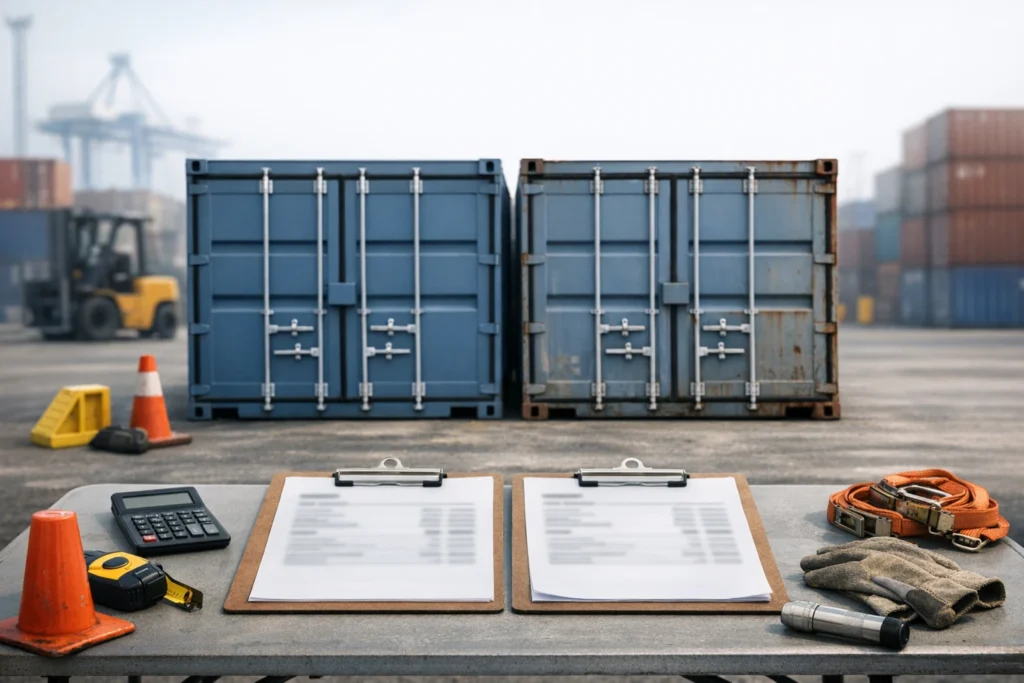
I assisted a small logistics startup in sourcing their first set of two, 20-foot shipping containers a few years ago. We contacted two suppliers on the same day asking for quotes for “standard 20ft containers,” and were given prices that differed by almost $1,400. Same size. Same color. Same steel walls. Yet completely different price tags.
It was a lesson that became one of many in the School of Hard Knocks when it comes to understanding container buying costs, and it’s worth explaining for people who might be purchasing containers for the first time.
The Moment the Quote Comparison Laid It All Bare
When we lined the two quotes up side by side, the specs were almost identical on paper. Both were standard 20-foot “dry” containers. Both were from the same port area. But one was a “cargo-worthy” used container, and the other was labeled “wind and watertight,” a fine line that, to an untrained eye, might as well have been gibberish.
In fact, it represents a massive gulf in structural integrity, certification status, and resale value.
This one comparison completely changed how I think about what influences container prices. It is never just size or steel. Condition rating matters, and so do usage history, location, and the intended use of the container.
Shipping Container Purchase Prices: What You Need to Know
Price matters, but it’s rarely smart to shop by price alone. Many first-time buyers are surprised to learn that a used 40-foot high-cube container can occasionally be cheaper than a new 20-foot standard unit. That happens because market-driven factors and condition-based pricing combine in ways that aren’t always intuitive.
A Quick Cost Breakdown Mindset
To understand what you’re paying for, think of container pricing as a combination of:
- Condition grade and inspection status
- Location and availability
- Timing and market volatility
- Delivery, placement, and any refurbishing work
Container Quality Standards and Market Value
There is a grading system in the container business that drives much of pricing.
One-Trip Containers
“One-trip containers” are units that have made a single journey from the factory, usually in Asia, and then are sold in near-factory condition. These are the most expensive, typically between $3,500 and $6,000 or more depending on size and market demand.
Used Container Grades
Used containers are rated from shipping-approved (“cargo-worthy”) down to “as-is” or “for parts.”
A cargo-worthy container is a unit that has been inspected and is suitable for continued shipping. It can work for storage, but condition details still matter. The price difference between two same-size containers can be over $1,000, exactly what we saw in that first quote comparison.
Geographic Location and Depot Availability
Where the container is sitting when you buy it counts nearly as much as what condition it’s in, and it’s one of the key factors in what affects container prices. Containers are not evenly spread around the world.
Port cities with trade surpluses, especially major export hubs, are more likely to have an overabundance of empty containers, which pushes prices down. On the other hand, bringing supply from high-volume outdoor depots to inland areas can add transportation and placement costs that raise the total price significantly.
In our quote comparison, one supplier was located fifteen miles from a working port. The other was dispatched from an inland depot in a state two states away. That geography alone explained a big portion of the price difference before we even considered condition.
Market Timing and Transnational Supply Chain Shifts
Anyone who tried to buy a container during the 2020 to 2022 global shipping disruptions saw how volatile prices can be. New container prices tripled in parts of the world during that period.
The point is simple: picking the right container budget means looking beyond the current quote. You need to understand whether you’re buying in a buyer’s market or a seller’s market.
Steel commodity prices, trade imbalances, and seasonally influenced demand from agriculture can also shift container costs meaningfully in a matter of weeks.
Picking a Container Budget That Doesn’t Put You Too Much in the Red
When selecting a container budget, the first step is being absolutely clear about what you need the container for.
If you need long-term onsite storage, there’s no reason to spend extra on one certified as cargo-worthy. A wind-and-watertight specification will do the job reliably for a lot less.
If you’re sending product across an ocean, skimping on condition grade will almost always bite back through failed inspections and liability long before any theoretical savings matter.
Ask for Itemized Quotes
It can pay to request itemized quotes. A trustworthy vendor will itemize shipping inspection and any refurbishing separately. Bundled quotes may be convenient, but they often hide where the money is going and make it hard to compare deals fairly.
Inspect Before You Buy
Always inspect before you buy, or at least demand a third-party inspection report.
The containers we considered looked pretty similar in photos. But when I visited the cheaper one, it had surface rust along two corner posts, untreated for outdoor storage use.
Final Thoughts
That initial quote comparison was my first lesson in how container pricing really works. It pays to be an informed buyer. It’s not about memorizing price charts. It’s about asking the right questions, understanding condition grades in real life, and knowing how location and timing change the numbers. Choosing the right container budget early on can save you from costly mistakes and ensure your purchase aligns with your financial goals. Two containers that look identical can tell radically different financial tales. Now you know how to read them.
Frequently Asked Questions
How come two containers of the same size have different costs?
Price differences between same-size containers are based on condition grade, origin and destination port dynamics, LUC status, and local supply. A one-trip container and a used wind-and-watertight container may be the same size, but they are built and priced for different needs and have very different values.
What is the primary thing to understand about container purchasing costs?
After size, and sometimes even more than size, grade is the most influential factor. It determines what the container can be legally used for, affects long-term maintenance costs, and directly impacts resale value if you plan to sell later.
Should you get a new container instead of a secondhand one?
Cargo-worthy or wind-and-watertight used containers are usually a great value for storage-only use. When returning to the manufacturer for warranty repairs is not feasible, or when certification is needed by an insurer or client, purchasing a one-trip or new container can be the more practical option.
How do I ensure that I choose the right container budget?
Define your use case and require itemized quotes from at least three vendors. Include delivery costs, inspection fees, and any work needed before comparing totals. A lower sticker price can quickly become a higher total cost once logistics are added.