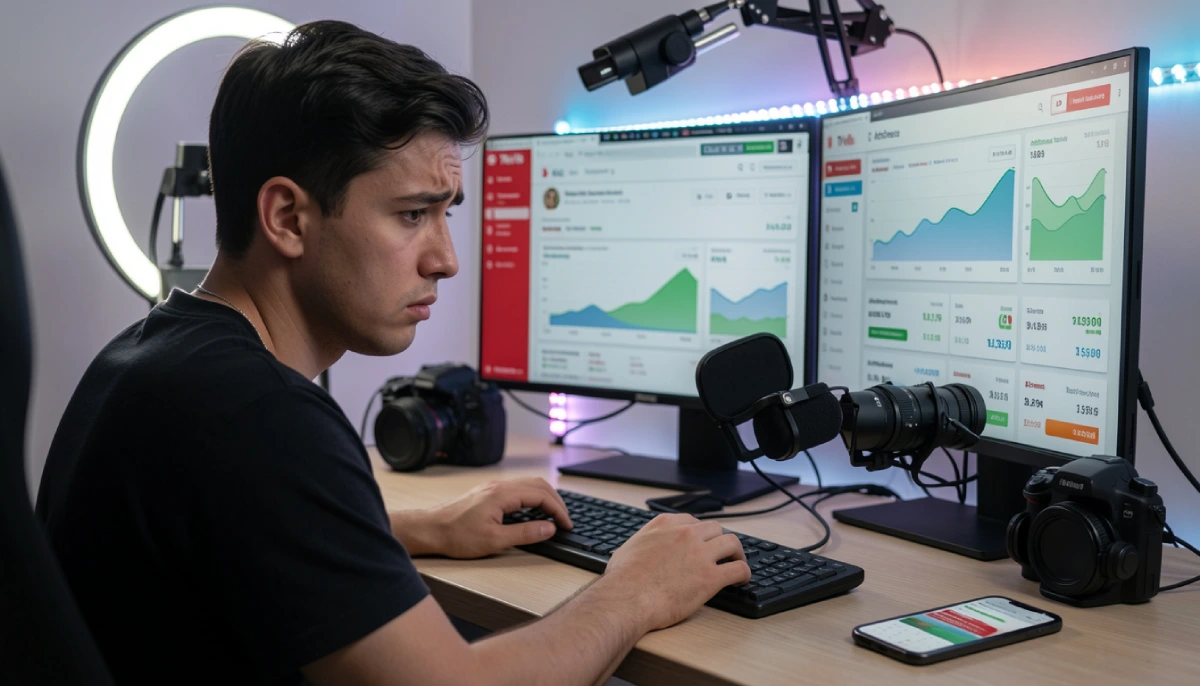
YouTube creators live in a constant state of financial limbo. You upload content today, it performs throughout the month, and then–if you’re lucky–you see money hit your account 60 days later. For many creators, this payment delay isn’t just inconvenient; it’s a business barrier.
The challenge becomes obvious when opportunity knocks. A sponsorship deal requires upfront investment in equipment. A trending topic demands quick content production. A collaboration needs travel expenses covered now. Your YouTube earnings exist–they’re accumulating in real-time as viewers watch–but they’re locked behind AdSense’s payment schedule.
The real cost of waiting for YouTube income
Traditional banking wasn’t built for the creator economy. When YouTube processes payments through AdSense, creators face a rigid timeline: earn throughout the month, wait for finalization, then wait again for the actual transfer. This system made sense earlier. In 2026, when content opportunities have a 48-hour shelf life, it’s actively harmful.
Consider what happens when you need funds before the payout arrives. Traditional options are limited and expensive. Bank overdrafts come with predatory interest rates. Credit cards designed for businesses assume you have collateral. Payday loans–well, those speak for themselves.
The irony is stark: you have verifiable income, trackable in your AdSense dashboard, but accessing it early means either waiting or paying premium rates for the privilege of using your own money.
Why future earnings are real assets for YouTube creators
Your YouTube revenue isn’t theoretical. When someone watches your video, that value is created immediately. The ad impression happens, the engagement is tracked, and the revenue is recorded. The only thing delaying payment is administrative processing.
This creates an interesting financial reality: future YouTube earnings are predictable assets. If your channel generates $3,000 monthly with reasonable consistency, next month’s payout is as certain as any paycheck. Yet traditional finance treats it like speculative income.
Smart creators recognize this disconnect. Your active funds represent real value – they’re just temporarily inaccessible through conventional channels. The question isn’t whether the money exists; it’s how to access it on your timeline, not YouTube’s.
Strategic access changes everything
When creators can access future earnings, the entire business equation shifts. Equipment upgrades don’t require credit card debt. Trending topics don’t pass by while waiting for funds. Collaborations happen when they make sense, not when AdSense finally pays out.
This flexibility compounds. A creator who can invest $500 into a trending topic this week might generate $2,000 in additional revenue. That same creator, forced to wait for next month’s payout, watches the trend pass and earns nothing extra. The cost of waiting isn’t just inconvenience – it’s a lost opportunity.
Financial planning becomes possible. Instead of surviving payment-to-payment, creators can make strategic decisions. Should you invest in that lighting upgrade? Does hiring an editor make sense? Can you afford to focus on content instead of taking freelance work? These questions require financial flexibility.
Modern solutions for modern creators
The creator economy is building its own financial infrastructure. Services designed specifically for YouTube creators understand that future earnings represent real, accessible value. Instead of treating your income as unpredictable, they recognize the patterns traditional banks ignore.
Multiple transfer methods give creators the flexibility that matches their global audience. When your viewers are worldwide, and your collaborators are distributed, having diverse payout options isn’t a luxury – it’s a necessity.
This infrastructure shift matters because it acknowledges a fundamental truth: YouTube creators are running legitimate businesses. Those businesses need working capital, cash flow management, and financial flexibility. Waiting 60 days for payment made sense when YouTube was a hobby platform. For professional creators, it’s an artificial constraint.
The bottom line
Access to future YouTube earnings is about accessing money you have earned on a timeline that matches your business needs. When opportunities cost money now, and earnings arrive later, the gap determines which creators can scale and which stay stuck.
YouTube’s payment schedule won’t change. But how creators access those funds is evolving. Understanding your earnings as accessible assets rather than distant promises changes what’s possible. In the creator economy, timing isn’t everything–but it’s definitely worth planning for.