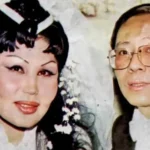

Frida Kahlo’s life has been examined more thoroughly than almost any artist of the twentieth century, and yet her eldest sister barely appears in it. María Luisa Kahlo Cardeña was sent away as an infant, raised apart from the family that would become famous, and lived to 94 — long enough to watch a half-sister she scarcely grew up with become a global icon.
Quick Bio / At a Glance
| Detail | Information |
|---|---|
| Full Name | María Luisa Kahlo Cardeña |
| Reported Date of Birth | September 9, 1894 |
| Birthplace | Azcapotzalco, Mexico City, Mexico |
| Father | Guillermo Kahlo, German-born photographer |
| Mother | María Cardeña Espino, Guillermo’s first wife |
| Half-Sister | Frida Kahlo (1907–1954) |
| Raised | In a convent, after her mother’s death |
| Reported Marriage | José Jesús Escanes, 1917 |
| Children | None reported |
| Reported Death | 1989, aged 94 |
The Kahlo Family Before Frida
Guillermo Kahlo’s First Marriage
Guillermo Kahlo, the German-born photographer who became one of Mexico’s most important architectural documentarians, married María de los Dolores Eleuteria Clotilde Cardeña Espino in August 1893. María Luisa was their eldest child.
The marriage ended in tragedy. María died giving birth to their third child.
The Convent
What Guillermo did next shaped his eldest daughter’s entire life. On the night his wife died, he approached Antonio Calderón for the hand of his daughter Matilde. After that second marriage, he sent the daughters from his first marriage away to be raised in a convent.
María Luisa spent her childhood there rather than in the household that would later be known worldwide as La Casa Azul.
The Second Family
Guillermo and Matilde Calderón had four daughters: Matilde, Adriana, Frida — born in 1907 — and Cristina. That is the family unit that appears in every Frida Kahlo biography, and the one from which María Luisa was structurally excluded.
A Sister at a Distance
Thirteen Years Apart
María Luisa was roughly thirteen years older than Frida. Combined with the separate upbringing, the age gap meant the relationship was never a sibling one in any ordinary sense. Accounts describe her as closer to an aunt figure when contact resumed in later years.
Reports indicate she married José Jesús Escanes in 1917, had no children, and maintained contact with the wider Kahlo family across the decades.
Watching Frida Become Famous
Frida died in 1954, at 47. María Luisa outlived her by some thirty-five years, reportedly dying in 1989 at the age of 94 in Azcapotzalco — the same area where she had been born.
That span covers almost the entirety of Frida Kahlo’s posthumous transformation from a respected Mexican painter into a worldwide symbol. María Luisa watched it happen from outside the frame.
What Is Documented and What Is Not
The structural facts are well established and appear in scholarship on Guillermo Kahlo: the first marriage in 1893, the wife’s death in childbirth, the immediate second marriage, and the decision to place the first family’s daughters in a convent.
The specifics attached to María Luisa individually — the September 1894 birth date, the 1917 marriage, the 1989 death at 94 — come from secondary genealogical and biographical sources rather than from primary documents that can be inspected online. They are consistent across accounts, but they should be read as reported rather than verified.
Why She Matters to the Kahlo Story
Frida Kahlo’s work is preoccupied with family, bodies, abandonment and belonging. The household she painted from was itself built on a separation: two daughters removed so that a second family could be assembled.
María Luisa Kahlo Cardeña is not a footnote to that story. She is the evidence of it.
More profiles of siblings who lived outside the spotlight: Carl Ellan Kelley and Blyth Dolores Barrymore.