
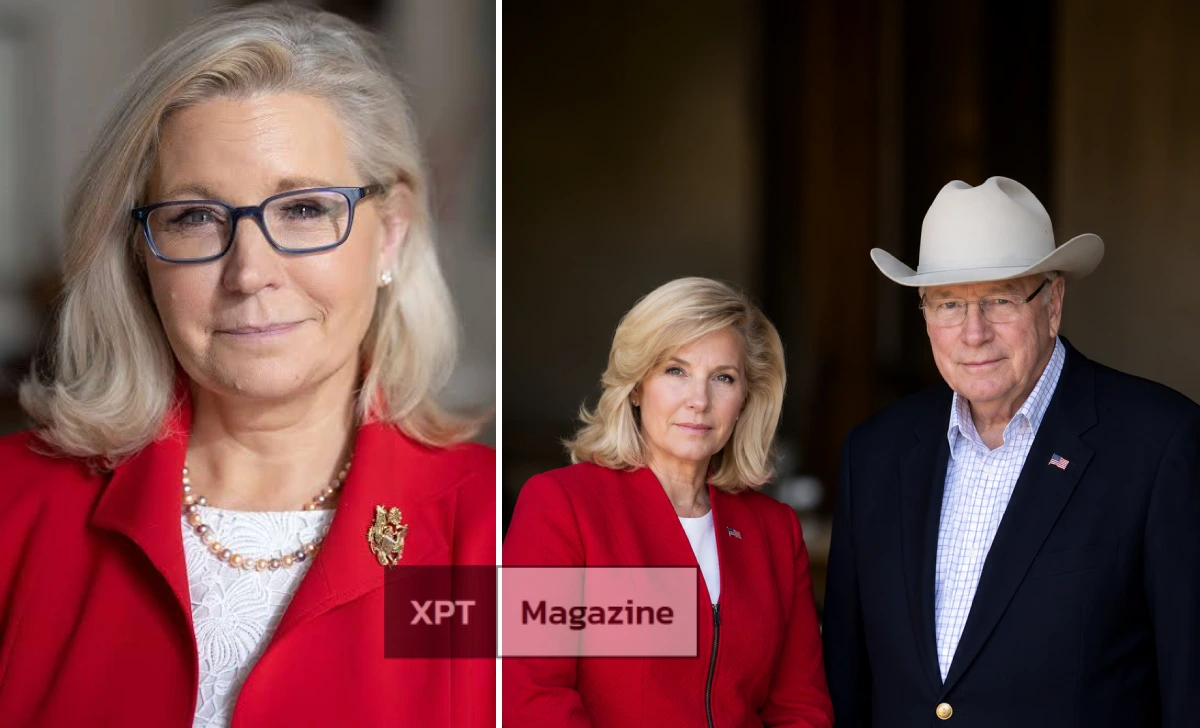
Liz Cheney spent six years in Congress, rose to the third-highest job in House Republican leadership, then lost both her seat and her party standing after she broke with Donald Trump. Few modern politicians have had a career arc quite like it — from party insider to one of its most visible critics — and that arc is exactly why people keep searching her name.
Cheney represented Wyoming’s at-large congressional district from 2017 to 2023. Before that, she worked at the State Department and practised international law. After Congress, she became known nationally as vice chair of the House committee that investigated the January 6 Capitol attack.
Why Liz Cheney Is a Prominent Political Figure
She’s the daughter of former Vice President Dick Cheney, which gave her a head start in Republican politics. But her national profile today comes from something else: she voted to impeach Trump after January 6, took a lead role investigating the attack, and lost her House seat because of it. That combination of family legacy and public break with her own party is rare in American politics.
Key Facts at a Glance
- Full name: Elizabeth Lynne Cheney
- Born: July 28, 1966, in Madison, Wisconsin
- Party: Republican
- Congressional service: U.S. Representative for Wyoming, 2017–2023
- Leadership role: Chair of the House Republican Conference, 2019–2021
- January 6 Committee: Vice Chair, 2021–2023
- Education: Colorado College (B.A.), University of Chicago Law School (J.D.)
- Spouse: Philip Perry
- Children: Five
Early Life and Family Background
Birth and Childhood
Cheney was born on July 28, 1966, in Madison, Wisconsin, while her parents were both connected to the University of Wisconsin. She’s the elder of two daughters born to Dick and Lynne Cheney. Her younger sister, Mary Cheney, was also born in Madison.
Parents and Family Heritage
Her father, Dick Cheney, went on to serve as White House Chief of Staff, Wyoming’s lone member of Congress, Secretary of Defense, and eventually Vice President under George W. Bush. Her mother, Lynne Cheney, built her own career as an author and chaired the National Endowment for the Humanities. Growing up as the daughter of two people that involved in national policy shaped Liz Cheney’s early interest in government.
Growing Up in a Political Family
The family split time between Wyoming and Washington, D.C. through the 1970s and 1980s as her father’s career in Congress and the executive branch developed. Cheney attended part of middle school in Casper, Wyoming, before the family settled more permanently near the capital, where she graduated from McLean High School in 1984.
Education
Colorado College
Cheney earned her bachelor’s degree from Colorado College — her mother’s alma mater — graduating in 1988. Her senior thesis, “The Evolution of Presidential War Powers,” previewed the interest in executive authority and foreign policy that would define much of her later career.
University of Chicago Law School
She received her Juris Doctor from the University of Chicago Law School in 1996. While there, she also took courses in Middle Eastern history at the university’s Oriental Institute, background that later fed directly into her State Department work in the region.
Academic Achievements
Beyond her formal degrees, Cheney’s coursework in Middle Eastern studies gave her a working knowledge of the region years before she’d need it professionally. That combination of legal training and regional expertise became a consistent thread through her early career.
Early Career Before Congress
Work at the U.S. State Department
Cheney’s first major government role came at the State Department, where she eventually served as Principal Deputy Assistant Secretary of State for Near Eastern Affairs. She also held positions tied to USAID and State Department programs operating in Poland, Hungary, Russia, and Ukraine.
International Law Career
Before her government appointments, Cheney practised law with the firm White & Case and worked at the International Finance Corporation, the World Bank Group’s private-sector lending arm. This gave her direct experience with international business law before she moved fully into foreign policy work.
Foreign Policy and Government Experience
By the time she left the State Department in 2003 to work on the Bush-Cheney reelection campaign, Cheney had built a foreign policy résumé few first-time congressional candidates could match. That experience became a central part of her pitch to Wyoming voters years later.
Political Career
Entering Politics
Cheney’s first run for elected office came in 2013, when she briefly challenged incumbent Wyoming Senator Mike Enzi in a Republican primary before withdrawing. She ran again in 2016, this time for Wyoming’s open House seat, and won.
Election to the U.S. House of Representatives
Cheney was elected to the U.S. House in November 2016 and took office in January 2017. She won reelection in 2018 and 2020, both times by wide margins, before her 2022 defeat.
Representing Wyoming’s At-Large District
Wyoming has only one House seat, so whoever holds it represents the entire state. Cheney’s father held the same seat decades earlier, which meant she was, in a real sense, continuing a family line in Wyoming politics.
Major Legislative Priorities
In Congress, Cheney focused heavily on national defence, energy policy tied to Wyoming’s economy, and a hawkish foreign policy stance consistent with her time at the State Department. She generally voted with traditional conservative positions on taxes, regulation, and gun rights throughout her time in the House.
Committee Assignments
House Armed Services Committee
Cheney served on the Armed Services Committee, where her foreign policy background made her a natural fit for defense and military policy discussions.
House Committee on Rules
She also sat on the Rules Committee, which controls how bills move to the House floor — a position that reflected her standing within party leadership.
Natural Resources Committee
Given Wyoming’s economy, which depends heavily on energy production, Cheney’s seat on the Natural Resources Committee let her work directly on issues tied to her constituents.
China Task Force
Cheney was also part of the House Republican China Task Force, which examined U.S. policy toward China across trade, technology, and security.
House Republican Leadership
Becoming Chair of the House Republican Conference
In 2019, Cheney was elected chair of the House Republican Conference, making her the third-highest-ranking Republican in the House behind the Speaker and Majority Leader.
Historic Leadership Role
At the time, it was one of the highest leadership positions ever held by a woman in House Republican history, and it put Cheney on a trajectory that many assumed would lead to even higher office within the party.
Conservative Policy Positions
During her time in leadership, Cheney held largely conservative positions on economic and foreign policy, and she was seen as a reliable ally of the party’s traditional wing rather than its more populist faction.
Break with Donald Trump
Response to the 2020 Presidential Election
Cheney publicly rejected Trump’s claims that the 2020 election had been stolen, breaking sharply with much of her own party’s messaging at the time.
Opposition to Election Fraud Claims
She continued to push back on unfounded fraud claims in the weeks following the election, arguing that Republicans had a duty to accept the certified results.
Vote to Impeach Donald Trump
After the January 6, 2021, attack on the Capitol, Cheney was one of only ten House Republicans who voted to impeach Trump, citing his role in encouraging the events of that day.
Removal from House Republican Leadership
That vote, and her continued criticism of Trump afterwards, led House Republicans to remove her from her leadership post in May 2021. Elise Stefanik took over as conference chair.
Role in the January 6 Committee
Appointment as Vice Chair
In September 2021, Cheney became vice chair of the House Select Committee to Investigate the January 6th Attack on the United States Capitol, one of only two Republicans (alongside Adam Kinzinger) to serve on it.
Goals of the Committee
The committee’s stated purpose was to build a full public record of what led to the attack, how it unfolded, and what role Trump and his allies played in it.
Key Hearings and Findings
Over more than a year, the committee held a series of televised hearings featuring testimony from White House staff, law enforcement, and Trump campaign officials. Cheney frequently led questioning and delivered some of the panel’s sharpest public statements about Trump’s conduct.
Public Statements
Cheney used her committee role to argue publicly, often in direct and unsparing terms, that Trump posed an ongoing threat to democratic norms — a message that put her further at odds with most of her own party.
Political Impact
The committee’s work made Cheney one of the most recognised Republican critics of Trump in the country, but it also cemented her position as a target within Wyoming’s Trump-aligned GOP base.
2022 Wyoming Primary Election
Campaign Overview
Cheney sought a fourth term in 2022 against Harriet Hageman, a Trump-endorsed challenger. The race became one of the most closely watched primaries in the country, seen widely as a test of Trump’s influence over the party.
Election Results
Hageman defeated Cheney decisively in the August 2022 primary, ending Cheney’s time in the House.
Reasons Behind the Defeat
Cheney’s vote to impeach Trump, her role on the January 6 Committee, and her continued public criticism of him made her deeply unpopular with much of Wyoming’s Republican electorate, which remained strongly supportive of Trump.
National Political Impact
The loss was read nationally as a sign of how firmly Trump still controlled the party’s base, even as Cheney’s national profile among his critics only grew.
Political Views and Policy Positions
National Security
Cheney has consistently supported a strong U.S. military posture and close ties with traditional allies, positions rooted in her State Department background.
Foreign Policy
She has generally supported an assertive American role abroad, including firm backing for Ukraine following Russia’s invasion.
Constitutional Principles
Since 2021, Cheney has framed much of her public work around protecting constitutional processes, particularly the peaceful transfer of power.
Democracy and Rule of Law
She has repeatedly argued that defending democratic institutions should outweigh party loyalty, a theme that runs through nearly all of her public statements since January 6.
Books and Publications
Oath and Honour: A Memoir and a Warning
Cheney’s 2023 memoir details her time in Congress, her break with Trump, and her work on the January 6 Committee, offering her own account of events from inside the room.
Exceptional: Why the World Needs a Powerful America
Co-written with her father in 2015, this earlier book lays out a hawkish, traditional Republican foreign policy vision — useful context for understanding her positions before her split from Trump.
Awards and Recognition
TIME 100 Recognition
Cheney has appeared on lists recognising her influence in American politics following her role on the January 6 Committee.
Forbes 50 Over 50
She has also been named to lists highlighting influential women over 50 for her post-Congress public role.
Profile in Courage Award
In 2022, Cheney received the John F. Kennedy Presidential Library’s Profile in Courage Award, sharing the honour that year with Ukrainian President Volodymyr Zelensky, for what the library described as her steady defence of democratic norms.
Other Honors
In January 2025, outgoing President Joe Biden awarded Cheney the Presidential Citizens Medal, the second-highest civilian honor in the United States, alongside former committee chair Bennie Thompson, recognising their work on the January 6 investigation.
Academic Career and Public Engagement
Teaching at the University of Virginia
After leaving Congress, Cheney joined the University of Virginia’s Center for Politics as a professor of practice, where she has engaged with students on issues of democracy and governance.
Public Speaking
Cheney has kept up a steady schedule of public talks and lecture series appearances since 2023, discussing her time in Congress and her views on the current political moment.
Civic Leadership Initiatives
Much of her public work now centers on encouraging voter participation and warning against what she sees as threats to democratic institutions, a message she has carried to audiences across the country.
Personal Life
Husband
Cheney has been married to Philip Perry, an attorney, since 1993.
Children
The couple has five children together.
Residence
Cheney has spent significant time in both Wyoming and the Washington, D.C., area throughout her life and career.
Interests and Personal Background
Cheney’s public identity has always been closely tied to policy and government work, a reflection of a family where politics was simply part of daily life.
Liz Cheney Net Worth
Estimated Net Worth
Public disclosure-based estimates have placed Cheney’s net worth in the low eight figures in past years, though these figures move over time and aren’t something we can verify with precision. Readers looking for a current, exact number should check recent federal financial disclosures rather than rely on older secondhand estimates.
Income Sources
Her income has come from a mix of congressional salary during her House years, legal and consulting work earlier in her career, book royalties following her 2023 memoir, and paid speaking engagements since leaving office.
Financial Disclosures
As a former member of Congress, Cheney’s past financial disclosures are part of the public record and offer the most reliable source for anyone researching her finances in detail.
Latest News and Current Activities
Recent Public Appearances
Cheney has continued a steady run of public speaking engagements into 2026, including lecture series stops where she has urged audiences to stay engaged in the midterm election process.
Political Endorsements
She has broken with traditional party lines in recent election cycles, including her public support for Kamala Harris in the 2024 presidential race.
Current Projects
Cheney’s post-Congress work centres on teaching, public speaking, and continued commentary on threats to democratic institutions, rather than a return to elected office.
Future Political Plans
Cheney has not run for office since her 2022 primary loss and has instead focused on public advocacy work, though she remains an active voice ahead of the 2026 midterms.
Liz Cheney’s Legacy
Influence on the Republican Party
Cheney’s career marks one of the clearest examples of a sitting Republican leader breaking publicly with Trump and paying a direct political price for it.
Role in Defending Democratic Institutions
Her work on the January 6 Committee remains the most detailed public accounting of the events of that day from inside the government, built with her direct involvement.
Impact on American Politics
Whether viewed as a principled break from her party or a political miscalculation, Cheney’s post-2021 career has become a reference point in discussions about party loyalty versus institutional accountability in modern American politics.
Frequently Asked Questions
Who is Liz Cheney?
Liz Cheney is a former U.S. Representative for Wyoming who served from 2017 to 2023 and later became vice chair of the House committee investigating the January 6 Capitol attack.
Why is Liz Cheney famous?
She’s known for breaking publicly with Donald Trump after January 6, voting to impeach him, and leading much of the public questioning during the January 6 Committee hearings.
Is Liz Cheney still involved in politics?
She’s not currently in elected office, but she remains active through public speaking, teaching, and advocacy work tied to elections and democratic institutions.
Why did Liz Cheney lose the Wyoming primary?
She lost her 2022 primary to Trump-endorsed challenger Harriet Hageman, largely because of backlash over her impeachment vote and her role on the January 6 Committee.
What was Liz Cheney’s role in the January 6 Committee?
She served as vice chair, one of only two Republicans on the panel, and took a lead role in questioning witnesses during the committee’s public hearings.
Is Liz Cheney related to Dick Cheney?
Yes. She’s the elder daughter of former Vice President Dick Cheney, who died on November 3, 2025.
What books has Liz Cheney written?
She wrote the 2023 memoir “Oath and Honor” and co-wrote “Exceptional: Why the World Needs a Powerful America” with her father in 2015.
What are Liz Cheney’s political views?
She holds broadly conservative positions on foreign policy and national security, alongside a strong public focus on defending constitutional norms since 2021.
What is Liz Cheney doing now?
She teaches at the University of Virginia’s Center for Politics and continues public speaking and advocacy work related to elections and democratic institutions.
What is Liz Cheney’s net worth?
Public estimates vary and aren’t precisely verified; her official congressional financial disclosures remain the most reliable source for exact figures.
Conclusion
Liz Cheney’s career shows how quickly political standing can shift when personal conviction runs against party direction. From State Department lawyer to House leadership to a lead role investigating January 6, her path has been shaped by decisions that cost her a congressional seat but built a different kind of public influence.
Whatever comes next for Cheney, her time on the January 6 Committee and her public break with Trump have already secured her place in the historical record of this period in American politics — and her continued public commentary keeps her part of the ongoing conversation heading into 2026.