
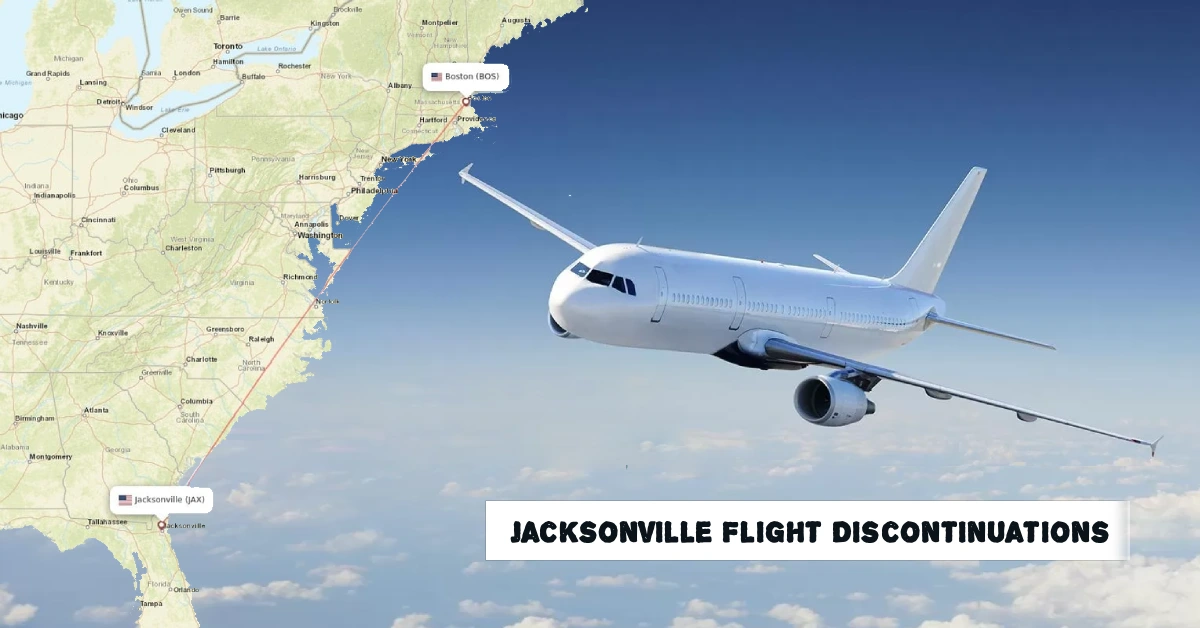
Jacksonville International Airport has lost several nonstop routes in 2025, including JetBlue’s Fort Lauderdale service, Southwest’s Atlanta connection, and Allegiant’s Cleveland flights. Airlines cite low seasonal demand, rising operational costs, and route profitability issues. New routes from Avelo, Air Canada, and Breeze partially offset these cuts, while JAX invests in terminal expansion and parking infrastructure.
Your favorite nonstop flight from Jacksonville disappeared overnight. You check multiple booking sites—nothing. The route simply vanished.
You’re not imagining it. Jacksonville International Airport lost multiple direct connections in 2025, forcing travelers to rethink how they fly out of Northeast Florida. JetBlue pulled its Fort Lauderdale service. Southwest dropped Atlanta. Allegiant cut Cleveland entirely.
These aren’t temporary cancellations. Airlines made strategic business decisions to permanently remove routes that couldn’t generate sufficient revenue. For a growing city of over 1 million people, the timing feels wrong—but the reasons run deeper than local market size.
This guide explains exactly which routes JAX lost, why airlines made these cuts, how it affects your travel plans, and what you can do right now to adapt.
Which Routes Did Jacksonville Lose in 2025?
The discontinuities happened fast. Here’s the complete list of confirmed route cuts:
- JetBlue Airways ended Fort Lauderdale service on April 1, 2025. This route served leisure travelers heading to South Florida beaches and cruise ports.
- Southwest Airlines discontinued Atlanta flights on April 8, 2025. Atlanta functions as a major connecting hub, making this cut particularly disruptive for travelers needing Southeast connections.
- Allegiant Air dropped Cleveland service in early 2025. Allegiant focuses on leisure destinations and cuts routes when seasonal demand drops below profitability thresholds.
- Breeze Airways stopped Westchester County, New York, flights in November 2024. While technically outside 2025, this cancellation fits the broader pattern of reduced Northeast connectivity.
Jacksonville passenger traffic fell 3% in March 2025 compared to the previous year. That percentage seems small—but for routes already operating near break-even points, a 3% drop can mean the difference between profit and loss.
Why Airlines Cut Jacksonville Routes
Airlines don’t cancel routes randomly. They track load factors (percentage of filled seats), revenue per available seat mile, and operational costs down to the penny. When the numbers don’t work, routes disappear.
Seasonal demand patterns hurt Jacksonville more than year-round destinations. Florida sees massive winter and spring traffic—snowbirds escaping cold weather, spring breakers flooding beaches, and families on vacation. Come summer, those crowds vanish. Routes profitable in March become money losers by July.
Fort Lauderdale traffic spikes during cruise season and drops dramatically outside peak months. Airlines can’t sustain routes that only work three or four months annually.
Rising operational costs squeezed profit margins across the industry. Jet fuel prices increased throughout 2024. Staffing costs rose as airlines competed for pilots, mechanics, and ground crew. Insurance premiums climbed.
Airlines responded by cutting routes where they couldn’t raise fares enough to offset expenses. Mid-sized markets like Jacksonville got hit harder than major hubs because they lack the passenger volume to absorb cost increases.
Competition from nearby airports pulled travelers away from JAX. Orlando International Airport sits 140 miles south with vastly more flight options and competitive pricing. Tampa International Airport offers similar advantages 200 miles southwest.
When travelers can drive two hours for better schedules and lower fares, local airports lose leverage with airlines.
Federal Aviation Administration constraints limited flight operations at major hubs. Air traffic controller shortages forced the FAA to cap flights at busy airports like Newark and Charlotte. Airlines responded by prioritizing their most profitable routes—which typically means larger markets, not mid-sized cities like Jacksonville.
Route profitability analysis showed certain destinations couldn’t sustain service. Business travel declined as remote meetings replaced in-person visits. Leisure routes that depended on convention traffic or seasonal tourism couldn’t fill enough seats year-round.
Airlines track these metrics constantly and adjust networks quarterly.
How Route Cuts Affect Your Travel Plans
Losing nonstop flights creates immediate, measurable problems for travelers.
- Travel time increases sharply: What was a 90-minute nonstop to Atlanta becomes a 4-hour journey through Charlotte or Dallas. You lose half a workday to airport connections.
- Ticket prices climb on remaining routes: Less competition means higher fares. When multiple airlines served a route, they competed on price. With fewer options, airlines can charge more.
- Connection complexity grows: You might need two layovers instead of one. Each connection adds risk—missed flights, lost luggage, schedule disruptions.
- Business travelers face scheduling conflicts: Morning meetings in Boston require overnight stays when direct flights disappear. That adds hotel costs and time away from home.
- Families encounter planning difficulties: Coordinating four people through multiple connections, especially with young children, turns simple trips into logistical challenges.
- Local businesses lose competitive advantages: Companies relying on quick client visits or trade show attendance can’t compete as effectively when travel takes twice as long.
The 3% passenger decline at JAX isn’t just a statistic—it represents thousands of disrupted travel plans and additional hours spent in airports.
New Routes Added to Jacksonville
Not all news is negative. Several airlines added Jacksonville service in 2025, partially offsetting discontinued routes.
1. Avelo Airlines
Avelo Airlines launched Philadelphia nonstop flights. This gives Jacksonville residents direct Northeast corridor access, important for both business and family travel.
2. Air Canada
Air Canada resumed Toronto service in May 2025. This international connection opens Canadian tourism opportunities and provides an alternative entry point for international connections.
3. Allegiant Air
Allegiant Air introduced three new routes: Grand Rapids, Akron-Canton, and Des Moines. While these serve smaller markets than discontinued routes, they expand Midwest connectivity.
4. Delta Air Lines
Delta Air Lines plans Austin service launch later in 2025. Austin’s growing tech sector makes this route attractive for business travelers.
5. Breeze Airways
Breeze Airways will add San Diego and Burlington flights. These routes target leisure travelers and expand West Coast and Northeast options.
These additions don’t fully replace lost capacity, but they demonstrate airlines still see Jacksonville as a viable market worth serving.
What JAX Airport Is Doing to Attract Airlines
Jacksonville International Airport officials aren’t sitting idle while routes disappear.
Concourse B expansion adds six new gates. More gates allow airlines to base aircraft in Jacksonville and operate more flights. Construction is already underway.
A $92 million parking garage brings 2,000 additional parking spaces. This addresses a key passenger complaint and signals to airlines that JAX can handle growth.
Airline incentive programs offer reduced fees and financial support for new route launches. Airports nationwide use these programs to attract carriers, essentially subsidizing initial operations until routes prove profitable.
Tourism marketing partnerships with local businesses promote Jacksonville as a destination worth visiting. More inbound tourism creates demand that justifies airline service.
Regional airport collaboration with Gainesville, Daytona Beach, and Savannah airports aims to collectively attract carriers. Airlines sometimes view regions rather than individual cities when planning networks.
These efforts take time. Infrastructure improvements won’t immediately bring back discontinued routes, but they position Jacksonville for future growth.
Practical Steps for Jacksonville Travelers
You can’t control airline decisions, but you can adapt your travel strategy.
Limited seats on remaining routes fill faster. Booking 6-8 weeks ahead often yields better prices and availability than waiting until 2-3 weeks before travel.
1. Use flexible date searches
Flying on Tuesday instead of Monday might reveal significantly better options. Most booking sites let you view entire month calendars showing price variations by date.
2. Check nearby airports systematically
Orlando International (MCO) sits 140 miles south, Tampa International (TPA) 200 miles southwest, and Savannah/Hilton Head International (SAV) 140 miles north. Compare total travel time and cost—sometimes driving two hours to catch a nonstop flight beats connecting through Atlanta.
3. Set price alerts on multiple platforms
Airlines adjust prices constantly. Alert systems notify you when fares drop on your preferred routes.
4. Consider alternative connection cities
If Atlanta connections disappeared, try routing through Dallas, Charlotte, or Washington. Different hubs sometimes offer better schedules or prices.
5. Join airline loyalty programs
Even if you don’t travel frequently, membership provides advance notice of schedule changes and sometimes access to better rebooking options when disruptions occur.
6. Build buffer time into itineraries
With more connections comes a higher risk of delays. Schedule important meetings or events with arrival the night before rather than the morning of.
Airlines track booking patterns. Choosing direct JAX flights over connecting through Orlando helps demonstrate demand for local service.
The Economic Impact on Jacksonville
Flight discontinuities create ripple effects beyond traveler inconvenience.
Tourism revenue declines when visitors need extra connections to reach Jacksonville. Hotels, restaurants, attractions, and retail businesses lose customers. One study suggests each lost daily flight costs a regional economy approximately $1.5 million annually in direct and indirect economic activity.
Companies evaluating Jacksonville for expansion or relocation factor airport connectivity into their decisions. Limited flight options put the city at a competitive disadvantage against metros with robust air service.
Trade shows, conferences, and sporting events depend on easy attendee access. Organizers choose cities where attendees can reach venues efficiently.
Fewer flights mean less parking revenue, reduced concession sales, and lower rental car activity. This affects airport budgets and long-term planning.
Ground crew, TSA agents, food service workers, retail employees, and transportation providers all see reduced hours or positions when flight activity drops.
Jacksonville’s population continues growing—the metro area added over 50,000 residents in the past two years. The disconnect between population growth and flight service availability creates genuine economic challenges.
Will Discontinued Routes Return?
Some routes may resume. Airlines constantly reassess network decisions based on changing conditions.
Seasonal service patterns mean certain routes might return during peak travel periods. An airline that cut year-round service might restore winter-only flights if that’s when demand justifies operations.
Economic improvements could shift airline calculations. If fuel prices stabilize, staffing shortages ease, or Jacksonville passenger numbers rebound, previously unprofitable routes might become viable again.
New airline interest sometimes fills gaps left by major carriers. Low-cost carriers and regional airlines often serve routes that large network carriers have abandoned.
Infrastructure completion might tip airline decisions. When Concourse B expansion finishes and new gates open, airlines gain capacity to add flights without displacing existing service.
However, expecting a quick restoration of all discontinued routes would be unrealistic. Airlines made these decisions based on sustained data showing insufficient demand. Reversing course requires demonstrated proof that conditions have changed.
How Jacksonville Compares to Similar Markets
Jacksonville isn’t alone. Mid-sized airports nationwide face similar pressures.
Tampa, Nashville, and Raleigh all experienced route reductions in 2024-2025. The pattern extends across markets with populations between 1-2 million that compete with larger nearby hubs.
Airlines prefer operating larger aircraft on fewer routes rather than smaller planes on many routes. This concentrates service at major hubs while reducing options at mid-sized cities.
Low-cost carrier strategies differ from legacy airlines. Southwest, Spirit, and Frontier focus on point-to-point routes rather than hub-and-spoke networks. When these carriers cut routes, they rarely replace them with connecting service.
Regional jet economics changed. Smaller aircraft that once served mid-sized markets became less profitable as pilot costs increased and maintenance expenses rose. Airlines shifted these planes to more profitable routes, leaving markets like Jacksonville with less frequent service.
Jacksonville’s situation reflects broader industry trends rather than unique local problems.
What to Expect?
Aviation markets don’t remain static. Several factors could reshape Jacksonville’s air service in the coming years.
Population growth continues attracting airline attention. Jacksonville added residents faster than most Florida metros in recent years. More people typically mean more travelers, which eventually justifies expanded service.
Infrastructure investments make the airport more attractive to carriers. Completed renovations and expanded facilities give airlines confidence they can grow Jacksonville operations without constraint.
Industry stabilization might ease some pressures that drove cuts. As pilot training pipelines fill and the workforce stabilizes, airlines gain the capacity to reconsider previously cut routes.
Low-cost carrier expansion could accelerate. Breeze Airways, Avelo, and other newer airlines seek underserved markets where they can build brand loyalty before legacy carriers respond.
International service potential remains largely untapped. Toronto represents Jacksonville’s only current international nonstop. Caribbean destinations, Mexican beach resorts, and Canadian cities all represent realistic expansion opportunities.
The near-term outlook involves adaptation to reduced service. The long-term outlook depends on how Jacksonville’s growth trajectory aligns with airline network planning over the next 3-5 years.