
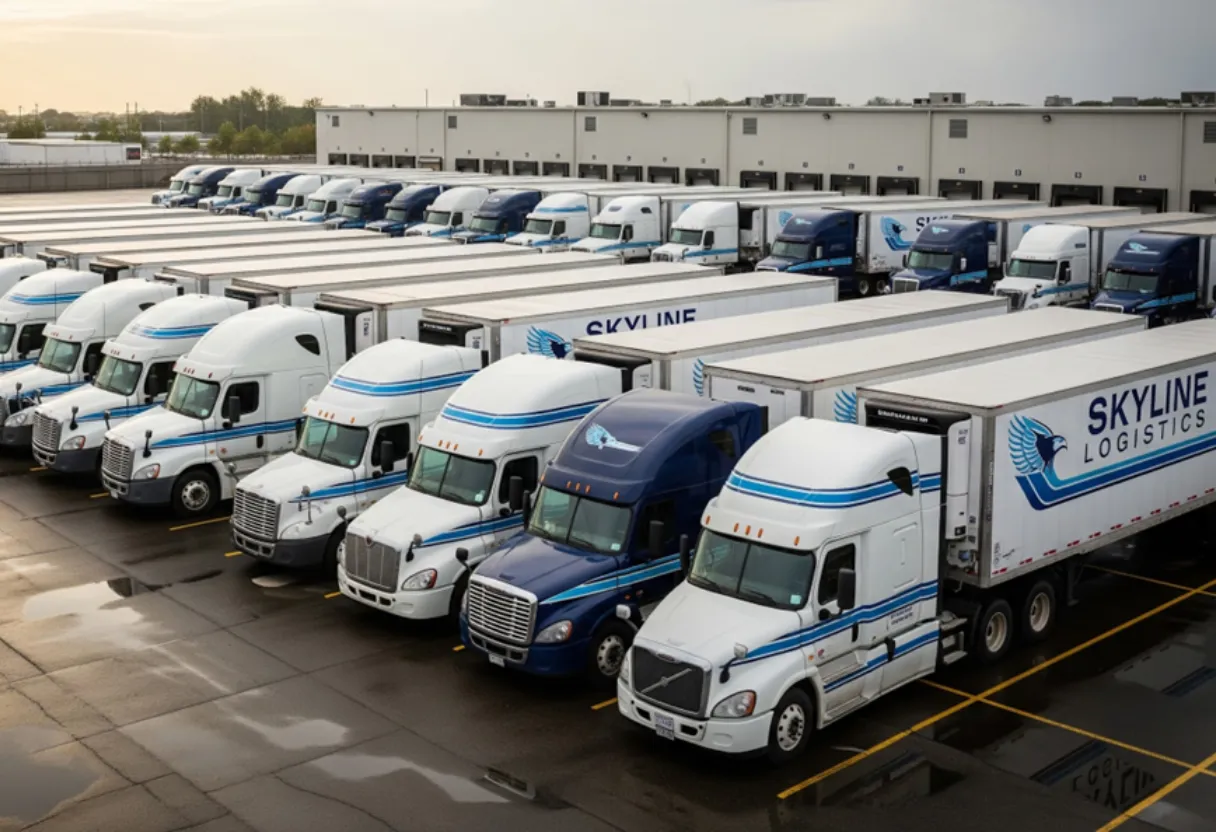
This guide is for you if you are willing to grow but have to be careful with every penny. We are not going to discuss hypothetical millions. We will discuss bootstrapping, smart decision-making, and the ugly truth about building a fleet on a small budget.
Strategic Planning: Define Your Trucking Niche Before You Buy
The greatest error of new fleet owners is believing that the process of fleet building begins with the purchase of the second truck. It doesn’t. It begins with a calculator and a notepad.
You must know your lane before you spend a dime: literally and figuratively. Are you a dry van, flatbed, or reefer? Do you specialize in last-mile delivery or long-haul OTR (Over-the-Road)? You cannot be a jack-of-all-trades when you have a tight budget. You need to specialize.
Specialization gives you a chance to estimate your costs better. When you are certain that you will be operating regional runs in the Midwest, your fuel and maintenance expenses can be estimated with far greater accuracy than if you are hauling loads between Maine and Mexico.
Actionable Tip: Get the work secured first before getting the truck. Discuss with your existing brokers or shippers. Ask them, “Would you have freight for me next month if I had another truck?” If the response is a hesitant no, continue driving alone. If the response is a resounding yes, then you have a business case to grow.
Sourcing Equipment: Buying Used Trucks and Financing Options
With a huge budget, you can go to a dealership and place an order for five new Peterbilts. You must be creative when you are bootstrapping.
Find trucks in the “Goldilocks zone”—trucks with approximately 400,000 to 500,000 miles. They still have a lot of life to live yet they cost half the new price. Maintenance records are the key here. A truck that has 600,000 miles of service history and perfect service records is a better bet than a truck with 300,000 miles and a questionable history.
You are not going to have a pile of cash in your backyard, so you will need borrowed capital. This can be the most frightening step for a first-time entrepreneur, particularly when your own credit is not flawless.
Conventional banks may be infamously challenging for trucking startups. They consider the industry high risk because of the high rate of failure. This is where you must look at specialty lenders that are aware of the logistics business. Finding the right truck financing may be the difference between the lemon that will bankrupt you and a workhorse that will bring in profit. These specialized lenders usually consider the potential revenue of the truck instead of your personal credit score, which can be a savior to new fleet owners.
Fleet Maintenance Management: Controlling Costs and Downtime
You bought the truck. You hired a driver. You’re making money, right? Not when that truck is in a shop waiting to have a part replaced.
A breakdown in a large fleet is a statistic. In a small low-cost fleet, failure is a disaster. It halts your cash flow immediately and at the same time generates a huge cost (towing + repair).
You have to get obsessed with preventive maintenance to develop a fleet on a budget. You cannot spare reactive maintenance.
- Do it yourself (where legal and safe): Assuming you are mechanically inclined, you can save a thousand a year per truck by doing simple tasks, such as changing your oil, greasing, and checking your brakes.
- Establish contacts with local shops: Do not use large truck stop chains to repair your truck unless it is an emergency. Identify a local mechanic at a reasonable labor rate and establish a relationship with them. They will usually offer you better prices or prioritize your trucks in case of trouble if you bring them regular business.
- Tire management: Tires are a major consumable expense. Don’t run them until they blow. Rotate them, check pressures every day, and look at retreads to save money on trailer tires.
Risk Management: Legal Structures and Contracts for Fleets
The bigger the fleet you have, the bigger your liability becomes. You are not just a driver anymore; you are an employer and a business. This adds an element of complexity that can destroy you if neglected.
You should establish your business structure. One truck could have been operating as a sole proprietorship, but once you have many drivers and vehicles, you are putting your personal property (house and car) at risk of lawsuits. The establishment of an LLC or Corporation is a comparatively cheap process that offers a corporate veil of protection.
Moreover, contracts are the lifeblood of your business. You will be handling driver employment contracts, lease contracts, and hauling contracts with shippers. One can be tempted to save several hundred dollars by downloading a free template on the internet. Don’t do it. One loophole in a driver contract regarding accident or cargo damage liability will cost you tens of thousands.
It is an investment in your fleet’s survival to engage professionals, such as business lawyers, at an early stage. Though you may hesitate to spend the money initially, having them review your fundamental contracts and corporate structure ensures you won’t be held liable for issues that could instantly bankrupt your operation.
Driver Recruitment Strategies: Avoiding the Cheap Labor Trap
This is a bitter pill to swallow: You get what you pay for with drivers.
On a tight budget, you may be tempted to get the cheapest labor you can find—drivers with limited experience or checkered records willing to work at a lower CPM (cents per mile).
This is a trap. A low-cost driver may cost you a fortune in:
- Higher insurance premiums.
- Increased accidents and cargo claims.
- Misuse of your equipment (riding the clutch, braking hard, leaving the engine running all night).
- Inability to communicate with brokers well, losing contracts.
Hire the safest driver you can afford as opposed to hiring the cheapest driver. Find older drivers who perhaps would like to slow down and operate regional routes. Treat them with great respect. When you are not able to compete with the salaries of the mega-carriers, compete with them in lifestyle perks, home time, respect, and absence of corporate bureaucracy. A contented driver will take care of your truck, and that will leave your maintenance budget intact.
Financial Growth Strategy: Reinvesting for the Snowball Effect
Lastly, we should speak about the timeline. What is the way to get ten trucks out of two?
You use the “Snowball Method.”
Do not spend the money that you made in your second truck to purchase yourself a new pickup truck or go on an expensive vacation. During the initial stages, you have to live like a monk. All the profit that the second truck makes should be deposited in a different account, marked for the purchase of the third truck.
This requires patience. That third truck may take two years to come. However, this strategy keeps you from becoming over-leveraged. When the market goes down (and freight markets always go up and down), a cash-based fleet survives. A fleet financed wholly on high-interest debt fails.
Conclusion: Scaling Your Trucking Business with Discipline
Creating a trucking fleet with a small budget is not about hacks, but rather discipline. It demands that you be a smart purchaser of equipment, a fanatic controller of maintenance, and a careful financial planner.
It won’t happen overnight. Late-night phone calls about blown tires in the middle of nowhere will take place. Months will come when the margins will be razor-thin. However, you can create something that will last by beginning small, reducing debt, and focusing on the quality of your equipment and drivers. It takes just one intelligent choice to get a truck on the road to a hundred. Always look at the horizon, but keep your hands on the wheel of your budget.