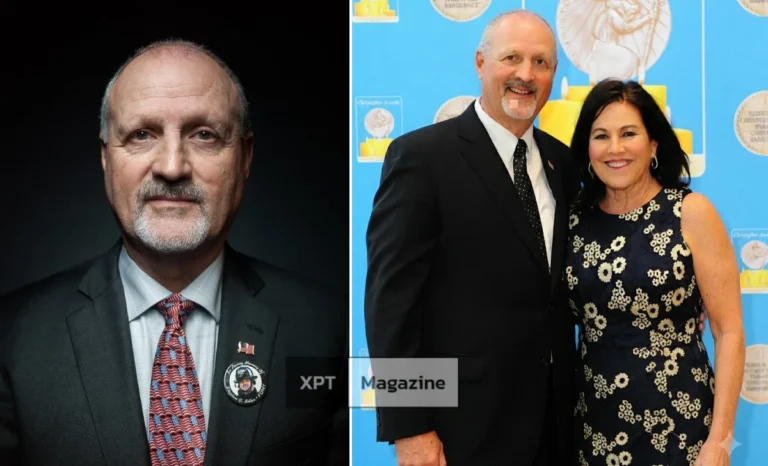
Tom Villante spent more than two decades building YapStone, a payment processing company that quietly became one of the largest players in its niche without ever going public. That privacy is exactly why his net worth is so hard to pin down.
Estimates online range from roughly $30 million to more than $500 million, and neither end of that range comes with real proof behind it. Villante has never confirmed a figure, and YapStone’s ownership structure has never been made public.
What we do know is more grounded: he co-founded a company in 1999 that grew into a major fintech player, sold a Malibu home for $35 million, and built a career that started in investment banking long before YapStone existed. That’s the story worth telling here.
Tom Villante Net Worth in 2026
Estimated Net Worth
Based on his equity in YapStone, his real estate history, and his other business interests, a reasonable estimate places Tom Villante’s net worth somewhere in the tens of millions to low hundreds of millions of dollars. Some sites list figures as high as $500 million or more, but those numbers rest on guesswork rather than disclosed financial records.
One number you’ll see repeated across the web — $18 billion — is not his net worth at all. That figure refers to the total dollar volume YapStone processes through its platform each year, which is a measure of transaction activity, not company value or personal wealth. Confusing the two is a common mistake in aggregator-style content, and it’s worth clearing up before going any further.
Why His Exact Net Worth Is Unknown
YapStone is privately held, which means it has no obligation to disclose revenue, profit, or valuation. Villante’s personal stake in the company has also never been made public, and after 24 years and multiple funding rounds, founder equity in a startup rarely stays anywhere close to 100%. Early investors, venture capital rounds, and employee stock pools all take a share over time.
In 2023, YapStone announced it would be acquired by Velo Payments, with some reports indicating the deal closed in late 2024. As with most private acquisitions, the financial terms were never disclosed, so this event likely affected his wealth without giving the public any way to measure by how much.
Factors That Influence His Wealth
A few things shape any reasonable estimate of his net worth:
- His equity stake in YapStone at the time of the Velo Payments acquisition
- Proceeds from the 2020 sale of his Malibu home, which more than doubled his original purchase price
- Real estate and private equity holdings through Villante Capital Partners, LLC
- Angel investments in other companies, including Aura and Insikt
- Income from board memberships, advisory roles, and speaking engagements
Quick Facts About Tom Villante
| Detail | Information |
|---|---|
| Full Name | Thomas Villante |
| Date of Birth | Not publicly confirmed |
| Age | Mid-to-late 50s (based on his 1989 Princeton graduation) |
| Nationality | American |
| Education | Princeton University, B.A. in Economics (1989) |
| Profession | Entrepreneur, fintech executive, investor |
| Company | YapStone (co-founder, former CEO, Chairman) |
| Years Active | Since the late 1980s |
| Estimated Net Worth | Unconfirmed; estimates range widely |
How Tom Villante Built His Wealth
Investment Banking Career
After graduating from Princeton in 1989, Villante started his career in investment banking, working at firms including S.G. Warburg (now part of UBS) and William E. Simon & Sons. This period gave him early exposure to deal-making and capital markets, skills he’d rely on heavily once he started raising money for his own company.
Private Equity Experience
Villante later became a Partner at The Seidler Company, a Los Angeles-based private equity and leveraged buyout firm. Private equity work meant evaluating businesses for their long-term value rather than short-term performance, a mindset that would shape how he later built YapStone.
Founding YapStone
In 1999, Villante co-founded YapStone with a simple idea: convert payments that were typically made by paper check into electronic transactions. At the time, digital payments were still a new concept for many industries, and YapStone found its opening by focusing on sectors that hadn’t yet modernised, like property management and rentals.
Expanding the Business
YapStone grew steadily by expanding into new verticals, including vacation rentals and sharing-economy platforms. The company raised more than $110 million in capital over the years, including funding rounds involving Accel Partners and Meritech Capital, and by 2018 had reached a reported valuation north of $470 million.
Leadership in Fintech
Villante served as CEO before moving into the Chairman role, and he became a regular speaker at fintech and business events, including Money 20/20 and Web Summit. That visibility helped position both him and YapStone as established names in payment processing.
Tom Villante Career Timeline
Early Career
Villante entered the workforce in investment banking shortly after finishing his degree at Princeton in 1989.
Joining the Financial Industry
He spent his early career years at established banking and private equity firms, building the financial and deal-making experience that would later support YapStone’s growth.
Launching YapStone
YapStone launched in 1999, with Villante and co-founder Matt Golis aiming to modernise how businesses accepted payments in industries still reliant on paper checks.
Company Growth
Over the following two decades, YapStone expanded its client base, raised outside capital, and grew into a payment processor handling billions of dollars in transactions annually.
Recent Business Activities
YapStone’s acquisition by Velo Payments, announced in 2023, marked one of the most significant developments in the company’s history and likely represented a major financial event for Villante personally, even though the deal terms were never made public.
YapStone Success Story
What Is YapStone?
YapStone is a payment processing company built for what the industry calls “vertical markets” — specific industries with their own payment needs, rather than general consumer transactions.
Industries It Serves
The company’s platform has been used across property management, vacation rentals, homeowners associations, and other sharing-economy businesses that needed a way to accept recurring or high-volume digital payments.
Major Milestones
YapStone reached profitability within its first two years and reportedly operated without needing additional outside funding for roughly 11 years, a notable stretch of self-sufficiency for a payments startup.
Funding and Growth
The company eventually raised over $110 million from investors, including a Series C round in 2018 that pushed its valuation past $470 million.
Market Position
By the time of its acquisition, YapStone was processing between $15 billion and $18 billion in payments annually, putting it among the more established names in vertical-market payment processing.
Tom Villante’s Income Sources
Equity Ownership
His stake in YapStone has long been considered his primary source of wealth, though the exact size of that stake has never been disclosed.
Executive Compensation
As CEO and later Chairman, Villante would have drawn a salary and likely other compensation tied to the company’s performance, though specific figures aren’t public.
Investments
Beyond YapStone, Villante has built a portfolio through Villante Capital Partners, LLC, a firm focused on real estate and private equity investments.
Venture Capital Interests
He’s made angel investments in companies including Aura and Insikt, adding diversification beyond his core fintech background.
Advisory Roles
Speaking engagements, board involvement, and advisory work have added additional, if likely smaller, income streams over the years.
Tom Villante’s Assets
Real Estate
Villante’s most publicly documented asset is a Malibu beachfront property known as Casa di Pietra. He purchased it in 2013 for $14.7 million and sold it in 2020 for $35 million, more than doubling his investment.
Business Holdings
His primary business holding was his stake in YapStone, alongside his ownership of Villante Capital Partners, LLC.
Investment Portfolio
His broader portfolio spans real estate, private equity, and select startup investments, reflecting a diversified approach rather than dependence on a single asset.
Education and Early Life
Childhood
Public details about Villante’s childhood are limited. Some sources describe a family connected to Major League Baseball through his father, though these details aren’t independently verified in mainstream reporting.
College Education
Villante attended Princeton University from 1985 to 1989, earning a Bachelor’s degree in Economics.
Skills Developed Early
His economics background gave him a foundation in financial systems and markets that carried directly into his early banking career and, later, into building YapStone.
Personal Life
Family
According to reporting from The New York Times, Villante was previously married to Caitlin Anastasia Meehan, with the two marrying in 1996 in Greenwich, Connecticut. He has three children: two daughters, Catherine and Taylor Anastasia, and a son, Thomas Jr.
Relationship Status
Villante largely keeps his personal life private and hasn’t publicly discussed his current relationship status.
Bethenny Frankel Relationship
Villante drew mainstream media attention in late 2024 when he was linked to former “Real Housewives of New York City” star Bethenny Frankel. The two were first photographed together in Santa Monica in September 2024, and Frankel confirmed the relationship on Instagram that November. They were seen together at events including the “Yellowstone” season premiere and a New Year’s trip to Miami. By 2026, however, Frankel had moved on and publicly introduced a new boyfriend, businessman Shane L. Campbell, suggesting her relationship with Villante had ended sometime before then.
Lifestyle
Villante has been associated with Malibu and Santa Monica, California, and is a member of the Young Presidents’ Organisation’s Santa Monica Bay chapter, a network for business leaders.
Business Leadership and Achievements
Awards
There’s no publicly documented record of major industry awards specifically given to Villante.
Industry Recognition
His clearest form of recognition came through YapStone’s growth and his frequent appearances as a speaker at major fintech conferences.
Speaking Engagements
Villante has spoken at events including Money 20/20, Web Summit, and MoneyConf, positioning him as a known voice in the payments industry.
Leadership Style
Public commentary suggests Villante favours deep, industry-specific knowledge and automation as central to running a payments business, along with staying closely engaged with competitors and market shifts.
Philanthropy and Community Involvement
Charitable Work
Villante has served on the boards of local schools and charitable organisations, though specific causes aren’t widely publicised.
Community Contributions
His philanthropic activity appears to be handled quietly, consistent with his generally private approach to matters outside of business.
Tom Villante Net Worth Growth Over the Years
| Year | Estimated Net Worth |
|---|---|
| 2021 | Estimate unavailable; no public disclosure |
| 2022 | Estimate unavailable; no public disclosure |
| 2023 | Estimate unavailable; Velo Payments acquisition announced |
| 2024 | Estimate unavailable; acquisition reportedly finalised |
| 2025 | Estimates range widely, from roughly $30M to $500M+ |
| 2026 | Estimates remain unconfirmed and widely disputed |
Because YapStone has never disclosed financial details and Villante hasn’t confirmed a personal figure, any year-by-year breakdown is speculation dressed up as data. We’re including this table because readers expect it, not because the numbers in it are reliable.
Tom Villante Compared With Other Fintech Entrepreneurs
Tom Villante vs. Patrick Collison: Collison co-founded Stripe, a payments company that reached a public valuation in the tens of billions of dollars through repeated funding rounds. YapStone operated at a far smaller scale and never approached that level of investor attention or size.
Tom Villante vs. Max Levchin: Levchin co-founded PayPal, a company that went public and later became part of eBay before spinning off again, giving Levchin a net worth built on well-documented, publicly tracked equity. Villante’s wealth, by contrast, has no equivalent public record.
Tom Villante vs. Jack Dorsey: Dorsey co-founded Block (formerly Square), a publicly traded company where his ownership stake and its value are disclosed in SEC filings. That transparency is the single biggest difference between his situation and Villante’s — one is a matter of public record, the other is a matter of estimation.
Key differences in business models and wealth: The entrepreneurs above built companies that eventually went public or reached massive scale with heavy venture backing. Villante took a more measured route, growing YapStone steadily within specific industry niches and keeping it private for its entire 24-year run. That approach likely built real, durable wealth, but it also means far less of it is visible to the outside world.
Interesting Facts About Tom Villante
- He’s a Princeton graduate with a degree in Economics
- He started his career as an investment banker before moving into private equity
- He co-founded YapStone in 1999 and served as both CEO and Chairman over the years
- He’s an active angel investor, with stakes in companies like Aura and Insikt
- He sold a Malibu property for $35 million in 2020, more than double what he paid for it
- He’s a member of the Young Presidents’ Organisation
- He built one of the more established names in vertical-market payment processing without ever taking YapStone public
Frequently Asked Questions (FAQs)
What is Tom Villante’s net worth?
There’s no confirmed figure. Public estimates range from roughly $30 million to more than $500 million, based mostly on his equity in YapStone and his real estate history.
How did Tom Villante make his money?
Primarily by co-founding and building YapStone, a payment processing company, alongside earlier work in investment banking and private equity, plus real estate and angel investments.
Is Tom Villante a billionaire?
No credible source supports that claim. The $18 billion figure sometimes attached to his name actually refers to YapStone’s annual transaction volume, not his personal wealth.
What company did Tom Villante found?
He co-founded YapStone in 1999, along with Matt Golis.
Who owns YapStone?
YapStone was privately held with Villante as a co-founder, CEO, and later Chairman, before the company’s 2023 acquisition by Velo Payments.
What does YapStone do?
YapStone provides payment processing technology for specific industries, including property management, vacation rentals, and sharing-economy businesses.
Who is Tom Villante dating?
He was publicly linked to Bethenny Frankel from late 2024 into early 2025, but by 2026 she had moved on to a new relationship, suggesting the two are no longer together.
What is Tom Villante’s educational background?
He earned a Bachelor’s degree in Economics from Princeton University in 1989.
Does Tom Villante invest in startups?
Yes. He’s made angel investments in companies including Aura and Insikt.
What are Tom Villante’s primary income sources?
His YapStone equity, real estate holdings, private equity investments through Villante Capital Partners, and various advisory and speaking roles.
Final Thoughts
Tom Villante’s career traces a fairly direct line: Princeton, investment banking, private equity, and then two decades spent building YapStone into a real player in payment processing. That’s a solid, well-documented foundation for wealth, even if the exact size of that wealth isn’t public.
The honest answer to “what is Tom Villante’s net worth” is that nobody outside his inner circle actually knows, and any specific number you see online is an estimate, not a fact. What’s clear is that his money came from steady, deliberate business building rather than one dramatic payday, and that YapStone’s 2023 acquisition by Velo Payments likely marked the most significant financial event of his career.
Since neither Villante nor YapStone has released financial details, expect the estimates to keep varying until something changes that.