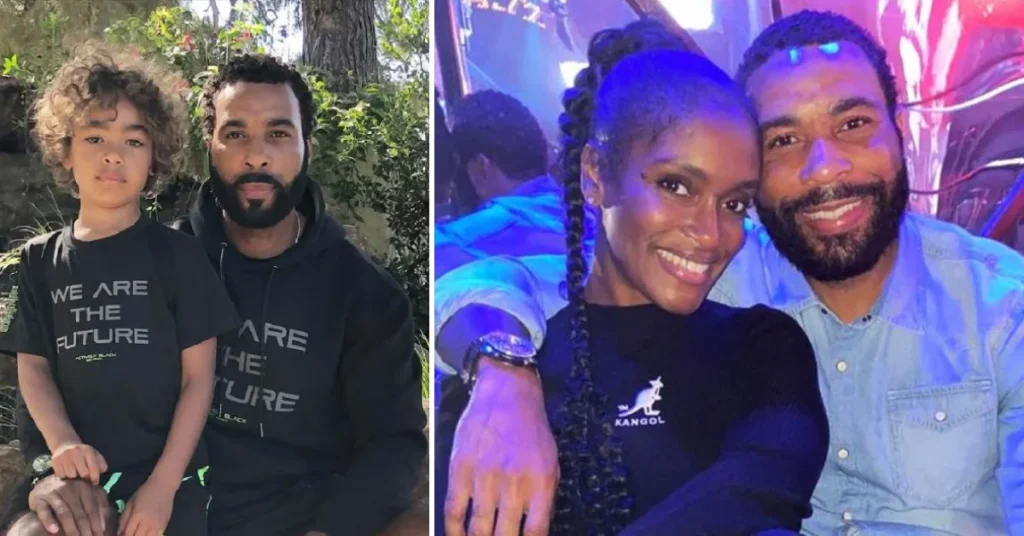
Most people recognize the Hardwick name because of Omari Hardwick’s starring role in Power. But his sister Shani has built her own meaningful path, one focused on community service and helping families thrive. While her brother commands attention on screen, Shani works behind the scenes in maternal and infant health programs, dedicating her career to some of the most vulnerable populations.
She prefers privacy over publicity. Her Instagram account stays private, and she rarely appears in media coverage. Yet her work speaks volumes about her values and the priorities she learned growing up in Georgia.
Who is Shani Hardwick?
Shani Hardwick is a community leader and nonprofit professional who has spent years working in maternal health advocacy. She’s best known publicly as the sister of actor Omari Hardwick, but her identity extends far beyond that family connection. She holds roles focused on improving outcomes for mothers and infants, particularly in underserved communities.
Unlike her famous brother, Shani chose a career path away from entertainment. She built her professional life around public service, working with organizations like the March of Dimes to support families during pregnancy and early childhood. Her work addresses critical issues like premature birth prevention and access to quality healthcare for pregnant women.
The contrast between the siblings is striking. Omari thrives in the spotlight; Shani operates effectively without it. This difference doesn’t reflect competing values but rather two different expressions of the same family foundation: both contribute to their communities, just through vastly different channels.
Family roots: growing up in the Hardwick household
Shani grew up in the Savannah and Decatur areas of Georgia alongside her brothers Omari, Jamil, and Malik. Their mother, Joyce Hardwick, worked as an attorney, while their father, Clifford Hardwick III, built a career in athletics. The household emphasized education, discipline, and service.
Growing up as the sister of future actor Omari Hardwick meant witnessing his early passion for performance and poetry. But each Hardwick sibling carved out their own identity. Shani gravitated toward community engagement and social issues rather than creative arts. The family dynamic encouraged individuality while maintaining close bonds.
Reports about her exact birthdate vary across sources, with some outlets listing different years. What remains consistent across accounts is the strong family foundation that shaped all the Hardwick children. Their parents instilled values about giving back and using your talents to benefit others, principles that clearly influenced Shani’s career choices.
Early influences & education
Shani pursued higher education with a focus on communications and community development. The specific details of her academic path aren’t widely publicized, which aligns with her privacy preference. What’s clear is that her education prepared her for work in nonprofit management and public health advocacy.
Her hometown environment played a role in shaping her interests. Growing up in Georgia communities with significant health disparities likely exposed her to the very issues she’d later work to address. Seeing firsthand how access to quality healthcare varies by zip code can leave a lasting impression on young people with service-oriented mindsets.
The Hardwick household valued both achievement and contribution. This combination pushed Shani toward a career where success meant measurable impact on real families rather than personal recognition or financial gain. Her educational choices reflected this priority, preparing her for roles in community organizations rather than corporate environments.
Career in community work & maternal health
Shani Hardwick has dedicated her professional life to maternal and infant health initiatives. Her work focuses on reducing disparities in birth outcomes and ensuring pregnant women receive proper prenatal care. This field requires deep commitment because progress happens slowly, one family at a time.
She’s been associated with the March of Dimes, an organization that fights premature birth and infant mortality. Community directors in these roles typically coordinate local programs, manage volunteer efforts, and build partnerships with healthcare providers. The work involves equal parts advocacy, education, and hands-on program implementation.
Her typical day likely includes meetings with healthcare professionals, grant writing, community outreach, and tracking health outcomes. It’s not glamorous work, but it saves lives. Every percentage point improvement in prenatal care access represents dozens or hundreds of healthier babies and mothers.
Notable projects or roles
While specific program details aren’t widely documented, professionals in her position typically lead initiatives like prenatal education classes, support groups for high-risk pregnancies, and community health fairs. According to organizational records and public profiles, her work emphasizes closing the gap between underserved communities and quality maternal healthcare.
Personal life: family, marriage, and privacy
Shani is married, though she keeps details about her spouse and children largely private. This discretion stands in sharp contrast to typical celebrity family dynamics, where every life event becomes content for public consumption. She’s made intentional choices about what parts of her life to share.
Her relationship with her famous brother remains strong. Omari occasionally mentions his siblings in interviews and social media posts, expressing pride in their accomplishments. Family gatherings appear to be private affairs, away from cameras and public attention.
Balancing a demanding career in nonprofit work with family responsibilities requires constant adjustment. Community health advocacy doesn’t follow a nine-to-five schedule. Health crises don’t wait for convenient timing, and the families she serves often need support during evenings and weekends. Her ability to maintain both professional impact and personal privacy demonstrates careful boundary-setting.
Public presence: media, social, and public perception
Shani maintains an Instagram account under the handle @shanikiden, but it stays private. This choice means her social media presence serves personal connections rather than public influence. You won’t find her posting advocacy campaigns or leveraging her brother’s fame for platform-building.
Most media coverage of Shani appears in articles about Omari Hardwick’s family rather than features about her own work. Entertainment outlets occasionally mention her when profiling the Power star’s background and family life. This secondary coverage pattern reflects her deliberate choice to stay out of the spotlight.
When her name appears in search results, it’s typically alongside questions like “Who is Omari Hardwick’s sister?” rather than recognition of her professional accomplishments. This reality frustrates some, but probably doesn’t bother Shani much. The families she serves know her impact, even if entertainment blogs don’t.
Why she matters: community impact beyond the headlines
Shani Hardwick represents a kind of success that rarely makes headlines but fundamentally changes lives. While society celebrates actors, athletes, and entrepreneurs, the community organizers and nonprofit leaders doing daily work in maternal health receive little public recognition. Yet their impact often exceeds that of more visible careers.
Maternal and infant health in America faces serious disparities. Black women experience significantly higher rates of maternal mortality and morbidity than white women, regardless of education or income level. Community advocates working to close these gaps address life-and-death issues, not abstract policy debates.
Her career choice matters precisely because it’s unglamorous. In a culture obsessed with fame and wealth, choosing a path focused on service over recognition demonstrates values worth celebrating. The mothers who receive proper prenatal care, the babies born healthy instead of premature, the families connected to resources they didn’t know existed—these represent Shani’s real legacy.
She’s built a life of purpose without needing public validation. That might be the most important lesson her story offers. Success doesn’t require spotlights or social media metrics. Sometimes the most meaningful work happens quietly, in communities far from red carpets and entertainment headlines.