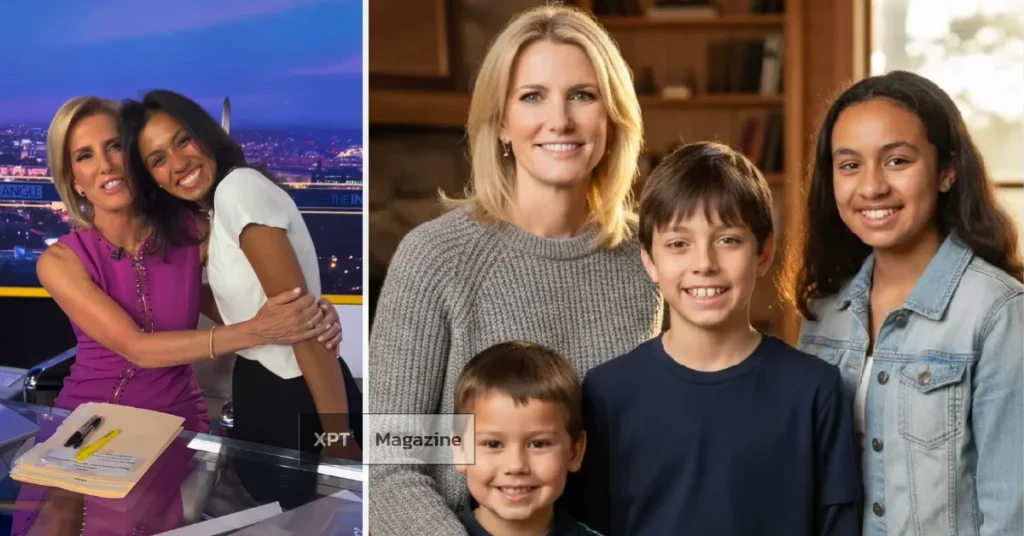
Laura Ingraham, the conservative political commentator and Fox News host, has built her career in front of a camera. Her family, by deliberate contrast, has stayed almost entirely out of frame. Her eldest child, Maria Caroline Ingraham, adopted from Guatemala in 2008, is the most private chapter of that story — and one of the least documented.
A quick note before we go further: a lot of what circulates online about Maria — her exact birth year, her current age, her college plans — varies from source to source, sometimes wildly.
This article separates what’s actually been confirmed from what’s simply been repeated often enough to sound true.
Quick Facts
| Detail | What’s Known |
|---|---|
| Full Name | Maria Caroline Ingraham |
| Adoptive Mother | Laura Ingraham |
| Birthplace | Guatemala |
| Adopted | 2008 |
| Family Role | Eldest of three siblings |
| Siblings | Michael Dmitri Ingraham (adopted from Russia, 2009), Nikolai Peter Ingraham (adopted from Russia, 2011) |
| Exact Birth Year / Current Age | Not confirmed — widely reported figures conflict |
| Education | Not confirmed — university enrollment claims are unverified |
| Public Profile | None verified (no confirmed social media, interviews, or public statements) |
| Net Worth | Not applicable — private individual with no public income, assets, or career |
Who Is Maria Caroline Ingraham?
Maria Caroline Ingraham is Laura Ingraham’s adopted daughter and the eldest of her three children. She was born in Guatemala and came home to the United States in 2008, when Laura — then 43 and single — completed the adoption. Laura was already a prominent conservative radio host at the time, but she chose to become a mother through international adoption rather than wait for her career or personal life to look a certain way first.
Laura has spoken about the trip to bring Maria home in unusually personal terms, calling it “the most amazing few days that I’ve ever spent in my life and the best thing I’ve ever done.”
Maria is now an adult, though her precise current age isn’t something the family has confirmed — more on why that’s murkier than it should be below. What is clear is that she has grown up almost entirely outside public view, by her mother’s design.
The Adoption: Guatemala, 2008
Maria’s adoption happened at a pivotal, and difficult, moment for Guatemalan international adoption. Guatemala had for years been one of the largest source countries for U.S. adoptions, but by 2007 the process had come under intense scrutiny over fraud, falsified paperwork, and concerns that some children were being placed for adoption without their birth families’ informed consent. In response, Guatemala moved to bring its system in line with the Hague Adoption Convention’s stricter standards — and in late 2008, it suspended new international adoptions almost entirely while it overhauled the process.
Laura completed Maria’s adoption before that window closed. Beyond confirming the year and calling it life-changing, she has not gone into detail publicly about the specifics of the process or Maria’s birth family — a boundary she’s maintained consistently for all three of her children.
Three Siblings, One Private Household
Maria isn’t an only child. Laura later adopted two sons from Russia: Michael Dmitri, who joined the family in 2009, and Nikolai Peter, adopted in 2011 — among the last children placed with American families before Russia banned the practice outright in 2013. Maria, as the eldest, has grown up as the oldest of three siblings from three different origins, raised together as a single-parent household in the Washington, D.C. area.
Laura has described balancing three adopted children with a demanding, high-profile television career as requiring real structure — school, routine, and, by her own account, keeping her children’s day-to-day lives as ordinary as possible despite her own visibility. The few family photos she has shared publicly tend to appear around birthdays and holidays, rarely more often, and never with identifying details beyond the moment itself.
What Maria Is Doing Now
This is the section where the internet gets the least reliable, so it’s worth being straightforward: reports that Maria attends a specific university, including claims she’s enrolled at Texas A&M, are widely repeated but have never been confirmed by Laura or by any primary source. The same goes for claims about a public LinkedIn profile. Treat both as unverified.
What’s more solidly established is the pattern, not the specifics: Maria has not built any public-facing presence — no verified social media, no interviews, no public statements — and Laura has not used her own platform to detail her daughter’s education or career plans. That silence is consistent with how she’s handled all three of her children’s lives, and it appears to be a choice rather than an absence of newsworthy material.
Public Appearances Are Rare, and That’s the Point
Photographs of Maria in public are uncommon enough that each one gets outsized attention relative to how little it actually reveals. Most surface around family-oriented events tied to Laura’s own public appearances, rather than anything Maria has sought out herself. Unlike children of many media figures, she has not attended premieres, galas, or press events in any documented, recurring way.
Laura’s own social media remains the most consistent — if still sparse — window into the relationship: occasional birthday or holiday posts, warmly worded, revealing little beyond affection. It’s a narrow aperture by design.
Why This Level of Privacy Is Unusual — and Deliberate
Laura’s job runs on public conflict — she stakes out strong political positions for a living, and those positions generate equally strong reactions. She’s spoken about wanting to keep that entirely separate from her children, and the record backs that up: none of her three kids have a verified public social media presence, none have given interviews, and none have been drawn into the political controversies that follow their mother.
That’s a genuinely uncommon outcome for the child of a prominent cable news personality. It’s also worth noting plainly: this piece exists in the same information ecosystem it’s describing, and the appropriate response to a family that has chosen privacy is not to fill the gap with invented specificity — which is exactly what a lot of the content about Maria online has done, with contradictory claims about her birth year, exact age, and other details that don’t hold up against the one verifiable primary source available (a 2008 news account of the adoption itself).
Conclusion
Maria’s story is really two things at once: the story of an international adoption completed in the final months before Guatemala’s program was overhauled, and a case study in how a public figure can — if she chooses to — keep her children almost entirely outside the story she tells for a living. Whatever curiosity her mother’s fame generates, Maria herself hasn’t asked for any of it, and the reliable version of her story is a short one: adopted from Guatemala in 2008, eldest of three, and by all available evidence, exactly as private as her mother intended her to be.