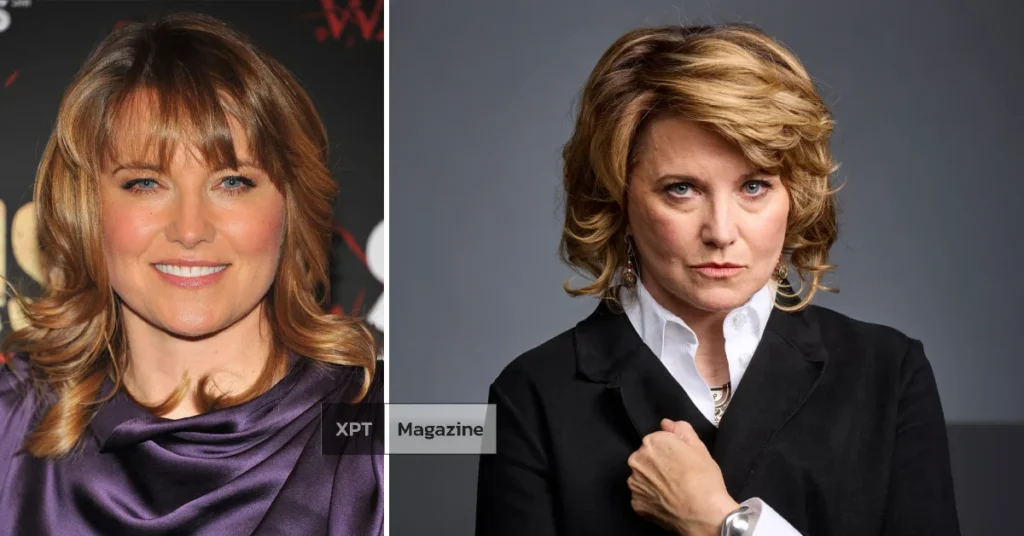
Lucy Lawless is a New Zealand actress best known for playing Xena in the 1990s TV series. She’s appeared in Battlestar Galactica, Spartacus, and My Life Is Murder, and is a vocal activist. In 2024, she made her directorial debut with the documentary Never Look Away about war photographer Margaret Moth.
You probably know her as the fierce warrior who kicked down doors on 90s television. But Lucy Lawless has spent the decades since building a career that stretches far beyond leather armor and battle cries. Born Lucille Frances Ryan on March 29, 1968, in Mount Albert, Auckland, the New Zealand actress became a household name when Xena: Warrior Princess turned her into an action hero for a generation. Now 56, she’s shifted into a completely new role: documentary director. Her debut film, Never Look Away, premiered at Sundance in 2024 and tells the story of war photographer Margaret Moth. The move surprised some fans, but anyone who’s followed Lawless’s path can see the thread connecting her choices. She’s always picked projects that demand something real from her, whether that’s physical stunts, emotional weight, or standing up for what she believes in.
Who is Lucy Lawless?
Lucy Lawless built her reputation playing women who refuse to back down. Her breakout role as Xena aired from 1995 to 2001, but she never let that character define her limits. Over the years, she’s appeared in Battlestar Galactica, Spartacus, Parks and Recreation, and the New Zealand crime series My Life Is Murder. She’s also walked Broadway stages, climbed oil-drilling ships for Greenpeace, and become one of the most vocal supporters of LGBTQ rights in entertainment. Her personal life centers around her marriage to producer Rob Tapert and their blended family. In 2024, she stepped behind the camera for the first time with a documentary about a photojournalist who survived a bullet to the face and kept working in war zones. That combination of toughness and empathy runs through everything Lawless does.
Early life and New Zealand roots
Growing up in Auckland shaped the way Lawless approached her craft. She was one of six siblings in a working-class family. Her mother was a teacher, her father a banker and the city’s mayor. Lawless attended Marist College, a Catholic girls’ school, where she sang in the choir and performed in school musicals. Music became her first creative outlet. She studied languages and opera at Auckland University but didn’t finish her degree. Instead, she started picking up small roles in New Zealand television and theater. In 1989, she won the Mrs New Zealand pageant title while married to her first husband, Garth Lawless. That same year, she landed a guest spot on the sketch comedy show Funny Business. The pageant and the comedy gig might seem disconnected, but both required her to perform under pressure and connect with an audience. Those early years taught her how to command attention without overthinking it.
The break that changed everything: getting cast as Xena
Lawless wasn’t the first choice for Xena. The character started as a villain in three episodes of Hercules: The Legendary Journeys in 1995. Producers Rob Tapert and Sam Raimi created Xena as a one-off antagonist, but test audiences responded so strongly that they greenlit a spinoff. Lawless brought a mix of physical power and vulnerability that made the warrior princess feel real. She did most of her own stunts, which meant long days of fight choreography, wire work, and bruises. The show became a cultural moment. It aired in over 100 countries and built a devoted fanbase, especially among women and LGBTQ viewers who saw something rare on screen: a strong, complex female lead who didn’t need a man to validate her story. The relationship between Xena and her companion Gabrielle, played by Renée O’Connor, added layers of subtext that fans embraced. Lawless never shied away from that interpretation. She understood what the character meant to people and used her platform to support those communities.
Beyond Xena: key TV roles and choices
After Xena ended in 2001, Lawless didn’t disappear. She showed up in projects that let her stretch in different directions. In 2005, she joined Battlestar Galactica for its final season, playing D’Anna Biers, a Cylon journalist. The role required less physical action and more psychological tension. Then came Spartacus: Blood and Sand in 2010, where she played Lucretia, a manipulative Roman woman caught in a violent political game. The role was dark, morally tangled, and far from heroic. Lawless leaned into it. She also made memorable guest appearances on The Simpsons, Curb Your Enthusiasm, and Parks and Recreation, where she played Ron Swanson’s love interest Diane. That last role showed her comic timing and warmth, qualities that don’t always get highlighted in action-heavy parts.
TV roles
Her most recent series, My Life Is Murder, launched in 2019 and follows a retired detective solving cold cases in Melbourne and later Auckland. The show brought Lawless back to New Zealand and gave her a chance to work closer to home. It’s lighter in tone than Spartacus but still centers on a sharp, independent woman. The show has run for multiple seasons and found an audience on streaming platforms like Acorn TV. Lawless serves as an executive producer, which gives her more creative control over the stories they tell.
Stage, music, and performance instincts
Theater never left Lawless’s system. In 1997, she took over the role of Rizzo in Broadway’s revival of Grease, replacing Rosie O’Donnell. The role required singing, dancing, and a completely different energy than Xena. She handled it. Over the years, she’s performed in cabarets, concert tours, and stage productions in both New Zealand and the United States. She recorded songs for Xena soundtracks and even released a few singles. Her voice is strong and controlled, which makes sense given her early training in opera. Stage work keeps her grounded. It’s immediate, unforgiving, and requires total presence. Film and TV allow for multiple takes and editing, but theater demands that you deliver every night without a safety net.
Public life: activism, causes, and public image
Lawless has used her fame to push for change. She became one of Greenpeace’s most visible supporters, participating in direct actions that made headlines. In 2012, she and several activists boarded the Noble Discoverer, an oil-drilling ship docked in New Zealand, and stayed there for four days to protest Arctic drilling. She was arrested and later convicted of burglary, though she received a light sentence. The stunt got attention, which was the point. She’s also spoken out on climate change, human rights, and political issues in both New Zealand and the United States. Her allyship with LGBTQ communities runs deep. She’s attended Pride events, spoken at rallies, and consistently defended the right of fans to interpret Xena however they choose. She doesn’t treat activism as a side project. It’s woven into her public identity and the roles she picks.
Personal life and off-screen priorities
Lawless married her first husband, Garth Lawless, in 1988 and had a daughter, Daisy, in 1989. The marriage ended in 1995. That same year, she met Rob Tapert on the set of Hercules. They married in 1998 and have two sons, Julius and Judah. Tapert produced Xena, Spartacus, and many of the projects Lawless has worked on over the years. That creative partnership has shaped both their careers. Family life pulled her away from Hollywood at times. She’s talked openly about the challenge of balancing work and parenting, especially when projects required long shoots overseas. Living in New Zealand for much of her life allowed her to raise her kids outside the entertainment industry spotlight. She’s protective of their privacy and rarely discusses them in interviews.
Latest chapter: directing Never Look Away and current work
Never Look Away marks Lawless’s first time directing a feature-length documentary. The film follows Margaret Moth, a fearless war photographer who worked for CNN and was shot in the face by a sniper in Sarajevo in 1992. Moth survived, rebuilt her jaw, and went back to conflict zones. Lawless spent years researching Moth’s life, interviewing her friends and colleagues, and piecing together archival footage. The film premiered at Sundance in January 2024 to positive reviews. Critics praised Lawless for capturing Moth’s reckless courage without romanticizing the trauma she endured. Directing required a completely different skill set than acting. Lawless had to shape a story from raw material, manage a crew, and make hundreds of decisions that actors don’t typically face. She’s said the experience changed how she sees filmmaking. It’s unclear if she’ll direct again, but the move signals that she’s not interested in repeating herself.
Legacy & why Lucy Lawless still matters
Lucy Lawless gave a generation of viewers a hero who looked and fought like no one else on television. Xena broke ground not just because of its action sequences but because it centered women’s stories without apology. Lawless brought authenticity to the role, and she’s carried that same quality into every project since. She didn’t retreat after Xena ended. She kept working, kept learning, and kept using her voice for causes she believes in. Her transition to directing shows that she’s still evolving. Fans remember Xena, but Lawless has built something bigger than any single role. She’s proven that you can be tough, vulnerable, political, and creative all at once. That’s the real legacy.