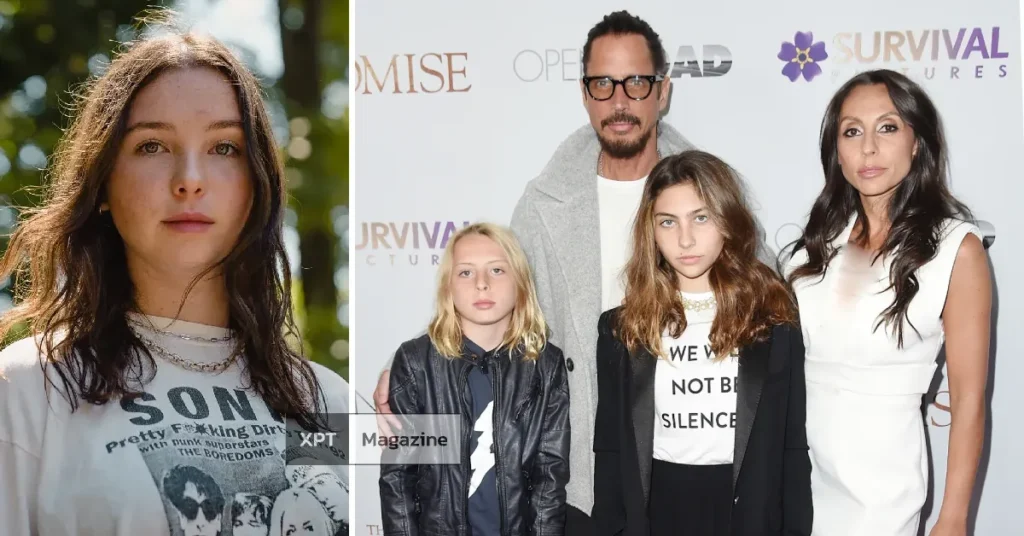
Born on June 28, 2000, Lillian Jean Cornell carries a name that connects her to one of rock music’s most respected voices. You might know her as Lily Cornell Silver — the name she often uses publicly. She’s the eldest daughter of Chris Cornell, the late Soundgarden and Audioslave frontman, and Susan Silver, a prominent music manager. But she’s building something beyond that connection: a voice focused on mental health and compassionate public conversation.
At 25, Lillian represents a generation that grew up with social media but chooses how to use it carefully. She posts about mental health, shares family moments, and appears in public when it matters to her. She’s not chasing fame — she’s using her platform to talk about things that help people.
Who is Lillian Jean Cornell?
Lillian made her first major public appearance in 2020 during a benefit concert honoring her father. She joined Alice in Chains on stage, a moment that introduced many people to her presence and poise. The performance showed she inherited her father’s calm stage presence, even if music isn’t her main path.
She goes by both Lillian Jean Cornell and Lily Cornell Silver in different contexts. The name variation reflects her dual identity: connected to her father’s legacy through Cornell, and to her mother’s through Silver. Born in Seattle and raised in the heart of the music industry, she had access to concerts, studios, and creative conversations from childhood. But she’s carved out her own direction, one that focuses on mental health advocacy rather than following directly into music.
Her younger sister, Toni Cornell, has pursued singing and occasionally performs their father’s songs. Lillian supports that choice, but made a different one for herself. She studied media and communication, skills she now uses to host conversations and create content about mental wellness.
Childhood and family background
Growing up as Chris Cornell’s daughter meant living in two worlds at once. Her father toured globally with Soundgarden and Audioslave, bringing rock music to millions. Her mother managed major Seattle bands during the grunge era, including Alice in Chains and Soundgarden itself. Music wasn’t just playing in the house — it was the family business.
But Lillian’s childhood wasn’t all backstage passes. Her parents prioritized normal routines when they could. School, friends, family dinners — they tried to balance fame with stability. Chris Cornell spoke openly in interviews about wanting his children to have grounded lives, despite the chaos that comes with touring.
She has two younger siblings: Toni Cornell, born in 2004, and Christopher Nicholas Cornell, born in 2005. The three siblings share a close bond, especially after their father died in 2017. That loss changed everything. Lillian was 16 when her father died, an age when you’re figuring out who you are. Grief became part of that process.
Susan Silver continued managing her career and raising the children through that difficult period. The family stayed in Seattle, maintaining connections to the community that had watched them grow up. Privacy mattered more than ever.
Education, interests, and early adulthood
Lillian attended college, focusing on media studies and communication. The specifics of her degree program aren’t widely publicized — she keeps academic details private. But her interests are clear from her work: she’s drawn to storytelling, mental health, and using media to start conversations that matter.
She didn’t grow up wanting to be famous. Friends and family describe her as thoughtful and observant, someone who listens more than she talks in group settings. That quality serves her well now. When she does speak publicly, people pay attention because she doesn’t waste words.
Her early adulthood involved processing grief while figuring out what she wanted to contribute. Many young people in her position might retreat entirely or lean hard into celebrity. Lillian found a middle path. She stepped into public view selectively, choosing projects that aligned with her values.
She’s interested in psychology, media production, and how people share vulnerable experiences online. These interests shape the work she does now — hosting conversations, appearing on podcasts, and using social platforms to reduce stigma around mental health challenges.
Mental-health advocacy and public projects
In 2020, Lillian launched “Mind Wide Open,” a series of conversations about mental health. The project featured interviews with friends, family members, and public figures discussing anxiety, depression, therapy, and coping strategies. She didn’t position herself as an expert — she positioned herself as someone asking honest questions.
The tone was gentle but direct. No clinical jargon. No performative positivity. Just real talk about what it’s like to struggle and what helps. She interviewed her younger sister Toni, family friends, and others willing to share their experiences. The conversations happened on video and reached thousands of viewers looking for that kind of openness.
Lillian also appeared on other platforms discussing mental health. She joined podcasts and participated in segments for outlets like Lemonade Media, where she talked about her first panic attack and what she learned from it. These appearances built her reputation as someone who could discuss difficult topics without making them feel heavy or preachy.
Her advocacy comes from personal experience. Losing her father to suicide in 2017 put mental health at the center of her life. She’s spoken about the importance of therapy, medication when needed, and the value of simply checking in on people. She doesn’t claim to have all the answers. She just keeps the conversation going.
Relationship to her father’s legacy
Chris Cornell died on May 18, 2017, shortly after performing with Soundgarden in Detroit. His death devastated the music community and his family. Lillian was thrust into public mourning at 16 — an impossible age to lose a parent, let alone process that loss under public scrutiny.
She handles her father’s legacy with care. When she does speak about him publicly, it’s with warmth and occasional glimpses of humor. She shares memories that show his personality: his terrible dad jokes, his love of cooking, and the way he sang around the house. These details humanize him beyond the rock star image.
In 2020, she joined members of Alice in Chains for a livestreamed benefit concert, performing “Black Gives Way to Blue.” It was her debut public performance, and she handled it with quiet confidence. The performance wasn’t about proving she could sing — it was about honoring her father and supporting a cause.
She doesn’t appear at every tribute event or anniversary. She chooses when to step into that spotlight. Some years she posts a simple photo on Instagram on his birthday or the anniversary of his death. Other times, she stays silent. That selectivity shows respect for her own boundaries and her father’s memory.
Public presence and social media
Lillian maintains an active Instagram account (@lilycornellsilver) where she shares glimpses of her life. Her feed includes photos with friends, posts about mental health resources, throwback family pictures, and updates on projects she’s working on. The account feels personal without being oversharing.
She uses social media differently from many people her age. There’s no constant posting, no trend-chasing, no performative content. When she does post, it usually has purpose: promoting a mental health organization, sharing a meaningful moment, or updating followers on advocacy work.
Her captions are thoughtful. She writes about therapy, grief, self-care, and the challenges of young adulthood. Followers respond positively because the content feels genuine. She’s not selling a lifestyle — she’s documenting a life that includes both struggles and growth.
She also uses her platform to amplify other voices. She shares posts from mental health organizations, advocates for suicide prevention, and promotes resources for people in crisis. This approach makes her account useful beyond just following a celebrity’s daughter.
What she’s working on now / current focus
Lillian continues working on mental health advocacy through various channels. While “Mind Wide Open” was her most public project, she remains involved in mental health conversations through guest appearances and collaborations with organizations focused on youth mental wellness.
She’s selective about her projects. You won’t see her at every event or attached to every initiative. She seems to prioritize quality over quantity, choosing work that aligns with her values and allows for meaningful impact.
She’s also focused on her own education and personal development. At 25, she’s at an age where many people are still figuring out their path. She’s not rushing. She’s building skills, maintaining relationships, and showing up for causes that matter to her when it makes sense.
Recent public appearances have been sparse, which is intentional. She values privacy and doesn’t feel the need to maintain constant visibility. When she does appear, it’s usually connected to mental health awareness or honoring her father’s memory in some way.
Why she matters — voice, values, and next steps
Lillian Jean Cornell matters because she shows what thoughtful public advocacy can look like. She didn’t have to use her platform for mental health conversations. She could have stayed completely private or pursued entertainment. Instead, she chose a harder path: speaking about grief, mental illness, and healing in ways that help others.
She represents a generation that inherited trauma but refuses to let it define them entirely. She talks about therapy and medication without shame. She acknowledges hard days while still moving forward. That honesty resonates with young people navigating similar challenges.
Her approach to her father’s legacy also sets an example. She honors him without being consumed by his shadow. She shares memories without exploiting them. She performs when it feels right, stays quiet when it doesn’t. That balance is difficult to maintain, but she does it with grace.
Looking ahead, Lillian will likely continue this measured approach. She’ll show up for mental health causes, support her siblings, and build a life that reflects her values rather than public expectations. She’ll probably never be as famous as her father, and that seems fine with her. She’s building something different: a reputation for compassion, honesty, and using privilege to start conversations that matter.
The public will see her when she chooses to be seen. And that might be the most powerful part of her story — knowing when to speak and when to step back.
Lillian Jean Cornell, born June 28, 2000, is the daughter of Chris Cornell and Susan Silver. Known publicly as Lily Cornell Silver, she’s a mental health advocate who uses her platform to discuss grief, therapy, and wellness. She balances privacy with selective public advocacy, honoring her father’s legacy while building her own path.