
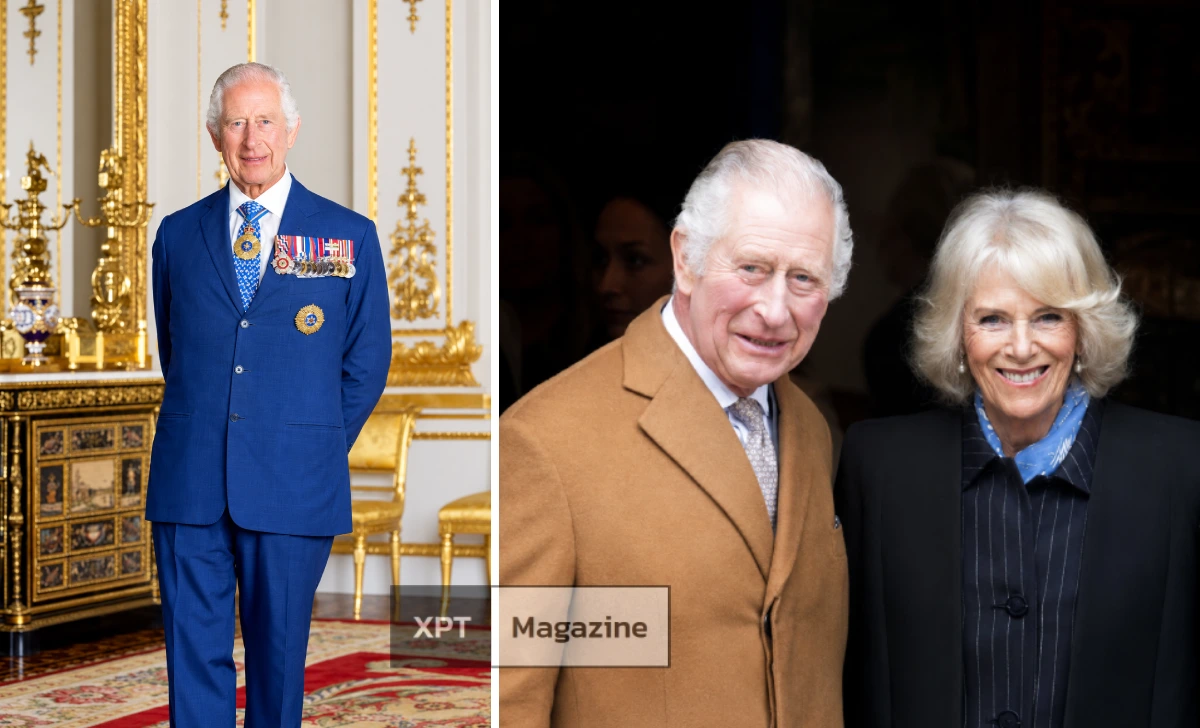
King Charles III has spent more than 77 years in public life, but only the last four as monarch. That shift — from the world’s longest-serving heir to head of state — changed almost nothing about his daily habits and almost everything about his responsibilities.
This guide answers the questions people actually search for: who he is, how he became king, what he does day to day, and why he holds a title most people have never heard of — Lord of Mann. It also covers his health, his finances, and where things stand for him in 2026.
Who Is King Charles III?
Quick Facts About King Charles
- Full name: Charles Philip Arthur George
- Born: November 14, 1948, Buckingham Palace, London
- Age: 77 (as of mid-2026)
- Title: King of the United Kingdom and 14 other Commonwealth realms
- Reign began: September 8, 2022
- Coronation: May 6, 2023, Westminster Abbey
- Spouse: Queen Camilla
- Children: Prince William, Prince Harry
- Parents: Queen Elizabeth II and Prince Philip, Duke of Edinburgh
Why Is He Famous?
Charles is famous first for being born heir to the British throne, and second for the decades he spent building an identity separate from that fact — as an environmental campaigner, a founder of youth charities, and, more controversially, through his personal life. His marriage to Diana, Princess of Wales, her death in 1997, and his later marriage to Camilla Parker Bowles shaped decades of public interest in him long before he became king.
Current Role as King of the United Kingdom
As monarch, Charles is the constitutional head of state. He doesn’t govern, but he performs ceremonial and legal functions that keep the British system running: opening Parliament, granting royal assent to laws, and representing the country at home and overseas. He’s also head of the Commonwealth, a group of 53 nations with historical ties to Britain.
Early Life and Education
Birth and Childhood
Charles was born at Buckingham Palace on November 14, 1948, the first child of the then-Princess Elizabeth and Prince Philip. He became heir apparent when his mother became queen in 1952, following the death of King George VI.
Parents and Royal Heritage
His mother reigned for 70 years, the longest of any British monarch. His father, Prince Philip, served in the Royal Navy before taking on royal duties full-time. Charles grew up largely at Buckingham Palace and Windsor Castle, with the usual round of royal residences that came with the role.
Education and Military Training
He attended Cheam School and then Gordonstoun in Scotland, a school known for its physically demanding routine. He later studied archaeology, anthropology, and history at Trinity College, Cambridge, becoming the first heir to the throne to earn a university degree. He then trained with the Royal Air Force and Royal Navy, eventually commanding a minehunter, HMS Bronington.
Becoming the Prince of Wales
Charles was formally invested as Prince of Wales in a televised ceremony at Caernarfon Castle in 1969, though he’d held the title since age nine. He spent the next five decades as heir apparent — longer than anyone else in British history.
Family and Personal Life
Marriage to Princess Diana
Charles married Lady Diana Spencer in 1981 at St Paul’s Cathedral, watched by an estimated global television audience in the hundreds of millions. The marriage produced two sons but ended in divorce in 1996, following years of public strain. Diana died in a car crash in Paris in 1997.
Marriage to Queen Camilla
Charles married Camilla Parker Bowles in a civil ceremony in 2005 — the first member of the royal family to have a civil wedding rather than a religious one. She became Queen Camilla when Charles ascended to the throne in 2022.
Children: Prince William and Prince Harry
His sons, Prince William (born 1982) and Prince Harry (born 1984), have taken very different paths. William, as Prince of Wales, remains a working royal and next in line to the throne. Harry stepped back from royal duties in 2020 and now lives in the United States with his wife, Meghan, Duchess of Sussex.
Grandchildren and Royal Line of Succession
Charles has five grandchildren: Prince George, Princess Charlotte, and Prince Louis (William’s children), and Prince Archie and Princess Lilibet (Harry’s children). The line of succession runs from William to George, then Charlotte, then Louis.
Journey to the British Throne
Life as Heir Apparent
Charles waited longer to become king than any monarch in British history — 73 years from becoming heir apparent to acceding to the throne. During that period, he built out his own charitable and environmental work rather than simply waiting in the background.
Becoming King After Queen Elizabeth II
Queen Elizabeth II died at Balmoral on September 8, 2022, at age 96. Charles became king immediately, under the principle that the throne never sits empty, and was formally proclaimed at St James’s Palace the following day.
Coronation Ceremony and Historic Milestones
His coronation took place on May 6, 2023, at Westminster Abbey — the first coronation in Britain in 70 years and the first ever to be televised in a shorter, more modern format compared to Elizabeth II’s 1953 ceremony.
What Does King Charles Do?
Constitutional Duties
As a constitutional monarch, Charles has no political power in practice. He gives royal assent to legislation passed by Parliament, appoints the Prime Minister following an election, and opens each new parliamentary session with the State Opening of Parliament.
Role in the Commonwealth
He’s Head of the Commonwealth, a title that isn’t automatically hereditary but was agreed upon by Commonwealth leaders when he became king. He also remains head of state for 14 countries outside the UK, including Canada, Australia, and Jamaica.
Royal Assent and Government Responsibilities
Royal assent is now a formality rather than a real check on Parliament — no monarch has refused it since 1708. Charles’s role here is procedural, but it’s a required step for any bill to become law.
Public Engagements and State Visits
Charles maintains a full public schedule, including UK-based visits, Commonwealth tours, and formal state visits abroad. He was recognised as one of the busiest working royals in 2025, with royal family members carrying out nearly 2,500 official engagements that year.
Why Is King Charles Called the Lord of Mann?
Meaning of the Title
“Lord of Mann” is the title held by the British monarch as head of state of the Isle of Man, a self-governing Crown dependency in the Irish Sea. It’s not a ceremonial nickname — it’s the Island’s actual constitutional title for its head of state, formalised since 1504.
History of the Lord of Mann
The Isle of Man has never been part of the United Kingdom. It’s governed separately, with its own parliament, tax system, and laws, but the British Crown has held the lordship for centuries, tracing back through a chain of English and Scottish rulers before George III’s reign.
The Isle of Man and the British Crown
Because the Island is a Crown dependency rather than a UK territory, the relationship works differently than with, say, Scotland or Wales. The UK government handles the Island’s defence and international representation, while the Isle of Man runs its own domestic affairs through its parliament, Tynwald.
Does King Charles Own the Isle of Man?
Not personally. The title “Lord of Mann” refers to constitutional headship, not private ownership. The Island governs itself; Charles’s role is symbolic and ceremonial, similar to his role as UK monarch but on a smaller, more localised scale.
King Charles and the Isle of Man
His First Official Visit as Lord of Mann
Charles made his first visit to the Isle of Man as monarch on July 14, 2026 — his first appearance there in this specific capacity, though he’d visited before as Prince of Wales, including a 2012 trip during his mother’s Diamond Jubilee.
Address to Tynwald Parliament
During the visit, he addressed a special sitting of Tynwald, continuing a tradition his mother began on her own first visit as Lord of Mann in 1955. He referenced 2026 as Manx Language Year and made a point of speaking some Manx during his remarks, drawing warm applause from the chamber.
Constitutional Relationship with the Isle of Man
The visit followed the Island’s established format for a royal welcome: a procession led by the historic Manx Sword of State, a Loyal Address from the President of Tynwald, and the King’s formal response — a ceremony that underscores the Island’s self-governing status while recognising the Crown’s constitutional role.
History of Royal Visits to the Island
Royal visits to the Isle of Man are infrequent by design, tied to significant moments rather than a fixed schedule. Charles’s 2026 trip also included a stop marking the 150th anniversary of the Douglas Bay Horse Tramway, where he rode a restored double-decker tramcar along the seafront.
Charity Work and Environmental Advocacy
The King’s Trust (Formerly The Prince’s Trust)
Charles founded The Prince’s Trust in 1976 to support young people facing barriers to education and employment. Renamed The King’s Trust after his accession, it remains one of the UK’s largest youth charities.
Support for Hundreds of Charities
Beyond the Trust, Charles has been patron or president of several hundred charities and organisations over his lifetime, covering areas from the arts to rural affairs to veterans’ support — a scale of involvement that predates his time as king by decades.
Climate Change and Sustainability Initiatives
Charles was talking about environmental issues publicly as early as the 1970s, long before it was a mainstream political topic. His interest in organic farming, sustainable architecture, and climate policy has remained consistent throughout his public life.
Contributions to Community Development
His Duchy of Cornwall estate, held while he was Prince of Wales, also became a testing ground for his ideas on sustainable town planning, most visibly through the Poundbury development in Dorset.
King Charles’ Net Worth and Assets
Estimated Net Worth
Estimates of Charles’s personal net worth vary widely depending on what’s counted. The Sunday Times Rich List 2026 put his personal wealth at roughly £680 million (about $900 million), while other outlets have estimated it anywhere from $800 million to over $1 billion. The gap comes down to how analysts treat Crown-linked assets versus his strictly private holdings.
Income Sources
His money comes from three main channels: the Sovereign Grant (public funding tied to Crown Estate profits, which finances official duties rather than personal spending), income from the Duchy of Lancaster (a private estate that funds his personal and family expenses), and undisclosed personal investments.
Royal Properties and Estates
Properties associated with the Crown — including Buckingham Palace, Windsor Castle, and Sandringham — aren’t personally owned by Charles; they belong to the Crown as an institution. His private holdings, by contrast, include estates managed through the Duchy of Lancaster.
Financial Responsibilities as Monarch
Unlike most wealthy private individuals, Charles pays income tax voluntarily on his private income, a practice his mother also followed. He doesn’t pay inheritance tax on assets passed down from the Crown, under a long-standing arrangement designed to prevent the erosion of Crown assets across generations.
Health and Recent Public Appearances
Official Health Updates
Buckingham Palace confirmed Charles’s cancer diagnosis in February 2024, without disclosing the specific type. In December 2025, he announced in a televised message that his treatment schedule would be reduced going into 2026, describing it as a personal milestone tied to early diagnosis and effective care. Palace officials described the shift as moving into a “precautionary phase,” with ongoing monitoring rather than a declared remission.
Recent Royal Engagements
Since that announcement, Charles has kept an active public schedule, including his July 2026 visit to the Isle of Man and a busy Royal Week in Scotland earlier that month, covering ceremonial duties including the Ceremony of the Keys and the opening of the Scottish Parliament.
Public Response and Media Coverage
Charles has occasionally made light, off-the-cuff comments about ageing and health during public appearances, which tend to generate significant media attention given the ongoing interest in his condition. Palace communications on the matter have remained measured, avoiding specific clinical detail.
Interesting Facts About King Charles
Lesser-Known Facts
He’s the first British monarch to hold a university degree, the first to have trained as a qualified pilot in three branches of the armed forces, and the oldest person to become monarch in British history, at age 73.
Personal Interests and Hobbies
Charles paints in watercolour, is a keen gardener (his gardens at Highgrove are well known), and has long-standing interests in architecture, organic farming, and classical music.
Awards, Honours, and Achievements
Over his lifetime,ime he’s received numerous military and honorary titles, along with international honours reflecting his decades of charitable and diplomatic work, though as monarch he now holds these roles alongside his constitutional duties rather than instead of them.
Timeline of King Charles’ Life
- 1948 — Born at Buckingham Palace
- 1952 — Becomes heir apparent when his mother becomes Queen
- 1969 — Invested as Prince of Wales at Caernarfon Castle
- 1976 — Founds The Prince’s Trust
- 1981 — Marries Lady Diana Spencer
- 1996 — Divorces Diana
- 2005 — Marries Camilla Parker Bowles
- 2022 — Becomes King following Queen Elizabeth II’s death
- 2023 — Coronation at Westminster Abbey
- 2024 — Cancer diagnosis announced
- 2026 — Reduces cancer treatment schedule; makes first visit to the Isle of Man as Lord of Mann
Conclusion
King Charles III spent most of his life waiting for a role he’s now held for four years. His reign so far has been shaped by continuity — keeping the monarchy’s ceremonial functions running smoothly — alongside real personal challenges, from his cancer diagnosis to ongoing family strain. As he moves through 2026 with a reduced treatment schedule and a full public calendar, the picture emerging is of a monarch trying to balance health, duty, and the long institutional habits of a role centuries in the making.
FAQs
Who is King Charles III?
He’s the King of the United Kingdom and 14 other Commonwealth realms, having acceded to the throne in September 2022 after the death of his mother, Queen Elizabeth II.
How old is King Charles?
He was born on November 14, 1948, making him 77 as of mid-2026.
Who is King Charles married to?
Queen Camilla, whom he married in 2005. His first marriage was to Diana, Princess of Wales.
How many children does King Charles have?
Two sons: Prince William, Prince of Wales, and Prince Harry, Duke of Sussex.
Why is he called the Lord of Mann?
It’s his constitutional title as head of state of the Isle of Man, a self-governing Crown dependency separate from the United Kingdom.
What are King Charles’ main responsibilities?
Mostly ceremonial and constitutional: granting royal assent to laws, opening Parliament, representing the UK at state events, and serving as Head of the Commonwealth.
What is King Charles’ net worth?
Estimates range from around $800 million to over $1 billion, depending on how Crown-linked assets are counted.
What charities does King Charles support?
Several hundred, most notably The King’s Trust (formerly The Prince’s Trust), which he founded in 1976 to support disadvantaged young people.
What is the line of succession after King Charles?
Prince William is next in line, followed by his children: Prince George, Princess Charlotte, and Prince Louis.
What are the latest updates about King Charles?
In December 2025, he announced a reduced cancer treatment schedule going into 2026. In July 2026, he made his first visit to the Isle of Man as Lord of Mann, addressing the Manx parliament, Tynwald.