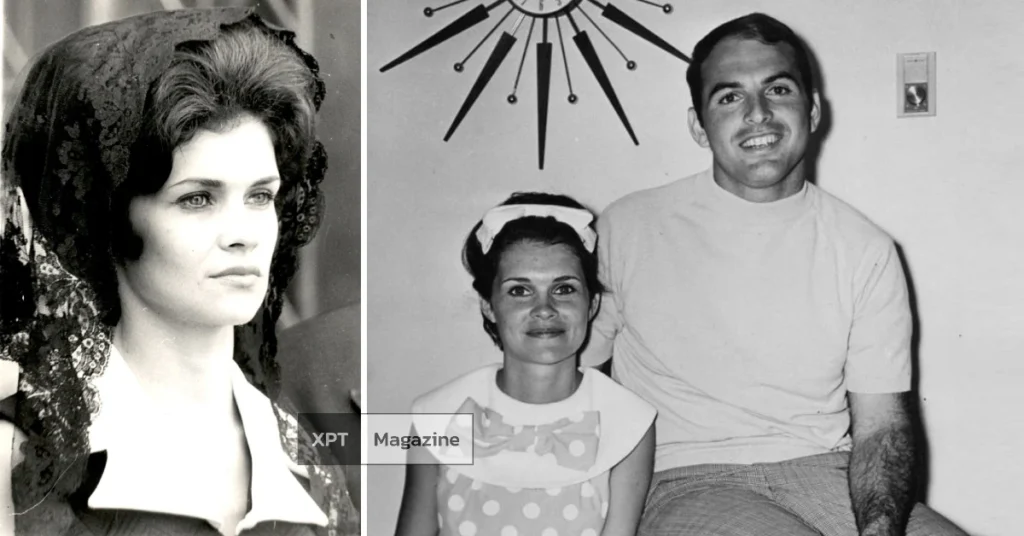
Joy Murrath is best known as Brian Piccolo’s wife. She married the Chicago Bears running back in 1964 and was left to raise three daughters alone after his death from cancer in 1970 at age 26. Despite being thrust into the public eye through tragedy and the film Brian’s Song, Joy has maintained a private life, quietly honoring Brian’s memory while building her own path forward.
In this article
- Who is Joy Murrath?
- Early life and background
- Meeting Brian Piccolo — a high-school love story
- Life as Brian Piccolo’s wife: family and everyday moments
- The illness, the loss, and the public response
- Life after Brian: rebuilding and private life
- Public image & legacy: how Joy shapes Brian’s memory
- Where is Joy Murrath now?
- Why Joy’s story still matters
Joy Murrath became a public figure not through her own ambition but through love and loss. When her husband, NFL running back Brian Piccolo, died of cancer at 26 in 1970, she was left to navigate grief while the world watched. Their story — told through the film Brian’s Song — made Joy part of American sports history. But who was she beyond the headlines? What happened after the cameras stopped rolling?
Who is Joy Murrath?
Joy Murrath is best known as Brian Piccolo’s wife. She married the Chicago Bears running back in 1964 and stood by him during his brief but memorable NFL career. When Brian died from embryonal cell carcinoma in June 1970, Joy was 26 years old with three young daughters. The tragedy turned her into a symbol of quiet strength during one of pro football’s most heartbreaking moments. While she never sought the spotlight, her connection to Brian’s legacy made her story inseparable from his.
Early life and background
Details about Joy’s early years remain largely private. She grew up during the 1940s and 1950s, a time when women’s stories often went unrecorded unless they married someone famous. What we know for certain is that she met Brian Piccolo during their high school years, and their relationship would become the foundation of her public identity. Unlike today’s celebrity spouses who manage social media profiles and give regular interviews, Joy kept her personal history close. This privacy has continued throughout her life.
Meeting Brian Piccolo — a high-school love story
Joy and Brian’s relationship began in the early 1960s when both were young and full of hope. They got engaged while Brian was building his reputation as a talented football player at Wake Forest University. On December 26, 1964, they married — a winter wedding that started their life together. Brian was working toward his NFL dreams, and Joy supported him through the uncertainty of professional sports. Their bond formed before fame touched their lives, giving it a foundation that would matter deeply in the years ahead.
The couple settled into married life just as Brian signed with the Chicago Bears in 1965. While he trained and competed, Joy managed their growing household. This was standard for the era — wives of athletes rarely worked outside the home, and their contributions went largely unacknowledged in public records.
Life as Brian Piccolo’s wife: family and everyday moments
Joy and Brian had three daughters together: Lori, Traci, and Kristi. By all accounts, their home life was normal and grounded despite Brian’s rising profile with the Bears. Joy took on the traditional role of mother and homemaker while Brian pursued his career. Friends and teammates remembered the Piccolo family as close-knit and down-to-earth.
Brian’s NFL career wasn’t glamorous by superstar standards. He played as a backup running back and special teams contributor. What made him notable was his friendship with fellow running back Gale Sayers, particularly their status as one of the first interracial roommate pairs in professional football. Joy witnessed this friendship up close and saw how Brian’s personality — warm, funny, competitive — shaped the team culture. She understood the man behind the jersey number.
During the late 1960s, the Piccolo household operated like many young families. Joy raised the girls while Brian traveled for games. Money was decent but not extravagant. Life revolved around football schedules, birthday parties, and the everyday routines of raising children. Then everything changed in 1969 when Brian started feeling sick.
The illness, the loss, and the public response
Brian Piccolo was diagnosed with embryonal cell carcinoma in November 1969. The cancer was aggressive and rare. Joy faced an impossible situation — watching her husband fight for his life while trying to protect their daughters from the harsh reality. Brian underwent surgery and treatment, but the disease spread quickly.
The Chicago Bears and the NFL community rallied around the family. Gale Sayers dedicated his 1969 George S. Halas Courage Award to Brian, giving a speech that moved everyone who heard it. The press covered Brian’s battle extensively, which meant Joy’s private grief became public property. Photographers captured the family at the hospital. Reporters asked about treatment updates. Joy had no choice but to endure this scrutiny while staying strong for her daughters.
Brian Piccolo died on June 16, 1970. He was 26 years old. The funeral drew teammates, fans, and media attention. Joy, still young herself, became a widow with three daughters under the age of six. The sports world mourned Brian as a symbol of courage and friendship. For Joy, the loss was deeply personal and overwhelming.
The tragedy inspired Brian’s Song, a made-for-TV movie that aired in 1971. The film told Brian’s story through his friendship with Gale Sayers, and it became one of the most-watched TV movies ever made. Suddenly, Joy’s life was dramatized on screen. While the movie kept Brian’s memory alive, it also meant Joy could never fully escape the public’s association of her with that painful chapter.
Life after Brian: rebuilding and private life
After Brian’s death, Joy faced the challenge of raising three daughters alone. Unlike today, resources for young widows were limited, and the financial benefits for NFL families were modest. She had to rebuild her life without much public support beyond the initial wave of sympathy.
Reports suggest Joy eventually remarried, though she maintained her privacy about her personal life. Some sources indicate she took the name Joy Piccolo in her later years, honoring Brian’s memory while moving forward. Details about her career or later relationships remain scarce because she chose to stay out of the media spotlight. This decision makes sense — after years of public grief, she deserved to live without constant attention.
Her daughters grew up away from the cameras. Joy focused on giving them stability and normalcy. She didn’t write memoirs or give regular interviews about Brian. While other NFL widows became advocates or public figures, Joy chose a quieter path. This doesn’t diminish her strength; it demonstrates a different kind of resilience.
Public image & legacy: how Joy shapes Brian’s memory
Despite her privacy preference, Joy played a role in preserving Brian Piccolo’s legacy. She attended memorial events and allowed her daughters to participate in tributes when appropriate. The Chicago Bears honored Brian with the Brian Piccolo Award, given annually to a rookie who shows courage and dedication. Joy’s presence at these events reminded people that behind the legend was a real family who lived with the loss every day.
Brian’s Song kept the story alive for new generations. People who never saw Brian play learned about him through the film. Joy became part of that cultural memory, even if she didn’t actively seek it. Her quiet dignity in the aftermath of tragedy added depth to Brian’s story — it wasn’t just about football or friendship but about love and loss.
Over the decades, Joy’s role shifted from grieving widow to guardian of memory. She didn’t exploit Brian’s fame or profit from the story. Instead, she let his legacy speak for itself while protecting her family’s privacy. This balance between honoring the past and living in the present defined her approach to being Brian Piccolo’s wife.
Where is Joy Murrath now?
Current information about Joy Murrath is limited. She maintains a low profile and doesn’t engage with media or social media platforms. Some sources suggest she lives a quiet life, possibly in Florida, though these details are difficult to confirm. Her daughters are adults with their own families, and Joy appears content to stay out of public view.
At her age — likely in her early 80s now — Joy has lived more than five decades since Brian’s death. She experienced a full life beyond those painful years in 1969 and 1970. While curiosity about “where is she now” persists among fans and researchers, the lack of information reflects her successful effort to maintain privacy. In an age of constant exposure, her ability to live quietly deserves respect.
Why Joy’s story still matters
Joy Murrath’s story matters because it shows the human side of sports tragedy. When we celebrate athletes, we often forget about the families who support them and suffer when they’re gone. Joy didn’t ask to become famous. She fell in love, built a family, and then faced unimaginable loss in the public eye.
Her resilience — raising three daughters alone, honoring Brian’s memory without exploiting it, and building a private life after years of scrutiny — demonstrates quiet strength. Not every story of courage involves grand gestures or public speeches. Sometimes it’s simply continuing forward when everything feels impossible.
For people researching Brian Piccolo or the history of the Chicago Bears, Joy represents the untold stories behind every famous athlete. She reminds us that sports legends were real people with families who loved them, and those families continued long after the final whistle blew.