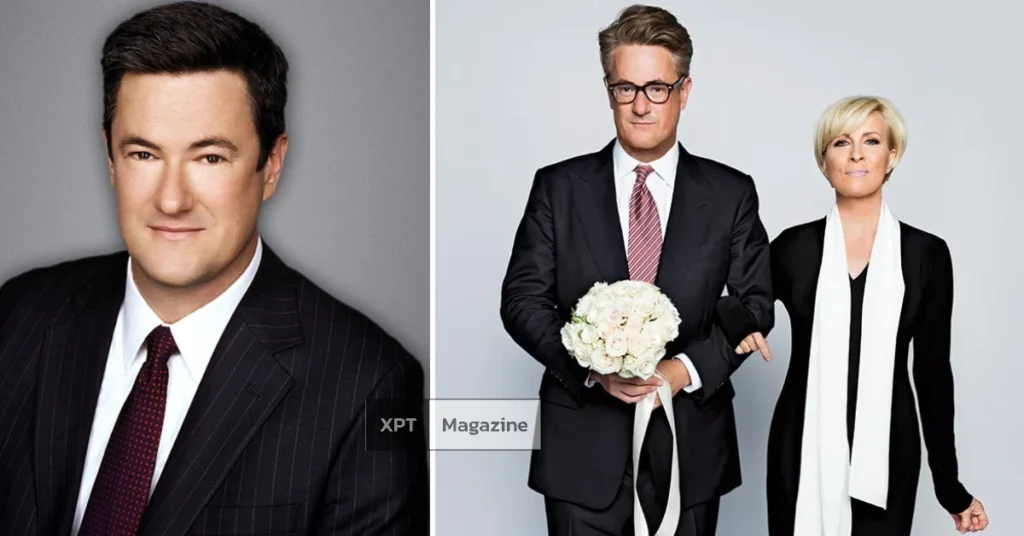
He spent six years representing Florida in Congress before walking away from politics. Now he wakes up America every morning from a television studio in New York. That shift from lawmaker to talk show host makes Joe Scarborough one of cable news’s most recognizable voices.
Charles Joseph Scarborough was born on April 9, 1963. Today, he co-hosts MSNBC’s Morning Joe, a program that blends political commentary with casual conversation. Before the cameras and the coffee mugs, he served Florida’s 1st congressional district from 1995 to 2001. He won four elections as a Republican, then left office while his career was still rising. That decision surprised colleagues and voters alike.
Most people know him from television. But his path to morning news took unexpected turns through law offices, campaign stops, and even music studios. His professional evolution offers a case study in reinvention.
Early life and education
Scarborough grew up moving between states. His father worked in business, which meant the family relocated often during his childhood. They spent time in Georgia before settling in the Florida Panhandle. That coastal region would later become his political base.
He attended the University of Alabama, where he earned a bachelor’s degree in history. College also sparked his interest in music. He played guitar and wrote songs, activities that stayed with him long after graduation. Later, he enrolled at the University of Florida’s law school, graduating with his J.D. in 1990. During those year,s he even penned a musical, mixing his legal studies with creative work. That blend of interests hinted at someone who wouldn’t fit a single professional category.
After law school, he returned to Pensacola and opened a practice. He handled real estate transactions and small business cases. The work paid bills but didn’t satisfy his broader ambitions.
A quick political chapter: Congressman from Florida
By the early 1990s, Scarborough saw an opening. Florida’s 1st district, stretching along the Panhandle, leaned conservative. The Republican Revolution was building momentum nationwide. He jumped into the 1994 race and won decisively, capturing his seat as part of the wave that gave Republicans control of the House for the first time in four decades.
In Washington, he joined the freshman class that pushed for balanced budgets and smaller government. He served on the Armed Services and Judiciary committees. Colleagues knew him as articulate and willing to challenge party leadership when he disagreed with their approach. He won reelection three times without breaking a sweat.
Then in 2001, he announced he was leaving Congress. He cited family reasons, particularly his desire to spend more time with his children after his divorce. The decision shocked political observers who expected him to climb the leadership ladder. He walked away at 38, turning his back on a promising congressional career.
Transition to media: Finding a voice on TV
Leaving politics didn’t mean leaving public life. Scarborough moved into television, where his background and communication skills found a new audience. MSNBC gave him a prime-time show called Scarborough Country in 2003. The program featured political debates and cultural commentary. It ran for four years and established him as a credible voice in cable news.
The network then asked him to co-host a morning program. Morning Joe launched in 2007 with Scarborough joined by Mika Brzezinski and Willie Geist. The show broke from traditional morning news formats. Instead of quick headlines and weather updates, it offered long-form discussions where guests could develop arguments and hosts could push back. Conversations often sprawled across segments, creating a living-room feel that contrasted with the stiff formality of other programs.
The format worked. Morning Joe became required viewing for political insiders, journalists, and anyone interested in the day’s news. Scarborough brought his congressional experience to the table, offering a perspective that pure journalists couldn’t match. He understood legislative tactics and political motivations from the inside.
Television host & former congressman
His dual identity as a politician and a commentator gives him unusual credibility. When he analyzes congressional negotiations, he speaks from experience. He knows how deals get made, how leadership applies pressure, and when public statements mask private positions.
But that background also draws criticism. Some viewers question whether a former Republican can fairly cover politics. Scarborough left the party in 2017, registering as an independent. He explained that the party had changed in ways he couldn’t support. That move didn’t silence critics who see partisan bias in his commentary.
His on-air chemistry with Brzezinski became central to the show’s appeal. They debated, disagreed, and occasionally interrupted each other. The dynamic felt authentic rather than scripted. Their professional partnership eventually became personal.
Personal life in brief
Scarborough married Brzezinski in 2018. The wedding followed years of speculation about their relationship. Both had been married before. He has four children from previous marriages. Brzezinski has two daughters.
The couple keeps much of their private life away from the cameras. They own property in Florida and Connecticut. On air, they maintain professional boundaries despite their marriage. The arrangement works because they treat political disagreements as part of the job rather than personal conflicts.
Their relationship also made them targets. Critics use their marriage to question the show’s objectivity. Supporters argue that transparency about their personal connection actually builds trust with viewers.
Moments that made headlines
Scarborough’s career hasn’t been without controversy. The most persistent attacks center on the death of Lori Klausutis, a staff member who worked in his congressional office. Klausutis died in 2001 from an undiagnosed heart condition that caused her to fall and hit her head. Medical examiners ruled the death accidental.
Despite clear findings, conspiracy theories emerged suggesting Scarborough was somehow involved. These false claims resurfaced repeatedly over the years. In 2020, then-President Donald Trump amplified the baseless accusations on social media. Klausutis’s widower wrote a letter to Twitter asking the company to remove Trump’s tweets, calling them cruel and harmful to his family.
The incident highlighted how public figures can become targets of unfounded speculation. Scarborough addressed the conspiracy theories directly on his show, calling them disgusting and hurtful. The experience shaped his views on social media accountability and the spread of misinformation.
His relationship with Trump has been complicated. Early in the 2016 campaign, Trump appeared frequently on Morning Joe. The show gave him significant airtime. As Trump’s rhetoric intensified, Scarborough became increasingly critical. The relationship soured completely, leading to public feuds that played out on Twitter and morning television. Trump attacked him personally, and Scarborough responded with detailed critiques of the administration’s policies and behavior.
Other work: books, music, and public speaking
Television doesn’t consume all his time. Scarborough has written several books, including novels and political commentary. His writing explores themes of power, corruption, and redemption. The books haven’t topped bestseller lists, but they show his range beyond morning television.
Music remains part of his life. He released an EP and occasionally performs. Friends describe him as a serious guitarist who takes his musical hobby seriously. The creative outlet provides balance to his media work.
He also gives speeches and participates in panel discussions. Universities and civic organizations invite him to share insights on politics and media. These appearances extend his influence beyond the television screen.
Why he matters today
Scarborough represents a specific type of political commentator. He came from inside the system, understands how government works, and isn’t afraid to criticize both parties. His evolution from Republican congressman to independent television host mirrors broader shifts in American politics.
Morning Joe shapes political conversation. Candidates announce campaigns on the show. Policymakers watch to gauge how their ideas are being received. Journalists treat appearances as important opportunities to reach influential audiences. The program’s impact extends beyond its ratings.
His willingness to challenge his former party has made him a polarizing figure. Some praise his independence. Others see opportunism. That divide reflects larger arguments about loyalty, principle, and political identity.
What’s clear is that he built a second career that rivals his first. Few politicians successfully transition to the media. Even fewer become household names in their new field. Scarborough managed both. His path from Congress to cable news created a template that others have tried to follow, though few have matched his success.
He brings political experience to morning television at a time when understanding government feels more important than ever. Whether you agree with his analysis or not, his voice has earned its place in the national conversation.