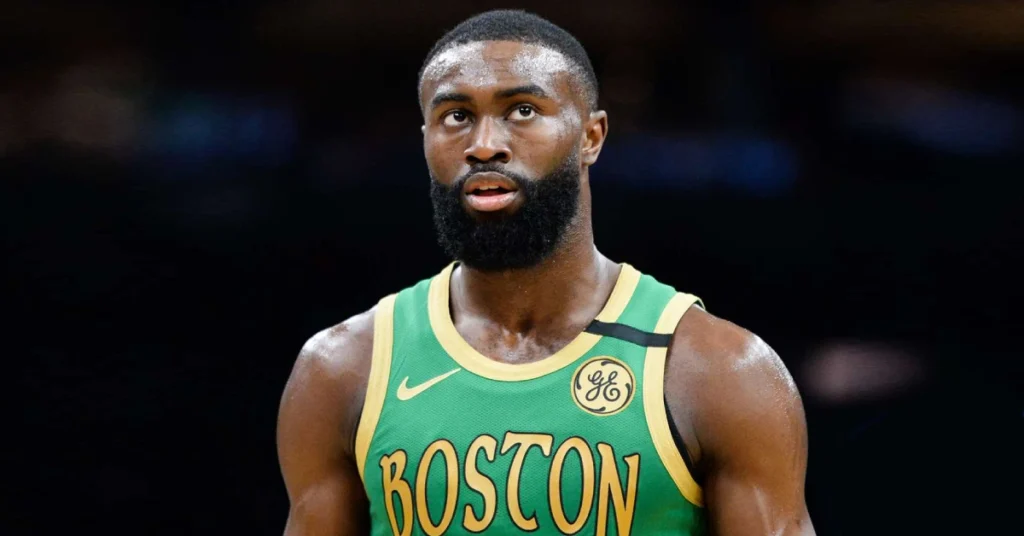
Jaylen Brown stands 6’6″ tall, plays for the Boston Celtics, and just won the 2024 NBA Finals MVP award. But reducing him to basketball statistics misses the bigger picture. At 28 years old, Brown has built a reputation that extends far beyond the hardwood—as a scholar, activist, and revolutionary thinker who happens to excel at professional basketball.
Who Is Jaylen Brown?
Born October 24, 1996, Jaylen Marselles Brown grew up in Marietta, Georgia, with a unique perspective on success. His mother, Mechalle, a professor at Michigan State, raised him with one clear message: education comes first, basketball second. That foundation shaped everything that followed.
Brown’s journey from suburban Atlanta to Boston stardom reflects more than athletic talent. He speaks multiple languages, studies at MIT during the off-season, and launched Boston XChange to bridge racial wealth gaps. His 2024 championship run proved what many already knew—Brown represents a new generation of NBA stars who refuse to fit into neat categories.
NBA Player for the Boston Celtics
The Celtics selected Brown third overall in the 2016 NBA Draft, immediately placing high expectations on the teenager from California. He responded by averaging 6.6 points per game as a rookie, showing flashes of the versatility that would define his career. Playing both small forward and shooting guard, Brown brought defensive intensity and improved three-point shooting to a team rebuilding its identity.
Seven years later, Brown’s growth transformed the franchise. His scoring average jumped from 14.5 points in his third season to over 26 points by 2023. The four-time All-Star developed into Boston’s co-leader alongside Jayson Tatum, forming one of the league’s most dynamic wing duos. Former teammate Marcus Smart, known for his defensive grit and leadership, helped shape Brown’s early competitive mindset. Their partnership culminated in the 2024 NBA championship, where Brown averaged 29.2 points per game in the Finals against Dallas.
Early Years in Marietta, Georgia
Growing up in Marietta shaped Brown’s worldview profoundly. His father, Marselles, a professional boxer, introduced discipline and work ethic early. But when his parents separated, Mechalle became the primary influence, balancing her academic career with raising Jaylen and his brother Quenton.
The family faced challenges. Brown watched his mother complete her master’s degree while working multiple jobs. Those experiences taught resilience. He excelled at Wheeler High School, leading the team to a state championship while maintaining a 3.5 GPA. Teachers remember a student who asked probing questions about history and social justice, interests that would resurface throughout his career.
Basketball offered opportunities, but education provided purpose. Brown turned down scholarship offers from schools with stronger basketball programs to attend California, drawn by academic reputation as much as athletic facilities.
College Career at California, Berkeley
Brown’s single season at UC Berkeley (2015-16) showcased both promise and principles. He averaged 14.6 points and 5.4 rebounds for the Golden Bears, earning Pac-12 Freshman of the Year honors. More revealing were his course selections: he studied Spanish and Arabic while taking graduate-level classes on global poverty.
The Berkeley experience reinforced Brown’s intellectual curiosity. He attended lectures on social movements, connected with professors about international development, and maintained his language studies despite a demanding basketball schedule. Teammates recalled finding him in the library at midnight, switching between game film and academic texts.
His decision to enter the NBA Draft after one year surprised nobody—Brown possessed lottery-level talent. But he promised to continue his education, a commitment he’s maintained through online courses and summer programs.
Draft Day & Rookie Impact
June 23, 2016, changed everything. The Celtics’ selection of Brown sparked debate among fans expecting a different choice. Some questioned drafting another wing player. Others worried about his shooting consistency. Brown responded with characteristic focus, spending the summer refining his jump shot and studying Boston’s defensive schemes.
His rookie season proved the doubters wrong. Brown started 20 games, defended multiple positions, and showed remarkable poise for a 20-year-old. Veterans like Al Horford praised his preparation and willingness to learn. His defense on Luka Dončić proved crucial in the Finals, limiting the Dallas superstar while facing former teammate Kyrie Irving and head coach Jason Kidd’s strategic adjustments. where Brown’s athleticism troubled LeBron James despite the Cavaliers’ eventual series victory.
The foundation was set. Brown’s combination of physical tools, his defense on Luka Dončić proved crucial in the Finals, limiting the Dallas superstar while maintaining offensive efficiency. T-ball IQ and relentless improvement suggested stardom awaited. He just needed time to develop.
Rise to All-Star and Team Leader
Brown’s ascent from role player to All-Star happened gradually, then suddenly. His third season marked the turning point, averaging 13 points while shooting 39.5% from three-point range. The following year brought his first 20-point scoring average and increased leadership responsibilities.
By 2021, Brown earned his first All-Star selection, validation of consistent excellence. He’d become Boston’s most reliable two-way player, equally comfortable defending the opponent’s best scorer or creating his offense. His improved ball-handling allowed him to attack closeouts and finish through contact, adding dimensions to his game.
The 2022 playoff run showcased Brown’s evolution. He averaged 23.1 points during Boston’s Finals appearance, often outplaying more heralded opponents. Though the Celtics fell to Golden State, Brown’s performance announced his arrival among the league’s elite wings. He signed a record-breaking contract extension that summer, committing to Boston through 2029.
2024 Championship & Finals MVP
Everything crystallized during the 2024 playoffs. Brown elevated his game when Boston needed him most, averaging 25 points on 52% shooting throughout the postseason. His defense on Luka Dončić proved crucial in the Finals, limiting the Dallas superstar while maintaining offensive efficiency.
Game 5 epitomized Brown’s impact. With the championship within reach, he scored 31 points, grabbed 8 rebounds, and delivered the signature moment—a thunderous dunk that essentially sealed Boston’s 18th title. The Finals MVP trophy recognized what teammates already knew: Brown had become a complete player capable of dominating every aspect of the game.
“Faith, Consistency, and Hard Work Pays Off,” Brown posted after the victory, a message reflecting his journey from overlooked draft pick to championship centerpiece. The moment validated years of steady improvement and sacrifice.
Scholar, Innovator & Activist
Boston XChange & Social Initiatives
Brown’s influence extends well beyond basketball statistics. In 2023, he launched Boston XChange (BXG), a project addressing racial wealth disparities through education and entrepreneurship. The initiative brings together Black and Brown youth with business leaders, creating mentorship opportunities and seed funding for community projects.
BXG represents Brown’s broader vision for athlete activism. Rather than symbolic gestures, he’s building sustainable programs that create generational change. The project has already funded several Boston-area startups and established partnerships with local colleges. Brown personally mentors participants, sharing insights on financial literacy and professional development.
His activism encompasses multiple causes. Brown has spoken at Harvard about criminal justice reform, organized voter registration drives, and donated millions to educational programs. He views these efforts as extensions of his mother’s teachings about using privilege responsibly.
Academic Pursuits (Languages, MIT/NASA)
Brown’s intellectual interests set him apart in professional sports. He speaks Spanish fluently and continues studying Arabic, seeing language acquisition as cultural bridge-building. During NBA off-seasons, he’s taken courses at Harvard Business School and participated in MIT Media Lab programs exploring technology’s social impact.
His NASA internship in 2018 raised eyebrows—few professional athletes spend summers at space centers. Brown worked with education specialists, developing STEM curricula for underserved communities. The experience reinforced his belief that exposure creates possibility. He frequently references the internship when speaking to young audiences about expanding their horizons.
These pursuits aren’t publicity stunts. Professors and colleagues describe someone genuinely engaged with complex ideas, asking thoughtful questions about artificial intelligence, urban planning, and economic policy. Brown represents a new athlete archetype—one inspired by figures like Muhammad Ali, Malcolm X, and Dr. Martin Luther King Jr.—combining intellect, activism, and excellence beyond sports.
Personal Life: Family, Faith & Passions
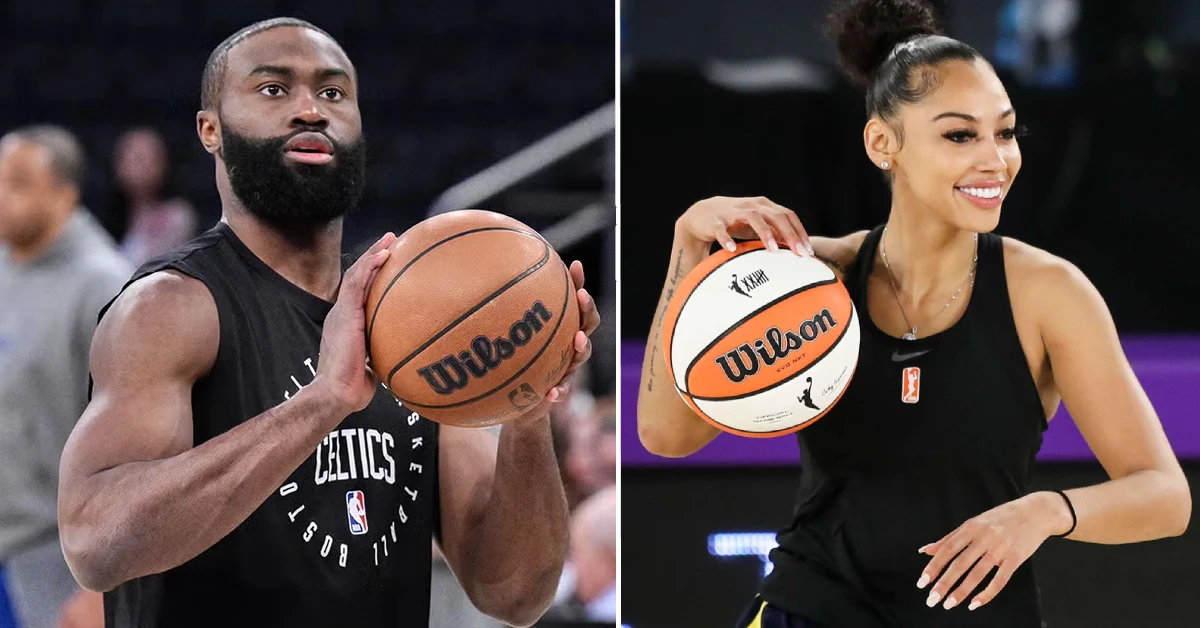
Family remains Brown’s foundation. He credits Mechalle with instilling values that transcend basketball success. While Brown keeps his personal relationships private, his close bond with his family and teammates defines much of his off-court life. Their relationship stays close despite his celebrity—she still critiques his games and reminds him about unfinished coursework. His brother Quenton works in music production, and they collaborate on creative projects during the off-season.
Brown’s faith influences his worldview without dominating his public persona. He describes spirituality as a grounding force, helping maintain perspective through professional pressures. This manifests in his leadership style—teammates describe someone who listens before speaking and considers multiple viewpoints before deciding.
His interests range widely. Brown plays piano, composes music, and reads extensively about history and philosophy. He’s particularly drawn to stories about underdogs and revolutionaries, seeing parallels with his journey. Friends describe someone equally comfortable discussing basketball strategy or James Baldwin essays.
What’s Next for Jaylen Brown?
At 28, Brown enters his prime with championships secured and individual accolades accumulating. His goals extend beyond additional titles. He’s expressed interest in NBA team ownership, seeing it as a vehicle for systemic change. His business ventures continue expanding, with investments in technology, media, and education sectors.
Brown’s basketball future looks bright. The Celtics built their roster around his and Tatum’s partnership, creating championship windows for years ahead. His game continues evolving, adding playmaking responsibilities and refining post moves that exploit smaller defenders. Analysts project several more All-Star appearances and potential All-NBA selections.
More intriguing are Brown’s off-court ambitions. He’s mentioned political interests, though not immediate plans. His academic pursuits suggest possible post-basketball careers in education or international development. Whatever path he chooses, Brown seems destined to impact society beyond sports.
The kid from Marietta who chose education alongside basketball has become everything his mother envisioned—and more. Jaylen Brown proves that modern athletes needn’t choose between excellence and intellect, between winning championships and changing communities. His story continues unfolding, each chapter revealing new dimensions of possibility.