
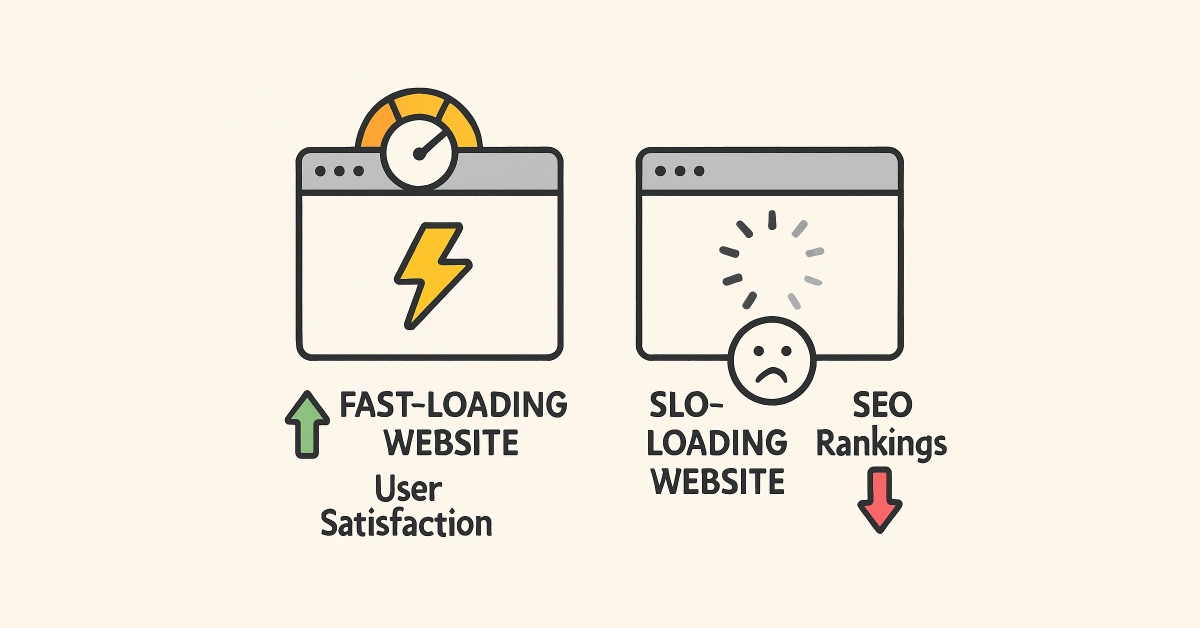
Today, a website’s visibility and success depend not only on its design and content but also on its performance. Google and other search engines prioritize user satisfaction, and slow, cumbersome pages can sabotage your chances of ranking highly. From the moment a potential visitor clicks to enter your site, performance metrics begin to influence both their experience and how search engines judge your relevance.
For site owners focused on maximizing their technical SEO, solutions like Victorious.com/services/seo/technical-seo provide expert guidance to address these critical areas.
Recent trends indicate that search engines prioritize user-centric signals for rankings, making page speed and smooth navigation essential. Laggy web pages lead to higher bounce rates and decreased conversions, presenting a challenge for businesses to ensure quick loading across all devices. Modern audiences expect fast access to information, making site speed optimization a crucial priority.
This optimization not only retains users but also influences engagement signals that search engines use to gauge relevance, emphasizing that speed and reliability are vital for a successful online presence.
Core Web Vitals and SEO
One of the most significant updates in Google’s ranking algorithm is the introduction of Core Web Vitals—metrics that target the heart of user experience. The three pillars, Largest Contentful Paint (LCP), First Input Delay (FID), and Cumulative Layout Shift (CLS), gauge loading performance, interactivity, and visual stability, respectively.
Largest Contentful Paint (LCP)
LCP measures how quickly the main content of a page loads and should ideally happen within 2.5 seconds. Delays can signal to Google that users encounter frustrating experiences, which can trigger lower rankings.
First Input Delay (FID)
FID measures the time it takes for a user to interact with a page, such as clicking a button. An FID under 100 milliseconds is considered optimal, demonstrating smooth interactivity and responsiveness.
Cumulative Layout Shift (CLS)
CLS tracks how much web page elements unexpectedly shift as it loads. A CLS score below 0.1 ensures a visually stable experience, preventing accidental clicks and user frustration.
Meeting these benchmarks not only boosts SEO but also ensures visitors enjoy a seamless, frustration-free browsing experience.
User Experience and Engagement
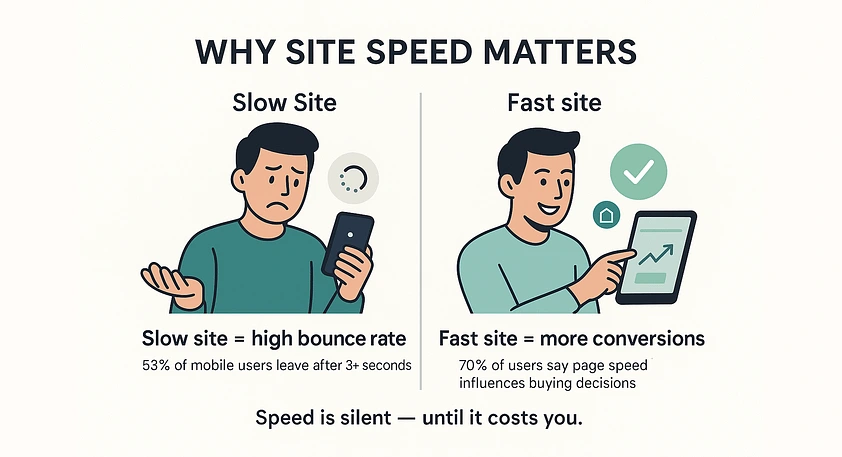
Performance directly affects crucial engagement metrics. Google’s research reveals that 53% of mobile users abandon a site if it takes more than three seconds to load. Dwell time, bounce rate, and session duration—all vital indicators of engagement—are improved by swift and dependable site performance. When users stay longer, interact more, and bounce less, it sends positive signals to search engines that the site is providing value.
Slow sites can create frustration and erode brand trust, ultimately leading to lower conversion rates. On the other hand, fast-loading pages keep visitors engaged and invite further exploration of your offerings.
Mobile-First Indexing
The shift to mobile-first indexing is a fundamental change in how sites are evaluated. Google now primarily uses the mobile version of a site’s content for indexing and ranking. If your mobile performance suffers, so does your visibility in search results. When users access your site on their smartphones or tablets, they expect the same quality of experience as they would on a desktop.
Failing to deliver will impact your SEO performance, especially as over half of global web traffic now comes from mobile devices. Optimizing for all device types is no longer optional; it is a key requirement for ranking success in the current SEO landscape.
Crawl Budget Efficiency
The crawl budget refers to the number of pages that search engine bots will crawl and index within a specific timeframe. Faster sites allow Googlebot and other crawlers to evaluate more content in less time, which is especially important for large or frequently updated sites.
If your site is slow, search engines may not reach important pages before hitting crawl limits, leaving valuable content undiscovered and unranked. Efficient site performance maximizes your crawl budget, helping ensure your entire site remains visible and competitive in search—an essential strategy for scalable SEO efforts.
Best Practices for Improving Site Performance
The following strategies can significantly improve your site speed and overall performance, benefiting both users and SEO:
- Optimize Images: Use modern formats like WebP and AVIF, compress files without noticeable quality loss, and implement lazy loading for offscreen images.
- Minify CSS, JavaScript, and HTML: Reducing the size of your site’s code shortens load times and decreases server response.
- Leverage Browser Caching: Store static resources locally on user devices to reduce the need for repeated file downloads.
- Use a Content Delivery Network (CDN): By distributing your content globally, CDNs ensure faster delivery from servers closest to your users.
- Implement Accelerated Mobile Pages (AMP): AMP versions are optimized for speed, enhancing the mobile user experience and boosting rankings.
Regularly audit your site with tools like Google PageSpeed Insights or Lighthouse to prioritize and monitor opportunities for improvement.
Conclusion
Site performance is a crucial component of SEO that impacts every stage of the user journey, from initial page load to ongoing engagement. By focusing on Core Web Vitals, optimizing for mobile-first visitors, and adhering to proven technical best practices, you provide the best user experience and signal quality to search engines. Investing in performance is not only a technical decision but a strategic imperative for online growth and visibility.