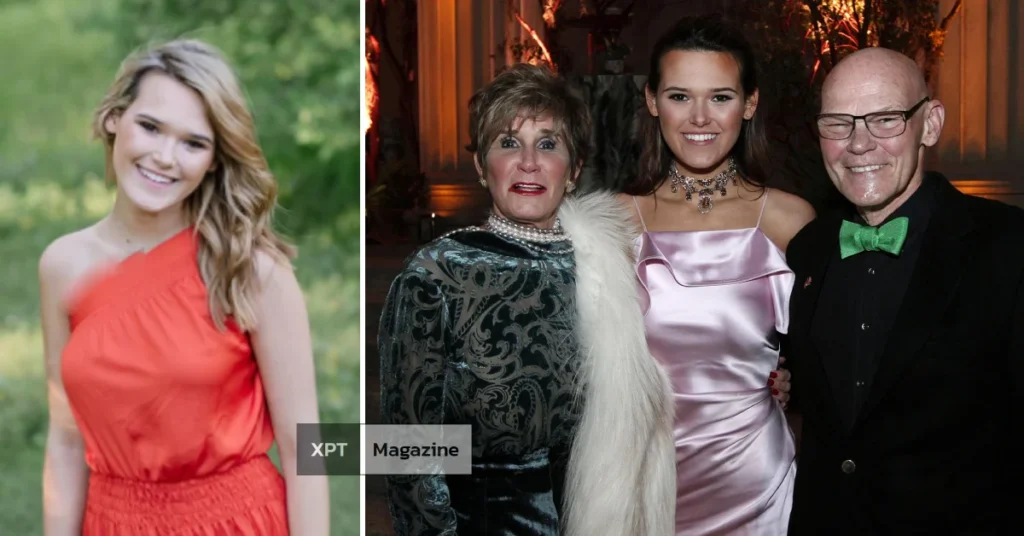
Most people know James Carville and Mary Matalin as sharp political minds who shaped campaigns and sparked debates on opposite sides of the aisle. Their daughter, Emerson Normand Carville, grew up watching both sides of America’s political divide play out at her own dinner table. But Emma, as friends and family call her, chose a different path—one that keeps her out of cable news green rooms and away from the chaos her parents thrived in.
Emma’s story isn’t about political strategy or campaign wins. She’s carved out a quieter life, balancing occasional public appearances with a desire for privacy. Sources list her birth year somewhere between 1998 and 2000, though public records vary. What we know for certain comes from scattered Instagram posts, a few society event photos, and the occasional mention in media coverage about her famous parents.
Who is Emerson Normand Carville?
Emerson Normand Carville is the daughter of James Carville, the Democratic strategist known as the “Ragin’ Cajun,” and Mary Matalin, a Republican consultant who worked for both Bush administrations. Emma represents something rare in American politics—a family where red and blue meet under one roof. Her parents made headlines not just for their work but for proving that political opposites could build a life together.
Emma keeps a low profile compared to her parents. She doesn’t give interviews or share her political views publicly. Instead, she appears at select family events and maintains a modest Instagram presence where she shares glimpses of her life without the commentary or controversy that follows political families. This choice feels deliberate. Growing up with two parents whose careers depended on strong opinions and public battles, Emma seems to have decided that her life doesn’t need to be part of the national conversation.
Early life and family background
Emma grew up between New Orleans and Washington, D.C., two cities that shaped her childhood in different ways. New Orleans offered the warmth of Louisiana culture, family traditions, and a slower pace. Washington brought the intensity of political life, where her parents’ work meant late-night strategy sessions and election cycles that turned their home into a hub of activity.
Imagine dinner conversations in the Carville-Matalin household. James might argue one side of a policy debate while Mary took the other, not as husband and wife but as seasoned strategists testing their arguments. Emma and her older sister, Matalin “Matty” Carville, grew up hearing both sides of every issue before most kids could vote. That environment taught them critical thinking, but it also showed them the toll public life takes on privacy.
The Carville family dynamic broke the usual mold. James and Mary’s bipartisan marriage fascinated media outlets, which meant Emma’s childhood included reporters asking questions about how her parents managed their differences. She learned early that being part of a political family meant living with public curiosity about private matters.
Daughter of political strategists
James Carville built his reputation helping Bill Clinton win the presidency in 1992. His blunt Louisiana accent and memorable one-liners made him a media favorite. Mary Matalin worked on the opposite side, advising Republican presidents and serving as a trusted voice in conservative circles. Both became television regulars, authors, and voices in American political discourse.
For Emma, having parents with such visible careers meant dealing with expectations she never asked for. People assumed she’d follow them into politics or take strong public stances on issues. Instead, she watched how political life consumed privacy and chose differently. Her parents’ success came with trade-offs—time away from family, constant scrutiny, and the pressure to always be “on.” Emma saw those costs firsthand.
Growing up between privacy and the spotlight
Emma’s approach to public life shows careful boundaries. She attended a few high-profile events, including debutante appearances in New Orleans that local publications covered. Photos from these events show her with family, dressed formally, smiling for cameras, but never courting attention. These appearances seem more about honoring family traditions than seeking fame.
Her Instagram account offers small windows into her world—friends, travel, pets—but nothing that invites political debate or controversy. She posts infrequently and keeps her follower count modest. This isn’t someone building a brand or leveraging her family name for influence. Emma uses social media the way most people do: to share moments with people who already know her.
Compare this to other political family members who launch careers on their parents’ fame. Emma chose the opposite. She could have written a book, started a podcast, or joined a campaign. Instead, she kept her life her own.
Education, interests, and early pursuits
Details about Emma’s education remain somewhat private, though sources suggest she attended college without much fanfare. She didn’t make headlines for academic achievements or campus activism. This fits her pattern of keeping personal milestones out of public view.
What interests Emma? Her social media hints at typical young adult pursuits—time with friends, exploring new places, enjoying music and art. Nothing suggests she’s preparing for a political career. She doesn’t post about campaigns or policy debates. Her life looks refreshingly normal for someone who could easily trade on her family’s political capital.
The lack of concrete information about her career plans or academic path might frustrate those looking for a complete picture. But this absence tells its own story. Emma maintains privacy in an age when most people, especially those connected to famous families, share everything online.
Public presence: social media and notable appearances
Instagram & personal brand
Emma’s Instagram handle exists but operates on a smaller scale than you’d expect from someone with her family connections. She has a few thousand followers—respectable but not celebrity-level. Her posts show travel snapshots, candid moments with friends, and occasional family photos. She rarely uses political hashtags or engages in debates.
This approach to social media feels intentional. Emma shares enough to stay connected but not enough to invite intense scrutiny. She doesn’t monetize her presence or use it to build a public platform. Her account looks like it belongs to someone who values privacy but still wants to document life’s moments.
Events and society appearances
Emma has appeared at several New Orleans society events, including debutante balls that local magazines covered. These appearances honor Louisiana traditions and family connections to the region. Photos from these events show Emma looking comfortable but reserved, participating without seeking the spotlight.
She’s also been photographed at family gatherings and occasional public events with her parents. These sightings are rare enough to generate some media interest but common enough to show she maintains close family ties. Emma seems to navigate public appearances with a clear strategy: show up for family, keep personal life private.
What she’s known for (and what she isn’t)
Emma often gets labeled a “celebrity daughter,” which isn’t quite accurate. She’s known primarily because of who her parents are, not because of anything she’s done publicly. This distinction matters. People search for information about her out of curiosity about the Carville-Matalin family, not because Emma herself sought fame or built a public career.
She isn’t a political commentator, influencer, or activist. She hasn’t written books or given speeches about growing up in a bipartisan household. Emma represents something increasingly rare—a person connected to fame who doesn’t exploit that connection. Her restraint stands out in a culture where most people would leverage family connections into opportunities.
Why people care: the human angle
Curiosity about Emma makes sense. Her parents represent opposite ends of American politics, yet they built a successful marriage and raised two daughters who seem well-adjusted and private. People wonder how that worked. They want to know if Emma leans left like her father or right like her mother, or if she rejected politics altogether.
Emma’s choice to stay private also intrigues people. In an age of oversharing, someone with her background keeping a low profile feels noteworthy. She could have capitalized on her family name in countless ways, but chose not to. That decision says something about her values and how she views the life her parents built.
There’s also something relatable about Emma’s story. Many people grow up feeling pressure to follow family traditions or meet expectations based on their parents’ success. Emma’s path shows it’s possible to respect your family while choosing your own direction. She honors her parents by living well, not by becoming them.
Quick timeline & social snapshot
Emma’s public timeline remains sparse by design, but here’s what we know:
Born around 1998-2000 to James Carville and Mary Matalin. Grew up between New Orleans and Washington, D.C. Attended college (specific institution not widely reported). Made occasional appearances at New Orleans society events and family gatherings. Maintains a private Instagram account with a modest following. Currently lives out of the public spotlight, pursuing interests away from political life.
Her Instagram handle offers the most consistent public presence, though she posts selectively and keeps her content personal rather than promotional.
Closing: short, human wrap-up
Emerson Normand Carville’s story reminds us that fame doesn’t have to be inherited. She grew up with two parents who lived in the public eye, yet she chose privacy. That choice deserves respect. Emma shows that you can honor your family’s legacy without living it out loud, that you can appreciate your parents’ achievements without feeling obligated to replicate them.
Details about Emma’s life remain limited because she wants them that way. As she continues building her life away from political spotlights and media attention, her story might evolve. But for now, Emma Carville represents a quieter kind of strength—the ability to define yourself on your own terms, even when the world is curious about every detail.