

Dan Blocker captured hearts across America as the gentle giant Hoss Cartwright on NBC’s hit Western “Bonanza.” Standing 6’4″ and weighing nearly 300 pounds, Blocker brought warmth and humor to television screens for 13 years. Behind his famous character stood a man with remarkable depth – a Korean War veteran, former teacher, family man, and business owner who left an indelible mark on American entertainment.
Born in Texas and gone too soon at age 43, Blocker’s story stretches beyond his iconic role. From his record-breaking birth to his unexpected death, his journey reveals a man whose real-life kindness matched his on-screen persona.
Early Life and Texas Roots
Dan Blocker entered the world on December 10, 1928, in De Kalb, Texas, and made quite an entrance. Weighing an astonishing 14 pounds at birth, he holds the record for the largest baby born in Bowie County. His parents, Ora and Mary Blocker, named him Bobby Dan Davis Blocker.
Growing up in rural Texas during the Depression shaped young Dan’s character. His father ran a general store, exposing Dan to people from all walks of life. These early experiences helped him develop the compassion and understanding he later brought to his acting.
As a boy, Dan showed his natural physical strength and size. By his teens, he towered over classmates and teachers alike. Yet despite his imposing frame, friends remember him for his gentleness and quick wit – traits that would later define his most famous character.
After graduating from Texas Military Institute, Blocker pursued higher education at Hardin-Simmons University before transferring to Sul Ross State University. There, he discovered two passions that would shape his pre-Hollywood life: football and drama. On the field, his size made him a formidable player. On stage, he found his voice.
From Classroom to Combat: Teaching & Korean War
Few fans realize Dan Blocker spent years molding young minds before entertaining them. After earning his degree, he became a high school English and drama teacher in Sonora, Texas. Former students remember him as engaging and passionate about literature and performance.
His teaching career took an unexpected pause when duty called. During the Korean War, Blocker served as an infantry sergeant in F Company, 45th Infantry Division. Military records show he earned a Purple Heart after being wounded in combat. The experience gave him perspective and maturity that later informed his acting choices.
After his military service, Blocker returned to education, teaching in New Mexico while pursuing a master’s degree. Yet something pulled him toward acting. He began taking small television roles while still teaching, testing the waters of a career change that would soon make him famous.
Breakthrough Role: Hoss Cartwright on Bonanza
Joining the Cast
In 1959, NBC launched a new Western series filmed in color – “Bonanza.” Producers needed someone special to play the middle Cartwright son, someone physically imposing yet emotionally vulnerable. Dan Blocker walked into his audition and, without saying a word, won over the room with his presence.
“The moment Dan entered, we knew we had our Hoss,” recalled producer David Dortort. “He embodied everything the character needed to be.”
The role transformed Blocker from a part-time actor into a household name. As Hoss Cartwright, he played the heart of the Ponderosa ranch – kind, sometimes naive, immensely strong, but gentle-spirited. Viewers connected with Hoss’s authenticity, which stemmed from Blocker bringing much of himself to the role.
Chemistry with Landon & Greene
What made “Bonanza” special wasn’t just its stunning Lake Tahoe backdrop or pioneering color broadcast – it was the chemistry between its stars, including Lorne Greene, Michael Landon, and Pernell Roberts, who completed the Cartwright family dynamic. Blocker formed genuine friendships with castmates Lorne Greene (who played his father, Ben) and Michael Landon (his brother, Little Joe).
Off-camera, the trio shared meals, played practical jokes, and supported each other through personal challenges. This real-life bond translated to screen chemistry that viewers could feel. Their camaraderie – on and off camera – made the Cartwright family feel authentic. Even Victor Sen Yung, who played the beloved cook Hop Sing, was considered part of the real Cartwright family circle.
“Dan was our anchor,” Michael Landon once said. “When tensions rose on set, he knew how to bring everyone back to earth with his humor.”
For 13 seasons, Blocker appeared in nearly every episode, making Hoss one of television’s most recognizable characters. His trademark outfit – ten-gallon hat, vest, and boots – became iconic in American pop culture.
Beyond Bonanza: Film & TV Adventures
While “Bonanza” consumed much of Blocker’s professional life, he explored other acting opportunities when scheduling permitted. He appeared in films including “Come Blow Your Horn” with Frank Sinatra and “Lady in Cement” with Raquel Welch.
On television, he made memorable guest appearances on shows like “Cimarron City” and “The Rifleman.” Each role demonstrated his range beyond Hoss, though directors often cast him in parts that utilized his imposing physical presence and natural warmth.
Blocker showed particular skill in comedy. His timing and expressions could earn laughs without sacrificing dignity – a rare talent that made him beloved by directors and fellow actors.
“Dan had this remarkable ability to communicate volumes with just a look,” noted director Robert Altman, who worked with Blocker on a “Bonanza” episode. “Many big men play their size for laughs or menace, but Dan played humanity.”
Family Man: Marriage, Kids, and Personal Passions
Away from cameras, Dan Blocker cherished his role as husband and father. He married Dolphia Parker in 1952, beginning a loving partnership that lasted until his death. Together, they raised four children: twin daughters Debra Lee and Danna Lynn, and sons David and Dirk.
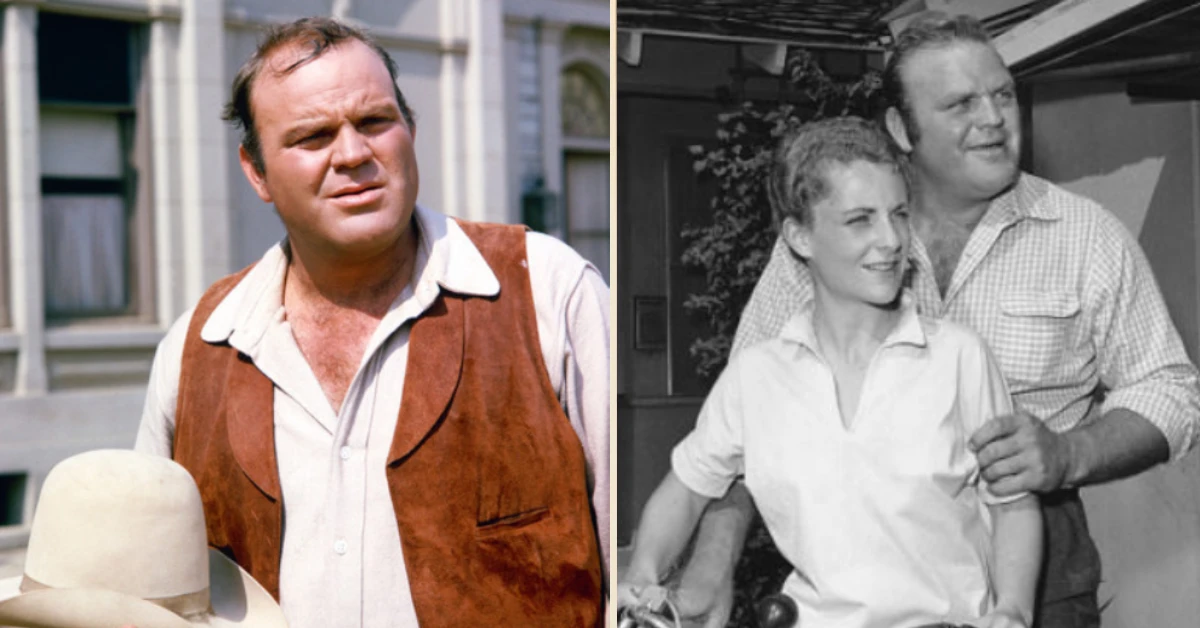
Home videos show a playful father who taught his children fishing, storytelling, and the value of staying grounded despite fame. His son, Dirk Blocker, carried forward his legacy, becoming an actor known for “Brooklyn Nine-Nine” and honoring his father’s spirit in interviews and public appearances.
Blocker protected his family from the spotlight, maintaining a ranch in California where they could live relatively normally. He drove his kids to school, attended their activities, and kept Hollywood separate from home life.
An avid reader throughout his life, Blocker maintained his teacher’s love of literature. His library contained classics, contemporary fiction, and history books, especially Civil War volumes. Friends noted he could discuss Shakespeare as easily as cattle ranching, breaking stereotypes about Western actors.
Chuck Norris, who taught karate to Blocker’s children, remembered him as “thoughtful and intellectually curious – not at all what people expected from a Western star.”
Business Ventures & Charitable Side
Blocker’s business sense matched his acting talent. Recognizing his fame could open doors beyond entertainment, he launched several ventures, most notably the Bonanza Steakhouse chain. The restaurants featured Western themes and hearty meals, growing to more than 600 locations nationwide by the early 1970s.
The actor used his platform for causes he believed in. Civil rights, veterans’ support, and children’s education received both his time and financial backing. Without seeking publicity, he funded scholarships for promising students from rural backgrounds similar to his own.
His generosity extended to the “Bonanza” set, where crew members recalled his habit of helping those facing medical bills or family emergencies. These quiet acts of kindness revealed the man behind the famous role – someone who remembered his humble beginnings despite Hollywood success.
Final Curtain: Surgery, Passing, and Tributes
The television world received shocking news on May 13, 1972. Dan Blocker had died at age 43 from complications following gallbladder surgery at a Los Angeles hospital. The routine procedure took an unexpected turn when a blood clot formed, leading to a pulmonary embolism.
NBC executives faced an unprecedented situation. With “Bonanza” still in production, they needed to address the sudden absence of a beloved main character. In a bold move, they chose to acknowledge Hoss’s death in the storyline rather than recasting – television’s first handling of a major character’s death resulting from an actor’s passing.
The season premiere opened with the Cartwright family returning from Hoss’s funeral, allowing both characters and viewers to mourn together. Ratings declined afterward, and “Bonanza” ended the following year, as if the heart of the show had gone with Blocker.
Tributes poured in from across the entertainment industry. Lorne Greene, visibly emotional in interviews, spoke of losing “not just a colleague but a son in many ways.” Michael Landon later admitted the show “never felt right again” after Blocker’s death — though he went on to create and star in Little House on the Prairie, where his storytelling carried echoes of the warmth he shared with Blocker.
Dan Blocker: Television Actor
Blocker’s acting style combined natural presence with thoughtful preparation. Despite his imposing size, he moved with grace on camera and mastered the subtle facial expressions television demands. Directors praised his reliability and preparation – he rarely needed retakes and knew everyone’s lines, not just his own.
What made Blocker stand out among television actors was his authenticity. He never seemed to be performing; rather, he inhabited his characters with genuine emotion. This quality helped “Bonanza” transcend typical Western fare to address meaningful themes of family, ethics, and American identity.
“Fame frightens me,” he once admitted in a rare interview. “I’m just an ordinary guy who happened to find work I love.”
This humility shaped his approach to celebrity. He avoided Hollywood parties, rarely gave interviews, and seemed uncomfortable with adulation. Yet to millions of viewers, he represented something special – a reminder that strength and gentleness could coexist.
Legacy and Influence on Westerns
Dan Blocker’s impact extends beyond his too-brief life. He helped redefine Western heroes, moving the genre away from lone gunfighters toward family-centered stories. Hoss Cartwright showed that courage came in many forms – sometimes in standing against violence rather than engaging in it.
The character’s popularity opened doors for more diverse Western protagonists in later shows. Actors with physical differences found more opportunities, as Blocker proved, leading men needn’t fit conventional molds.
In De Kalb, Texas, a historical marker honors their famous son. The Bonanza Steakhouse chain he founded continued for decades after his death. Memorabilia from the show, particularly items connected to Hoss, remains sought after by collectors.
Perhaps Blocker’s greatest legacy lives on through the continuing popularity of “Bonanza” in reruns worldwide. New generations discover the show through streaming services, connecting with the warmth and humanity Blocker brought to Hoss Cartwright.
His fellow cast members perhaps said it best. Lorne Greene once reflected: “Some actors play characters. Dan revealed them, finding the truth underneath the lines. He showed us that being a big man isn’t about size – it’s about heart.”