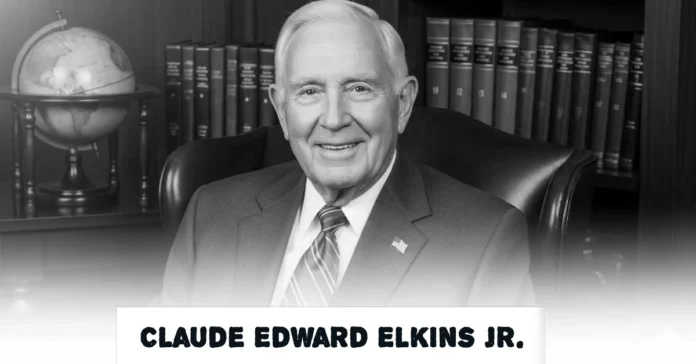
Claude Edward Elkins Jr. is the Executive Vice President and Chief Commercial Officer at Norfolk Southern Corporation, overseeing intermodal operations, automotive freight, industrial products, and customer logistics. After serving in the Marine Corps, he started at Norfolk Southern in 1988 as a Road Brakeman, progressing through operational roles before transitioning to leadership positions in marketing and commercial strategy. His career exemplifies hands-on experience combined with strategic vision.
When you think of corporate leadership, you might picture someone who climbed straight from business school to the boardroom. Claude Edward Elkins Jr.’s story challenges that assumption entirely.
He started on railroad tracks—literally. As a brakeman coupling train cars in harsh weather, he learned the business from the ground up. Today, he leads commercial strategy for one of America’s largest freight railroads. His path offers valuable lessons about perseverance, adaptability, and the power of understanding your business at every level.
Who Is Claude Edward Elkins Jr.?
Claude Edward Elkins Jr. was born and raised in the Appalachian region of Virginia, where hard work and community values shaped his early years. The region’s deep connection to the railroad industry gave him firsthand exposure to an essential part of American commerce.
After serving in the United States Marine Corps, Elkins was hired by Norfolk Southern as a Road Brakeman in 1988. This entry-level position required physical endurance, precision, and teamwork—skills developed through military service that proved invaluable in railroad operations.
He pursued a Bachelor’s degree in English at the University of Virginia’s College at Wise, followed by an MBA in Port and Maritime Economics from Old Dominion University. This unique combination of liberal arts and specialized business education gave him strong communication skills alongside deep logistical knowledge.
His educational journey didn’t stop there. Elkins completed executive programs at Harvard Business School, UVA Darden School of Business, and the University of Tennessee Supply Chain Institute, continuously sharpening his leadership capabilities throughout his career.
The Journey from Railroad Tracks to Corporate Leadership
Starting at Ground Level
Elkins served as a Conductor, Locomotive Engineer, and a Relief Yardmaster during his early years at Norfolk Southern. These weren’t ceremonial titles—they were demanding operational roles that gave him intimate knowledge of how railroads function.
Working as a brakeman means coupling and uncoupling train cars, managing signals, and coordinating with engineers to ensure safe train movement. It’s physically taxing work that requires split-second decision-making. Many executives lack this foundational understanding, but Elkins built his career on it.
This hands-on experience became his competitive advantage. When he later made strategic decisions in executive roles, he understood exactly how those decisions would affect frontline workers and daily operations.
Transition to Marketing and Strategy
Following his time in Operations, Elkins spent two decades in Intermodal Marketing. This shift marked his evolution from operations expert to commercial strategist.
Intermodal freight—shipping containers that transfer between trucks, trains, and ships—represents one of the railroad’s fastest-growing segments. His ability to merge technical knowledge with strategic vision helped Norfolk Southern modernize its services and expand its intermodal operations.
By 2016, he became Group Vice President of Chemicals Marketing—a position that required both strong leadership and deep market understanding. Managing chemical transportation demands exceptional safety standards and specialized logistics knowledge.
In 2018, he was promoted to Vice President of Industrial Products, where he led efforts to improve supply chain efficiency and strengthen customer relationships across sectors, including metals, construction materials, and agriculture.
Leading Norfolk Southern’s Commercial Strategy
Chief Commercial Officer Role
In 2021, his journey reached a new height when he was named Executive Vice President and Chief Marketing Officer at Norfolk Southern. He currently serves as the EVP and Chief Commercial Officer at Norfolk Southern and was appointed in 2021.
His responsibilities include leading the company’s Intermodal, Automotive, and Industrial Products business divisions. Additionally, he oversees the Real Estate, Industrial Development, First and Final Mile Markets, and Customer Logistics business groups.
This isn’t just managing departments—it’s orchestrating complex commercial operations across a 22-state network that serves the majority of America’s population and manufacturing base.
Recent Achievements and Impact
In 2024, Norfolk Southern Corporation customers advanced 149 industrial development projects, representing $4.3 billion in investment for new or expanded facilities. “The active pipeline of $9 billion in customer investments along our network reflects the value businesses place in rail as a cornerstone of their supply chains,” said Norfolk Southern Executive Vice President and Chief Marketing Officer Ed Elkins.
Under his commercial leadership, Norfolk Southern has focused on several key priorities:
- Customer-Centric Solutions: Building partnerships based on understanding specific industry needs, whether chemicals, automotive, or agriculture.
- Sustainability Initiatives: Norfolk Southern helps its customers avoid approximately 15 million tons of yearly carbon emissions by shipping via rail, supporting environmental goals while meeting logistics demands.
- Technology Integration: He’s played a key role in advancing intermodal freight services, which help reduce road congestion and lower carbon emissions.
- Network Efficiency: Balancing service reliability with operational productivity to maintain competitive advantage.
Values Rooted in Service
His Marine background reinforces his commitment to integrity and teamwork, values that guide every decision he makes. The Marine Corps’ emphasis on honor, courage, and commitment translates directly to corporate leadership—fostering accountability, mission focus, and team cohesion.
Having worked in nearly every area of the rail business, he leads with empathy and understanding. He’s known for encouraging collaboration between departments and inspiring employees to innovate while maintaining safety and reliability.
This empathetic approach matters in an industry facing significant challenges. Railroad operations require coordination between thousands of employees across vast geographic areas. Leaders who understand frontline realities can make better strategic decisions.
Facing Industry Challenges
The railroad industry faces multiple pressures: economic volatility, regulatory requirements, infrastructure demands, and competition from trucking. Norfolk Southern operates 19,420 route miles in 22 eastern states and the District of Columbia, requiring sophisticated coordination.
Elkins has helped navigate these challenges by focusing on operational excellence, customer satisfaction, and safety improvements. Norfolk Southern has maintained positive safety momentum into 2024 with year-to-date improvement across all core safety metrics.
The company also faced significant leadership transitions in 2024, including changes to its board and executive team. Throughout these changes, maintaining commercial momentum and customer relationships remained critical—responsibilities that fell squarely on Elkins’ shoulders.
Beyond Norfolk Southern: Industry Leadership
Currently, he serves on the Georgia Chamber of Commerce Executive Committee and on the boards of directors of the National Association of Manufacturers and TTX Company. Elkins also serves on the Georgia State University Marketing RoundTable and is a member of The Conference Board, Inc., on the Council for CMOs.
These positions extend his influence beyond Norfolk Southern into broader industry collaboration and policy development. The National Association of Manufacturers represents companies across sectors, allowing Elkins to advocate for transportation infrastructure and logistics policies that benefit American manufacturing.
His involvement with TTX Company—which provides railcar fleet services to North American railroads—demonstrates commitment to industry-wide operational improvements rather than narrow competitive advantages.
What Makes His Leadership Unique?
Most Chief Commercial Officers arrive at their positions through traditional sales, marketing, or business development paths. Elkins’ operational background gives him distinct advantages:
He understands capacity constraints and operational realities when making commercial commitments to customers. He can speak credibly with both frontline employees and C-suite executives. He recognizes how operational efficiency directly impacts customer satisfaction and profitability.
This combination of operational expertise and commercial acumen is rare—and valuable.
Long-Term Perspective
Spending 36 years at one company is increasingly uncommon in today’s job-hopping culture. Elkins’ tenure at Norfolk Southern reflects deep organizational knowledge and relationship networks built over decades.
This institutional memory helps him navigate complex industry changes while maintaining strategic continuity. He’s seen economic cycles, regulatory shifts, and technological transformations—experience that informs better decision-making.
Lessons from His Career Path
1. Start Where You Are
Elkins didn’t wait for the perfect opportunity. He started with what was available—a physically demanding job that others might overlook. That willingness to begin at ground level gave him foundational knowledge that proved invaluable later.
2. Continuous Learning Matters
From his undergraduate degree in English to his MBA to executive education programs at top business schools, Elkins consistently invested in education. This commitment to learning kept him adaptable as the industry changed.
3. Respect Every Role
Understanding how different roles contribute to organizational success creates better leaders. Elkins’ operational background ensures he values frontline employees’ contributions—building stronger teams and better decisions.
4. Long-Term Commitment Pays Off
Career loyalty is often dismissed today, but Elkins demonstrates its value. Deep organizational knowledge, extensive relationship networks, and proven track records matter in senior leadership positions.
The Future of Rail Leadership
Norfolk Southern maintains 28,300 miles of track, with intermodal containers and trailers being the most common commodity type carried by NS. As e-commerce grows and supply chains become more complex, intermodal freight will only increase in importance.
Leaders like Elkins—who combine operational knowledge with commercial strategy—will be essential to navigating this evolution. The railroad industry needs people who understand both the historical foundations and future possibilities of freight transportation.
Conclusion
Claude Edward Elkins Jr.’s career from brakeman to Chief Commercial Officer demonstrates several important principles:
- Foundational experience builds better leaders: Understanding operations creates strategic advantages in executive roles.
- Military service develops leadership: Discipline, teamwork, and mission focus translate effectively to corporate environments.
- Education complements experience: Combining hands-on knowledge with formal education creates well-rounded expertise.
- Industry commitment matters: Long-term organizational knowledge provides competitive advantages.
- Values guide decisions: Integrity, empathy, and collaboration create sustainable success.
His story reminds us that leadership excellence often begins not in boardrooms but on railroad tracks, factory floors, and other places where real work happens. The path to the executive suite doesn’t require starting there—it requires dedication, learning, and understanding your business from the ground up.
For anyone building a career in transportation, logistics, or any industry, Elkins’ journey offers a powerful model: Start where you can. Learn continuously. Value every role. Lead with integrity. The results speak for themselves.