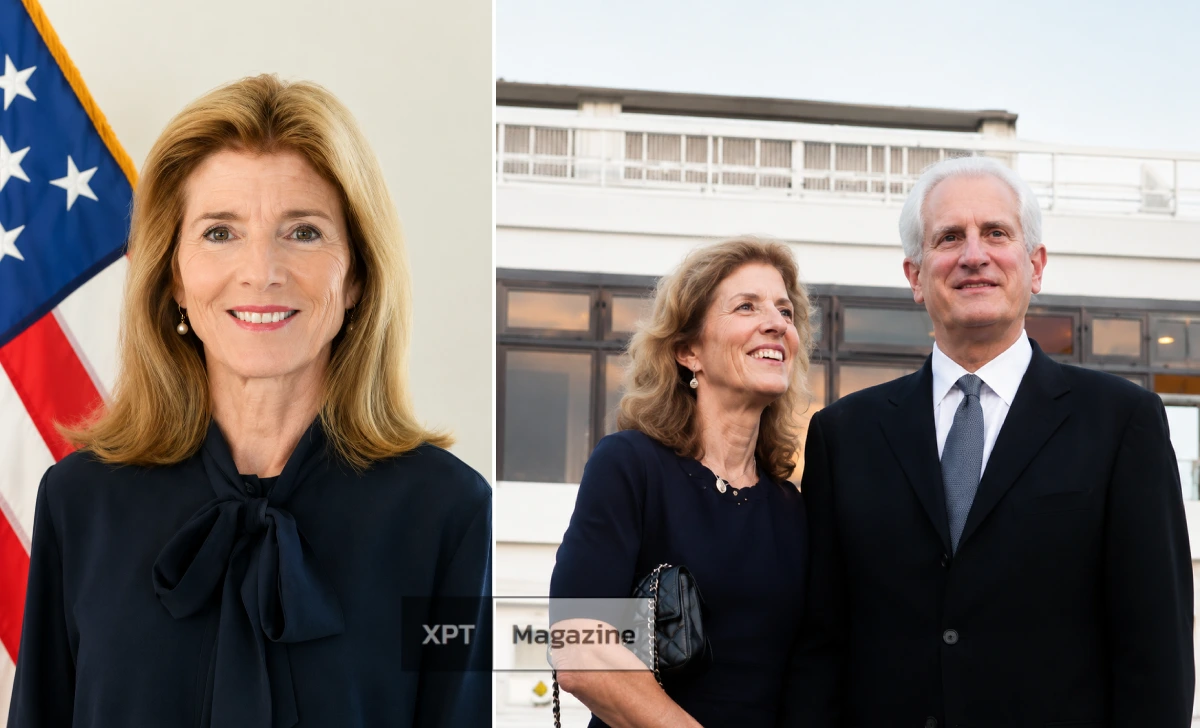
Caroline Kennedy is an American attorney, author, and diplomat, and the only surviving child of President John F. Kennedy and First Lady Jacqueline Bouvier Kennedy. She was three years old when her father was elected president and spent part of her childhood inside the White House, a detail that later shaped how the public came to see her as a quiet but steady presence in American life.
She is well known for three separate reasons that rarely overlap in one person: her direct connection to one of the most documented political families in the country, her own record as a lawyer and bestselling author on constitutional law and civics, and her diplomatic service as U.S. Ambassador to Japan and later to Australia. Unlike many public figures who inherit a famous name, Kennedy built a career with its own distinct achievements, from co-writing legal reference books to representing the United States abroad under two different presidents.
Her work spans four decades and touches law, publishing, education reform, and foreign policy. This guide covers her full biography in one place, drawing only on verifiable public record.
Caroline Kennedy at a Glance
Full Name
Caroline Bouvier Kennedy
Date of Birth and Age
November 27, 1957. As of 2026, she is 68 years old.
Birthplace
New York City, New York, United States
Nationality
American
Profession
Attorney, author, and diplomat
Political Affiliation
Democratic Party
Education
Radcliffe College at Harvard University (undergraduate); Columbia Law School (J.D.)
Years Active
Since the late 1970s, spanning law, publishing, and public service
Early Life and Childhood
Born Into America’s Most Famous Political Family
Caroline Kennedy was born on November 27, 1957, the first child of then-Senator John F. Kennedy and Jacqueline Bouvier Kennedy. Three years later, her father was elected the 35th President of the United States, making her, at age three, one of the youngest children of a sitting president in modern history.
Growing Up in the White House
Kennedy spent her early childhood years living in the White House, an experience few Americans have shared. Photographs from this period, showing her playing on the White House lawn or attending a preschool set up for her and other children, became part of the public record of the Kennedy administration and remain widely recognised images of that era.
The Assassination of President John F. Kennedy
In November 1963, when Kennedy was five years old, her father was assassinated in Dallas, Texas. The loss reshaped her family’s life overnight and placed her, from a very young age, at the centre of a national tragedy that she did not choose and rarely discussed publicly in the decades that followed.
Life After the White House
Following her father’s death, Kennedy grew up largely outside the public eye, raised by her mother with an emphasis on privacy and a conventional education. Her mother’s later marriage to Aristotle Onassis in 1968 brought additional public attention, but Kennedy herself was kept largely removed from the press throughout her adolescence.
Education
Schooling and Early Academic Years
Kennedy attended private schools in New York City and Concord, Massachusetts, receiving an education that her mother deliberately kept out of the spotlight as much as possible given the family’s public profile.
Harvard University
She earned her undergraduate degree from Radcliffe College, the historic women’s college affiliated with Harvard University, graduating in 1980.
Columbia Law School
Kennedy went on to earn her Juris Doctor from Columbia Law School, where she focused her studies on constitutional and civil liberties issues that would later define much of her published writing.
Interest in Constitutional Law
Her law school years shaped a lasting focus on the Bill of Rights and constitutional protections, a subject she returned to repeatedly in her later books and public speaking, including work explaining these protections to a general audience rather than only to legal professionals.
Career Journey
Early Professional Career
Before law school, Kennedy worked in several entry-level roles typical of a young graduate building professional experience, including time at a major New York newspaper and in the office of her uncle, Senator Edward “Ted” Kennedy.
Legal Career
After completing her law degree, Kennedy practised law and worked as a researcher and writer on legal and cultural topics, including a period at the Metropolitan Museum of Art in New York, where she also met her future husband.
Transition Into Public Service
Through the 1990s and 2000s, Kennedy moved from private legal work toward public service roles, particularly in New York City education reform, which became one of the clearest throughlines of her professional life before her diplomatic appointments.
Becoming an Influential Public Figure
By the 2008 presidential election, Kennedy had stepped further into public political life, most visibly through her endorsement of Barack Obama’s candidacy and her role helping vet his choice of running mate. That period marked her transition from a respected but relatively private author into a more active national figure.
Diplomatic Career
U.S. Ambassador to Japan (2013–2017)
Historic Appointment
President Barack Obama nominated Kennedy as U.S. Ambassador to Japan in 2013. The U.S. Senate confirmed her, and she presented her credentials in Tokyo that November, succeeding Ambassador John Roos.
Strengthening U.S.–Japan Relations
During her four years in Tokyo, Kennedy worked to reinforce the security and economic alliance between the two countries at a time of shifting power dynamics across the Asia-Pacific region.
Women’s Empowerment Initiatives
Kennedy used her posting to support programs encouraging greater workforce participation and leadership opportunities for women in Japan, an issue that aligned with broader policy goals the U.S. and Japanese governments were pursuing at the time.
Okinawa Military Base Agreement
Her tenure included continued, often sensitive negotiations over U.S. military basing arrangements on Okinawa, a long-running point of discussion between Washington and Tokyo that predates and outlasts her posting.
Hiroshima and Pearl HHarbourHistoric Visits
Kennedy’s time as ambassador coincided with two landmark reconciliation visits: President Obama’s 2016 visit to Hiroshima, the first by a sitting U.S. president, and Japanese Prime Minister Shinzo Abe’s visit to Pearl Harbour later that year.
Key Achievements
Kennedy is widely credited with being an accessible, high-profile ambassador who used her family name to draw public attention to the U.S.-Japan relationship, helping keep the alliance visible to audiences well beyond typical diplomatic circles.
U.S. Ambassador to Australia (2022–2024)
Appointment and Responsibilities
President Joe Biden nominated Kennedy for the Australia post in 2021, and the Senate confirmed her the following year. She presented her credentials to Australia’s Governor-General on July 25, 2022, succeeding Ambassador Arthur B. Culvahouse Jr.
Major Diplomatic Priorities
Kennedy’s posting in Canberra centred on the AUKUS security partnership between Australia, the United Kingdom, and the United States, along with cooperation on science and technology, climate policy, and expanding people-to-people ties, including the Quad Fellowship program for students from Quad member countries.
Notable Achievements
Her term concluded on November 28, 2024, and she gave a farewell address at the National Press Club of Australia that November, reflecting on the strength of the U.S.-Australia alliance during her posting. Her term ended as the presidential transition took effect on January 20, 2025.
Political Involvement
Support for Barack Obama
Kennedy’s most visible entry into national politics came with her January 2008 op-ed endorsing Barack Obama’s presidential campaign, in which she compared his candidacy to the inspiration her father had once represented. She went on to serve on the committee that helped select Obama’s running mate.
Democratic Party Activities
Kennedy has remained aligned with the Democratic Party throughout her public career, though she has generally avoided seeking elected office herself. In 2008, she was briefly considered as a possible appointee to the U.S. Senate seat vacated by Hillary Clinton before withdrawing her name from consideration.
Civic Engagement and Democracy
Much of Kennedy’s writing and public speaking has focused on civic education, particularly encouraging younger Americans to understand and engage with constitutional rights and the mechanics of government.
Public Service Philosophy
Across her legal, educational, and diplomatic work, Kennedy has consistently framed public service as a family value rather than a political strategy, a theme she returns to often when discussing her father’s legacy and her own career choices.
Leadership and Public Service
Fund for Public Schools
Kennedy helped establish and lead the Fund for Public Schools, a nonprofit that raised private funding to support New York City’s public education system.
New York City Department of Education
She held a senior role at the NYC Department of Education focused on building partnerships between public schools and private and corporate donors during the early 2000s.
John F. Kennedy Library Foundation
Kennedy serves as Honorary President of the John F. Kennedy Library Foundation, based in Boston, a role tied directly to preserving her father’s presidential record and legacy.
Profile in Courage Award
She has long been associated with the Profile in Courage Award, given annually by the JFK Library Foundation to public officials who demonstrate political courage, a program inspired by her father’s book of the same name.
Other Boards and Nonprofit Organizations
Kennedy has served as a trustee or director for organisations including the Carnegie Corporation, the International Rescue Committee, the NAACP Legal Defence and Educational Fund, and The Boeing Company, and has co-chaired Harvard’s Institute of Politics.
Books Written and Edited by Caroline Kennedy
Bestselling Books
Kennedy has written or edited multiple New York Times bestselling books, most focused on making constitutional law, civics, and poetry accessible to general readers rather than legal specialists.
Constitutional Law Publications
Her legal writing, including work co-authored with Ellen Alderman, translates complex Bill of Rights case law into plain language aimed at readers without a legal background.
American History Collections
She has edited collections examining American political history and civic tradition, often built around primary documents and speeches.
Poetry Anthologies
Kennedy has compiled several poetry anthologies, including collections built around her mother’s favourite poems, reflecting a personal as well as literary interest in the subject.
Jacqueline Kennedy: Historic Conversations
Kennedy edited and released the recorded oral history interviews her mother gave shortly after President Kennedy’s assassination, offering a rare first-person account of the Kennedy White House years.
In OurDefencee: The Bill of Rights in Action
Co-written with Ellen Alderman, this book walks through real legal cases to explain how each amendment in the Bill of Rights has been applied and tested in American courts.
Advocacy and Causes
Education Reform
Kennedy’s education work has centred on strengthening public schools through private philanthropic partnerships, particularly in New York City.
Women’s Leadership
As ambassador to Japan, she supported initiatives aimed at expanding professional opportunities for women, a cause she has continued to speak about in public appearances since leaving that post.
Human Rights
Her board work with the International Rescue Committee reflects a continuing interest in refugee support and international humanitarian issues.
Civic Participation
Kennedy has repeatedly encouraged younger audiences to engage with constitutional rights and democratic institutions, a theme running through both her books and public speeches.
Philanthropy
Beyond formal board roles, Kennedy has supported causes tied to education, the arts, and preserving her family’s historical legacy through the JFK Library Foundation.
Personal Life
Husband
Kennedy has been married to designer and author Edwin Schlossberg since 1986.
Children
The couple has three children: Rose, Tatiana, and Jack Schlossberg. Jack Schlossberg has become increasingly visible in public and political commentary in recent years.
Family Life
Kennedy has generally kept her family’s daily life private, granting relatively few personal interviews compared to her level of public recognition.
Personal Interests
She has spoken publicly about her interest in poetry, constitutional history, and sailing, reflecting time spent at the family’s longtime properties on Cape Cod and Martha’s Vineyard.
Caroline Kennedy Net Worth
Estimated Net Worth
Caroline Kennedy has not filed a public financial disclosure since her 2013 Senate confirmation process for the Japan ambassadorship, and no verified, current figure for her net worth exists. Public estimates online vary enormously, from tens of millions to figures that are clearly speculative or inaccurate, so any specific number circulating today should be treated with caution rather than as a confirmed fact.
Main Sources of Wealth
What can be said with confidence is the general shape of her finances, based on her career and background rather than a precise total:
- Family inheritance from the Kennedy and Bouvier family trusts
- Royalties from multiple bestselling books
- Decades of legal and consulting work
- Corporate board compensation, including her role at Boeing
- Government salary during her two ambassadorial postings
Awards and HHonours
Grand Cordon of the Order of the Rising Sun
In 2021, the Japanese government awarded Kennedy the Grand Cordon of the Order of the Rising Sun, Gold and Silver Star, one of Japan’s highest honours for a foreign national,recognisingg her service as ambassador and her contribution to U.S.-Japan relations.
Diplomatic Recognition
Beyond this formal award, Kennedy received consistent praise from officials in both Japan and Australia for her accessibility and public visibility as ambassador, qualities less common among career diplomats.
Public Service Honours
Kennedy has also beenrecognisedd over the years by education and civic organisations for her work supporting New York City public schools and constitutional education programs.
Caroline Kennedy’s Lasting Legacy
Preserving the Kennedy Legacy
Through her role at the JFK Library Foundation, Kennedy has taken on the responsibility of managing how her father’s presidency and legacy are presented to new generations, from archival work to public programming.
Contributions to Diplomacy
Her two ambassadorial postings, to Japan under a Democratic administration in 2013 and to Australia under another Democratic administration nearly a decade later, make her one of relatively few Americans to hold two separate ambassadorships in different regions of the world.
Impact on Education
Her early work with the Fund for Public Schools helped shape a model of public-private partnership funding that other U.S. cities later studied and adapted.
Influence on American Politics and Public Service
Without ever holding elected office herself, Kennedy has remained one of the most visible living links to the Kennedy political tradition, using that platform consistently to promote civic engagement rather than personal political ambition.
Lesser-Known Facts About Caroline Kennedy
Interesting Facts
Kennedy briefly worked as a researcher at the Metropolitan Museum of Art in New York, where she met her future husband, artist and designer Edwin Schlossberg.
Historic Firsts
Kennedy is one of a small number of Americans to serve as U.S. ambassador to two different countries under two separate presidential administrations, first to Japan under President Obama and later to Australia under President Biden.
Personal Achievements
Beyond her diplomatic and legal work, Kennedy built a genuinely independent career as a published author, with several of her books reaching bestseller lists well before her ambassadorial appointments began.
Recent News and Current Activities
Latest Public Appearances
Kennedy’s term as Ambassador to Australia ended in November 2024, and she gave a farewell address at Canberra’s National Press Club that month. In January 2025, she appeared at a Quad Fellowship event in Melbourne, suggesting she has maintained informal ties to the diplomatic relationships she built during her posting even after leaving office.
Current Projects
Since returning from Australia, Kennedy has continued in her long-standing role as Honorary President of the John F. Kennedy Library Foundation. No new government appointment has been publicly confirmed as of this writing.
Recent Speeches and Initiatives
Kennedy’s public remarks since leaving her ambassadorial post have largely focused on reflections about the U.S.-Australia relationship and the broader importance of alliance-building in the Indo-Pacific region.
Frequently Asked Questions (FAQs)
Who is Caroline Kennedy?
Caroline Kennedy is an American attorney, author, and diplomat, and the only surviving child of President John F. Kennedy. She served as U.S. Ambassador to Japan and later to Australia.
How old is Caroline Kennedy?
Caroline Kennedy was born on November 27, 1957, making her 68 years old as of 2026.
Who are Caroline Kennedy’s parents?
Her parents were President John F. Kennedy and First Lady Jacqueline Bouvier Kennedy, later Jacqueline Kennedy Onassis.
Is Caroline Kennedy married?
Yes. She has been married to designer and author Edwin Schlossberg since 1986.
Who is Caroline Kennedy’s husband?
Her husband is Edwin Schlossberg, an author and museum exhibit designer.
Does Caroline Kennedy have children?
Yes, she has three children: Rose, Tatiana, and Jack Schlossberg.
What is Caroline Kennedy’s net worth?
There is no verified, current public figure for her net worth, since she has not filed a financial disclosure since 2013. Online estimates vary widely and should not be treated as confirmed.
What books has Caroline Kennedy written?
She has written or edited several bestselling books on constitutional law, American history, and poetry, including “In Our Defence: The Bill of Rights in Action” and edited collections of her mother’s oral history interviews and favourite poems.
Why is Caroline Kennedy famous?
She is known both for being the only surviving child of President John F. Kennedy and for her own independent career as an author, attorney, and two-time U.S. ambassador.
What did Caroline Kennedy accomplish as Ambassador to Japan?
She served from 2013 to 2017, working to strengthen the U.S.-Japan alliance during a period that included the historic Hiroshima and Pearl Harbour reconciliation visits.
When did Caroline Kennedy serve as Ambassador to Australia?
She served from July 2022 until November 2024, focusing heavily on the AUKUS security partnership.
What awards has Caroline Kennedy received?
Her most notablehonourr is Japan’s Grand Cordon of the Order of the Rising Sun, Gold and Silver Star, awarded in 2021.
What is Caroline Kennedy doing now?
Since her ambassadorship ended in late 2024, she has continued her role as Honorary President of the John F. Kennedy Library Foundation, with no new government appointment publicly confirmed as of this writing.
Conclusion
Caroline Kennedy’s life connects two distinct stories: the inherited weight of being John F. Kennedy’s only surviving child, and a career she built on her own terms as a lawyer, author, and diplomat. Her two ambassadorial postings, in Tokyo and Canberra, place her among a small group of Americans trusted with representing the country in two different regions under two different administrations.
Her lasting influence may end up resting less on any single title and more on the throughline across all of her work: preserving her family’s public legacy while consistently pushing others, through her books, her school’s work, and her diplomacy, toward civic engagement rather than passive recognition of a famous name.