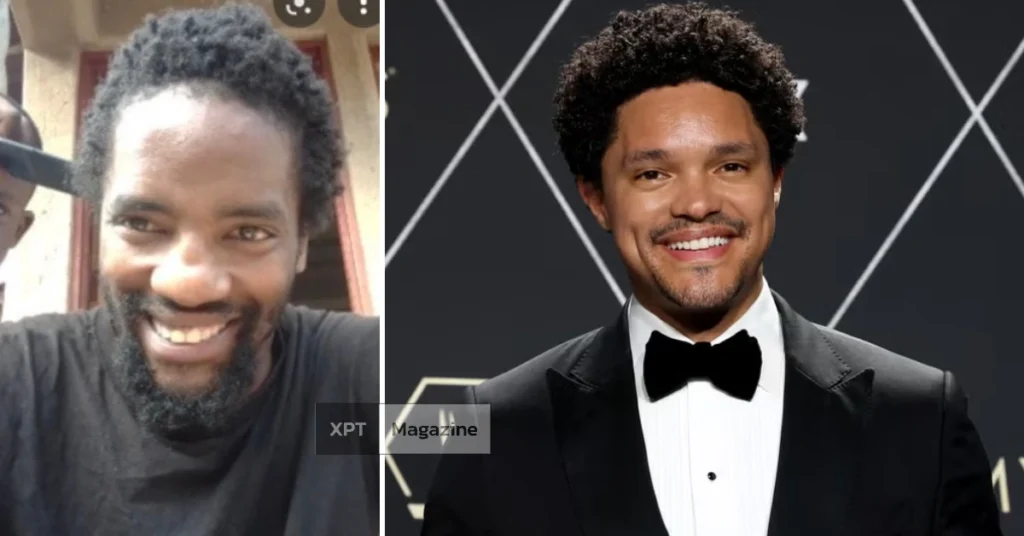
Andrew Shingange is Trevor Noah’s half-brother, who grew up in Johannesburg during apartheid. He shares Patricia Nombuyiselo Noah as his mother and maintains a deliberately private life away from media attention, focusing on community work in South Africa rather than pursuing public recognition despite his connection to international celebrity.
Most people recognize Trevor Noah’s name instantly. The comedian, political satirist, and former host of “The Daily Show” has millions of fans worldwide. But his half-brother Andrew Shingange? That’s a different story. Andrew keeps such a low profile that even dedicated Trevor Noah fans often miss mentions of him. Yet his story connects to one of the most powerful family narratives in modern entertainment.
Andrew shares the same mother as Trevor: Patricia Nombuyiselo Noah, the resilient woman at the heart of Trevor’s memoir “Born a Crime.” While Trevor traveled the world telling stories on stage, Andrew chose a quieter path. He built his life in South Africa, away from cameras and red carpets. That choice makes him interesting for reasons beyond celebrity gossip.
Who Is Andrew Shingange?
Andrew Shingange is a South African man known primarily as Trevor Noah’s half-brother. The two share Patricia as their mother but have different fathers. Beyond family ties, Andrew remains largely private. He doesn’t grant interviews or maintain active public social media profiles. Most information about him surfaces through Trevor’s mentions or small community profiles in South Africa.
According to various biographical sources, Andrew was born and raised in Johannesburg. His exact birth year varies across sources, with some reporting the mid-1980s, though these details remain unconfirmed. What’s clear is that he grew up during the same turbulent era as Trevor, navigating apartheid’s final years and South Africa’s transition to democracy.
The Shingange name comes from Patricia’s second marriage. After her relationship with Trevor’s father ended, Patricia married Ngisaveni Abel Shingange. That union brought Andrew and another brother, Isaac Shingange, into the family. Trevor writes about this period in “Born a Crime,” describing the complex household dynamics that shaped all three brothers.
Early Life and Upbringing in Johannesburg
Growing up in Johannesburg during the 1980s and 1990s meant witnessing history firsthand. Andrew’s childhood unfolded against apartheid’s rigid racial classifications and the violence that accompanied its collapse. His mother, Patricia, worked multiple jobs to support her children, often walking miles to save bus fare. She prioritized education and independence, teaching her sons to think critically about the world around them.
The family lived in various neighborhoods around Johannesburg. Patricia deliberately exposed her children to different communities and languages. She wanted them to be comfortable moving between worlds, a survival skill in fractured South Africa. Trevor describes his mother’s parenting style as fierce and uncompromising. She expected her sons to work hard, question authority, and never accept limits based on race or circumstance.
Andrew’s upbringing also included his stepfather Abel’s presence. Trevor’s memoir paints Abel as an increasingly volatile figure whose drinking led to domestic violence. These experiences shaped the brothers’ understanding of family, resilience, and protection. According to Trevor’s accounts, Patricia eventually left Abel, but not before years of difficulty that affected everyone in the household.
Family Ties and the Relationship with Trevor Noah
The bond between Andrew and Trevor seems rooted in shared experience rather than constant contact. Trevor left South Africa to pursue comedy internationally, spending years in America building his career. That geographic distance naturally created space between the brothers. Yet Trevor’s public comments suggest mutual respect and affection.
In “Born a Crime,” Trevor mentions his brothers when discussing family gatherings and childhood memories. He describes Patricia’s approach to parenting all three boys, emphasizing her refusal to treat any child as less important. She insisted on equality in her household, even when outside forces tried to divide people by skin color or background.
Recent social media posts from family gatherings show Andrew and Trevor together occasionally. These rare glimpses suggest the brothers maintain their relationship privately. Andrew doesn’t capitalize on Trevor’s fame for attention or business opportunities. That restraint speaks to his character and the family’s values about privacy.
Patricia herself set the example for staying grounded. Despite her son’s massive success, she continued living modestly in South Africa for years. Her priorities centered on community work and personal integrity rather than celebrity lifestyle. Andrew appears to share that outlook.
Work, Interests, and Low-Profile Career Notes
Details about Andrew’s professional life remain scarce. Unlike Trevor, who built a very public career, Andrew reportedly works in community development or entrepreneurial ventures in South Africa. These roles keep him connected to Johannesburg’s neighborhoods and social initiatives.
Some sources mention his involvement in local business projects, though specifics vary across profiles. What remains consistent is the description of someone invested in his community rather than chasing international recognition. That focus aligns with Patricia’s teachings about service and responsibility.
One small but notable detail: Andrew received a credit in Trevor’s 2011 documentary “You Laugh But It’s True.” The film chronicles Trevor’s early comedy career in South Africa. According to niche film databases, Andrew had a minor role or behind-the-scenes involvement. This represents one of his few verifiable connections to entertainment media.
Beyond that single credit, Andrew stays off screens and out of entertainment industry circles. He doesn’t attend high-profile events or grant media interviews. For someone related to one of the world’s most recognizable comedians, that level of privacy requires deliberate effort.
Private Life and Public Perception
Andrew’s decision to avoid publicity makes sense given his family’s history. Patricia endured years of scrutiny and danger during apartheid simply for existing. She had a mixed-race child when interracial relationships were illegal. She survived domestic violence. She navigated poverty while raising three boys in unstable times. Those experiences taught the family about vulnerability and exposure.
Trevor’s fame brought renewed attention to Patricia and her other children. Andrew could have leveraged that spotlight for personal gain. Reality shows, interviews, and paid appearances would have been available if he wanted them. Instead, he maintained boundaries.
His social media presence appears minimal or nonexistent on major platforms. No verified Instagram or Twitter accounts exist under his name with substantial followings. Occasional photos surface from family events, usually posted by others. This absence from digital self-promotion feels intentional rather than accidental.
Public perception of Andrew, to the extent it exists, frames him as the “private brother.” Articles about him often note what he isn’t: not famous, not seeking attention, not interested in celebrity culture. That framing sometimes flattens him into a one-dimensional figure. But choosing privacy doesn’t mean lacking depth or ambition. It just means different priorities.
Why His Story Matters Beyond the Headline
Andrew Shingange’s life raises questions about identity in the age of social media and celebrity culture. We’re conditioned to measure success through visibility and influence. Yet here’s someone connected to massive fame who deliberately stays invisible. That choice challenges assumptions about what people want and value.
His story also highlights family resilience across generations. Patricia raised three boys through circumstances that could have broken them. She taught them survival, dignity, and independence. Trevor took those lessons to international stages. Andrew applied them differently, building a life rooted in his home country and community.
The brothers’ different paths don’t represent success versus failure. They represent different definitions of purpose. Trevor tells stories that reach millions. Andrew’s impact likely occurs in smaller circles, through direct relationships and local work. Both matter. Both reflect Patricia’s influence.
Understanding Andrew means understanding that not everyone related to famous people wants the spotlight. Some prefer autonomy over attention, privacy over profit. That preference deserves respect rather than dismissal as “playing it safe” or “missing opportunities.”
Where He Is Now
Current reports place Andrew in South Africa, likely still in or around Johannesburg. He maintains his low profile, with no recent interviews or public statements available through major media outlets. Family photos occasionally surface online, showing him at gatherings with Trevor and Patricia, but these appearances remain rare.
According to social media posts from late 2024, Andrew attended family events looking healthy and engaged. The images suggest someone comfortable with his choices, surrounded by loved ones but away from the chaos of public life. Whether he’ll ever step forward with his own story remains unknown.
For now, Andrew Shingange exists in the interesting space between public curiosity and personal privacy. He’s known because of family connections, but he remains largely unknown by choice. That balance takes effort in an era where everything becomes content and everyone becomes searchable.