
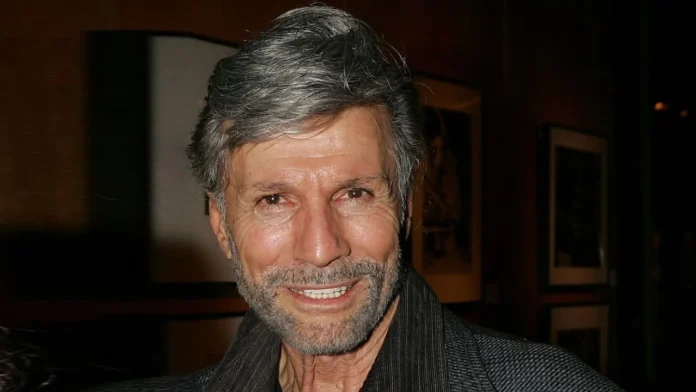
George Maharis net worth was estimated at $2 million at his death in May 2023. The Route 66 star earned his fortune from 1960s television work, seven music albums, and decades of guest roles before retiring to pursue visual arts in Beverly Hills until his passing at age 94.
Picture a young actor cruising down America’s highways in a Corvette, his dark good looks and leather jacket making him the heartthrob of early 1960s television. George Maharis captured millions of viewers as Buz Murdock on Route 66, but his journey from Greek-American kid to TV star — and his financial legacy — tells a more complicated story than the glamorous image suggests.
When Maharis died in May 2023 at 94, questions about his wealth surfaced alongside obituaries celebrating his career. Most sources estimate his net worth at $2 million at the time of his death, though the exact figure remains unconfirmed. Understanding how he built that fortune requires looking at his unexpected rise, the health crisis that derailed his peak earning years, and the decades of steady work that followed.
George Maharis Net Worth
George Maharis net worth is widely reported to $2 million when he passed away in 2023. This estimate comes from entertainment industry tracking sites, but treat it as exactly that — an educated guess rather than confirmed financial records. Celebrity wealth calculations rely on career earnings, property holdings, residuals from TV work, and other assets, but families rarely release estate details publicly.
His fortune stemmed mostly from his Route 66 payday in the early 1960s, when top TV actors could command substantial salaries. He also released seven albums between 1962 and 1966, adding music royalties to his income stream. Later guest spots on dozens of shows, character roles in films, and stage work kept money coming in through the 1990s. However, his abrupt departure from Route 66 in 1963 — just as the show peaked — cost him years of premium earnings that A-list stars typically bank during their prime.
The $2 million figure reflects a comfortable but not extravagant retirement. Maharis lived quietly in Beverly Hills for his final decades, pursuing painting and sculpture rather than chasing new acting gigs. His modest estate suggests someone who valued privacy and artistic satisfaction over maximizing wealth.
Who Was George Maharis?
Born September 1, 1928, in Astoria, Queens, George Maharis grew up as one of seven children in a Greek immigrant family. His parents ran a restaurant, giving young George an early education in hard work and tight budgets. The crowded household and working-class neighborhood shaped his tough-guy screen persona, though he showed artistic tendencies from childhood.
After high school, Maharis studied at the Actors Studio in New York, training alongside future stars in Method acting techniques. He paid his dues in off-Broadway productions and live television dramas during the 1950s, building skills but making little money. Small parts in shows like Naked City kept him afloat until his big break arrived in 1960.
His Greek heritage and distinctive features — dark eyes, strong jaw, brooding intensity — set him apart from the clean-cut leading men dominating early television. Casting directors saw him as raw and authentic, qualities that would serve him perfectly in his most famous role.
TV Actor & Singer
Route 66 premiered in October 1960 on CBS, following two young men driving across America in a Corvette. Maharis played Buz Murdock opposite Martin Milner’s Tod Stiles. The show caught viewers hungry for adventure stories and reflected the restless American spirit of the Kennedy era. Maharis became an instant sensation — his combination of vulnerability and toughness earned him an Emmy nomination in 1962.
The role paid well by early 1960s standards, likely pulling in several thousand dollars per episode. Over three seasons, that added up to significant earnings for a former struggling actor. Fan magazines put him on covers, and teenage girls screamed at his public appearances.
Capitalizing on his fame, Maharis signed a recording contract with Epic Records. He released his debut album “George Maharis Sings!” in 1962, followed by six more through 1966. His baritone suited easy-listening ballads and standards. While none became major hits, the albums sold respectably and generated royalties. Music industry income supplemented his TV salary during his peak years.
His dual career as actor and crooner positioned him to maximize earnings during his moment in the spotlight. Everything seemed set for decades of stardom and wealth accumulation.
Why He Left Route 66 — Health, Contract, and Fallout
Everything changed in 1963. Maharis abruptly left Route 66 during the third season, creating controversy that followed him for years. The official explanation cited hepatitis — he’d contracted the illness during production and needed extended recovery time. His representatives said the demanding shooting schedule, which involved traveling to different locations weekly, had worn down his health.
Behind the scenes, contract disputes complicated the situation. Maharis wanted more money and creative control as the show’s breakout star. CBS and the producers resisted renegotiating midway through his contract. Whether health or money triggered his exit remains debated, but the result was clear: he walked away from television’s hottest show.
The decision proved costly. Route 66 replaced him with actor Glenn Corbett and continued another season. Maharis lost out on another year of premium salary plus the career momentum that carrying a hit show provides. Networks and casting directors viewed his departure as difficult behavior, making them hesitant to offer leading roles afterward.
He filed a $2.25 million lawsuit against Screen Gems and CBS, claiming the hepatitis came from unsanitary working conditions. The case dragged on and eventually settled quietly. Whatever money he received likely didn’t match what he’d have earned staying with the show through its natural conclusion.
Career After Route 66
Maharis kept working steadily but never recaptured his early 1960s stardom. He appeared in films like Sylvia (1965) and The Satan Bug (1965), playing supporting roles that paid decent money but didn’t make him a movie star. His brooding intensity worked better on television anyway.
Through the 1970s and 1980s, he became a reliable guest star on popular shows. He appeared on Mission: Impossible, Fantasy Island, Murder, She Wrote, and dozens of other series. These one-off roles paid union scale plus a premium for his name recognition. While not the big money of a series lead, steady work provided financial security.
He also returned to the theater, appearing in touring productions and regional playhouses. Stage work satisfied his artistic training even when the paychecks were smaller than screen work. His last credited acting role came in 1993, after which he retired from the business entirely.
Notable Credits and Cameo Moments
Beyond Route 66, Maharis left marks in several projects. His role in The Satan Bug showcased his ability to handle action and suspense. Television movies like Look What’s Happened to Rosemary’s Baby (1976) kept him visible to audiences who remembered his earlier fame. He even appeared in the original Fantasy Island pilot movie before the series launched, showing producers still valued his presence.
Controversies & Public Moments
Maharis’ personal life generated occasional headlines. In 1967 and again in 1974, he was arrested on morals charges in different states. Both cases were later dismissed or resulted in plea bargains with minimal consequences. The incidents happened during an era when police routinely targeted gay men, and details remain vague.
In 1973, he appeared in a Playgirl magazine photo spread, unusual for a mainstream actor at that time. The appearance sparked conversation but didn’t derail his working career. He gave a few interviews about his personal life, maintaining privacy around relationships and sexuality.
These controversies generated gossip but didn’t significantly impact his earning potential in an industry where steady character actors could always find work.
Later Life, Retirement & Death
Maharis spent his final decades in Beverly Hills, pursuing the visual arts. He painted and created sculptures, exhibiting his work occasionally in small galleries. Friends described him as content in retirement, uninterested in Hollywood events or chasing past glory.
He never married and had no children. His social circle remained small and close. By his 80s, he’d stepped back from public life almost entirely, with only occasional tributes from classic TV fan groups reminding people of his Route 66 legacy.
George Maharis died on May 24, 2023, at his Beverly Hills home. He was 94 years old. Obituaries in major outlets celebrated his contribution to television history and noted his long, quiet life after stardom faded. No cause of death was specified beyond advanced age.
His estate, valued around $2 million by industry estimates, likely went to family members or designated beneficiaries. The modest sum reflected someone who lived comfortably but not lavishly, who chose artistic pursuits over aggressive wealth building.
How to Read “Celebrity Net Worth” Numbers
When you see a celebrity net worth figure online, remember it’s calculated from public information — career histories, property records, industry salary standards — not actual bank statements. Companies like Celebrity Net Worth compile these estimates, but they’re educated guesses. Real estate values, investment returns, debts, and private assets all remain unknown unless revealed in estate proceedings.
For someone like Maharis, who worked steadily but never reached superstar status, estimates become even trickier. His Route 66 salary was substantial for the era but modest by today’s standards. Residuals from decades-old shows provide some ongoing income, but nothing like modern streaming deals. Album sales and stage work added to his wealth but weren’t massive money makers.
The most reliable information comes from reputable obituaries in outlets such as The Hollywood Reporter, People, and The New York Times. These sources verify dates, career highlights, and basic biographical information. For financial details, treat all numbers as approximations.
A Route 66 Legacy
George Maharis gave television one of its most memorable early antiheroes. His Buz Murdock wasn’t a cowboy or detective — just a guy looking for meaning on America’s highways. That relatability made him a star and built the foundation for his $2 million estate.
The money tells only part of the story. He walked away from fame at its peak, whether for health or principle, and spent six decades living on his own terms. He painted, sculpted, and kept his privacy. That’s a different kind of wealth than the dollar figures suggest.
When classic TV fans think of Route 66, they picture the Maharis behind the wheel of that Corvette. The image captures an era, a style, and a performer who understood how to project restless ambition. His financial legacy — comfortable, not extravagant — reflects a life lived fully if unconventionally.